Introduction
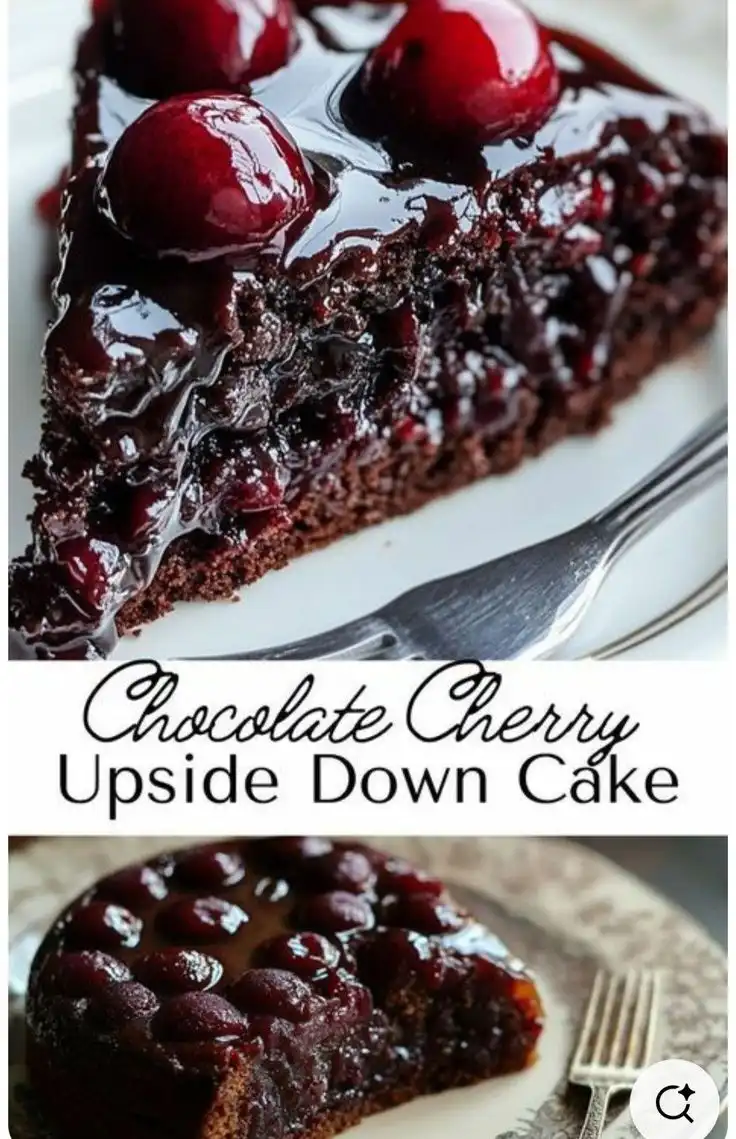
The Chocolate Cherry Upside-Down Cake is a luscious, decadent twist on the classic American upside-down cake—a dessert that marries deep cocoa richness with the bright, tangy-sweet burst of cherries. Unlike traditional pineapple or apple versions, this iteration elevates the format with layers of velvety chocolate cake batter poured over a glossy, caramelized cherry topping—then baked until golden, flipped while warm, and served with an irresistible sheen of syrupy fruit glaze pooling around tender, moist chocolate crumb. It’s a showstopping centerpiece for holidays, dinner parties, or cozy Sunday afternoons—equally comforting and elegant, nostalgic yet refreshingly modern.
The History
The upside-down cake traces its roots to early 20th-century American home baking, gaining widespread popularity in the 1920s and 1930s—partly fueled by marketing campaigns from brands like Hawaiian Pineapple Company (now Dole), which promoted pineapple upside-down cake as an easy, impressive dessert using canned fruit. Before that, similar “skillet cakes” were common in colonial kitchens, where bakers would arrange fruit and sugar in a cast-iron pan, pour batter over top, and bake over open flames or in wood-burning ovens. The technique was practical: minimal mixing, no frosting required, and built-in presentation—just flip and serve. Chocolate, though historically reserved for elite confections before the 1800s, became increasingly accessible in the U.S. after the Industrial Revolution, especially with the rise of Dutch-process cocoa and mass-produced chocolate bars. By the mid-20th century, regional bakers began experimenting—adding cocoa to yellow cake batters or layering dark chocolate ganache under fruit toppings. The chocolate cherry variation likely emerged organically in Pacific Northwest and Michigan kitchens—regions renowned for tart Montmorency cherries—and gained traction in community cookbooks and church fundraisers in the 1970s–80s. Today, it enjoys renewed acclaim thanks to food bloggers, viral baking challenges, and the growing appetite for bold flavor contrasts—especially the dynamic interplay between bitter cocoa and vibrant, slightly acidic cherries.
Ingredients Breakdown
Every element in this cake serves both functional and sensory roles—no ingredient is arbitrary. Let’s explore them in detail:
- Cherries: Tart frozen or jarred Morello or Montmorency cherries are ideal—they hold their shape, provide balanced acidity, and release just enough juice without turning the topping watery. Fresh cherries can be used but require pitting, blanching, and careful reduction to concentrate flavor and avoid excess moisture. Sweet Bing cherries may be substituted but should be paired with a splash of lemon juice or balsamic vinegar to restore balance.
- Brown Sugar (for topping): Packed light or dark brown sugar contributes molasses depth, moisture retention, and rich caramel notes. Its natural acidity helps activate the Maillard reaction during caramelization, yielding a complex, amber-hued syrup.
- Butter (for topping): Unsalted European-style butter (82–84% fat) delivers superior browning and nutty aroma. Melted butter emulsifies with sugar to create a cohesive, glossy glaze—not greasy or separated—that clings to each cherry.
- Vanilla Extract & Almond Extract (for topping): Pure Madagascar bourbon vanilla adds warmth and floral sweetness; almond extract (used sparingly—¼ tsp max) enhances cherry’s natural benzaldehyde compounds, intensifying its fruity-nutty profile without tasting “artificial.”
- All-Purpose Flour: Provides essential gluten structure. We recommend bleached all-purpose (like Pillsbury or Softasilk) for finer crumb and better moisture absorption—critical in a dense chocolate cake.
- Unsweetened Cocoa Powder: Use high-quality, natural (non-alkalized) cocoa—such as Hershey’s Natural or Ghirardelli Special Dark—for pronounced chocolate flavor and proper leavening interaction with baking soda. Dutch-process cocoa may be substituted, but reduce baking soda by ¼ tsp and add ¼ tsp cream of tartar to maintain pH balance.
- Granulated Sugar: Not just for sweetness—it aids in creaming, stabilizes air bubbles during mixing, and contributes to crust formation and shelf life.
- Baking Soda & Baking Powder: A dual-leavening system ensures lift *and* tenderness. Baking soda reacts immediately with acidic cocoa and buttermilk for initial rise; baking powder provides secondary lift during oven spring.
- Salt: Fine sea salt or kosher salt heightens all other flavors and tempers bitterness—never omit, even in sweet recipes.
- Eggs: Large, room-temperature eggs emulsify fat and liquid, trap air for volume, and contribute protein for structure. Extra yolk (one additional yolk is included) adds richness, moisture, and denser crumb—ideal for chocolate cakes.
- Buttermilk: The star acidulant—its lactic acid activates baking soda, tenderizes gluten, and imparts subtle tang that cuts through chocolate’s heaviness. If unavailable, make a substitute: 1 cup whole milk + 1 tbsp white vinegar or lemon juice, rested 5 minutes until curdled.
- Vegetable Oil: Neutral-flavored oil (like canola or grapeseed) ensures unparalleled moisture and shelf stability—unlike butter-based cakes, this stays tender for up to 5 days.
- Hot Strong Coffee (or Hot Water): Coffee doesn’t make the cake taste like coffee—it amplifies chocolate’s roasted, earthy notes and improves crumb tenderness. Decaf works perfectly. If avoiding caffeine, use hot water—but add ½ tsp instant espresso powder to compensate for flavor depth.
- Dark Chocolate (optional garnish): 60–70% cacao chopped or shaved—added just before serving for textural contrast, visual elegance, and an extra layer of bittersweet complexity.
Step-by-Step Recipe
- Preheat & Prep Pan: Position rack in center of oven. Preheat to 350°F (177°C). Generously grease a 9-inch round, straight-sided, oven-safe cake pan (preferably nonstick or well-seasoned cast iron) with unsalted butter or baking spray with flour. Line bottom with parchment paper cut to fit exactly—this prevents sticking and eases flipping later.
- Prepare Cherry Topping: In a medium bowl, combine 1 cup pitted tart cherries (drained well if canned/jarred; if frozen, thaw and pat *very* dry with paper towels), ¾ cup packed light brown sugar, 6 tbsp (¾ stick) unsalted butter, 1 tsp pure vanilla extract, and ¼ tsp pure almond extract. Stir gently until evenly coated and sugar begins to dissolve slightly. Spread mixture into bottom of prepared pan in an even layer—cherries should not overlap heavily; aim for single-layer coverage with slight gaps for syrup to pool.
- Bake Topping (Optional but Recommended): Place pan in preheated oven for 8–10 minutes, just until butter is fully melted, sugar begins bubbling at edges, and cherries release a small amount of glossy syrup. Remove and let cool 5 minutes—this jumpstarts caramelization and ensures topping won’t sink into batter.
- Mix Dry Ingredients: In a large bowl, whisk together 1¾ cups all-purpose flour, ¾ cup unsweetened natural cocoa powder, 1½ cups granulated sugar, 1½ tsp baking soda, 1½ tsp baking powder, and 1 tsp fine sea salt until no streaks remain and cocoa is fully aerated.
- Cream Wet Base: In another bowl, whisk 2 large eggs, 1 extra large egg yolk, 1 cup buttermilk, ½ cup neutral vegetable oil, and 2 tsp pure vanilla extract until smooth and homogenous.
- Combine Wet & Dry: Pour wet mixture into dry ingredients. Whisk gently but thoroughly—just until no dry pockets remain (about 30 seconds). Do *not* overmix—gluten development leads to toughness.
- Incorporate Hot Liquid: Carefully stir in 1 cup hot strong brewed coffee (or hot water + espresso powder) in two additions, mixing only until fully incorporated and batter is smooth and fluid. Batter will be thin—this is correct and essential for even rise and tender crumb.
- Pour Over Topping: Immediately and evenly pour batter over warm cherry layer. Tilt pan gently to level batter—avoid disturbing cherry arrangement. Tap pan firmly twice on countertop to release air bubbles.
- Bake: Place pan on center oven rack. Bake 38–45 minutes, rotating halfway through. Cake is done when a wooden skewer inserted into center (avoiding cherries) comes out with *moist crumbs*—not wet batter, not completely clean. Surface should be set, edges pulling slightly from pan, and top springs back when lightly pressed.
- Cool Slightly: Let cake cool in pan on wire rack for exactly 15 minutes—this allows topping syrup to thicken slightly and set, preventing catastrophic fruit slippage upon flipping. Do *not* skip or shorten this step.
- Flip with Confidence: Run a thin offset spatula or knife around inner edge to loosen. Place a wide, heatproof serving platter (larger than pan) upside-down over cake. Using oven mitts, grip both pan and platter firmly. In one swift, confident motion, invert. Lift pan straight up—topping should release cleanly. If any cherries cling, gently nudge with spatula and drizzle residual syrup over them.
- Final Rest & Serve: Let cake rest, right-side-up, for 10 more minutes before slicing. This allows internal steam to redistribute and crumb to stabilize. Serve warm or at room temperature—never chilled, as cold dulls flavor and firms texture.
Tips
- Dry Cherries Thoroughly: Excess moisture is the #1 cause of soggy topping and collapsed cake. Whether using frozen, canned, or fresh, always drain, then blot cherries with triple-layered paper towels—press gently but firmly.
- Use Room-Temperature Eggs & Buttermilk: Cold ingredients cause premature fat solidification and uneven emulsion—leading to curdled batter and dense spots. Pull from fridge 45 minutes before baking.
- Measure Cocoa Correctly: Spoon cocoa into measuring cup and level—don’t scoop directly from bag (compacts it, adding up to 20% extra). Too much cocoa = bitter, dry cake.
- Don’t Skip the Pre-Bake Topping Step: That 8–10 minute head start creates a firm, syrupy base that anchors the batter and prevents “swimming” cherries. Skipping it increases risk of topping sinking or separating.
- Invest in an Oven Thermometer: Ovens often run hot or cold. An inaccurate temperature causes uneven baking—underbaked centers or scorched edges. Verify yours reads true at 350°F.
- Rotate Midway—Religiously: Home ovens have hot spots. Rotating ensures even browning and consistent rise across the entire cake.
- Check Doneness Early: Begin testing at 38 minutes—ovens vary, and overbaking dries out chocolate cake faster than vanilla. Remember: moist crumbs = perfect; clean skewer = overbaked.
- Flip While Warm—Not Hot: 15 minutes is the Goldilocks window. Too soon (hot pan + hot syrup = dangerous steam + slipping fruit). Too late (cool syrup hardens → stuck cherries).
- Platter Must Be Heatproof & Larger: Avoid melamine or thin ceramic—they can crack from thermal shock. And if platter is smaller than pan, syrup will spill over and burn your counter.
- Let It Breathe Before Slicing: Cutting too soon releases steam and causes crumbling. Wait full 10 minutes post-flip for clean, defined slices with intact cherry caps.
- Storage Tip: To retain moisture, store leftovers *uncovered* at room temperature for up to 2 days (the syrup keeps it moist), or loosely tented with foil. Refrigeration is unnecessary and makes crumb gummy.
Variations and Customizations
This recipe is gloriously adaptable—here are inspired, tested variations that preserve structural integrity while expanding flavor horizons:
- Black Forest Style: Add ¼ cup kirsch (cherry brandy) to cherry topping + 1 tbsp to batter. After flipping, pipe swirls of stabilized whipped cream and garnish with chocolate curls and fresh cherries.
- Gluten-Free: Substitute 1:1 gluten-free all-purpose blend (like King Arthur Measure-for-Measure or Bob’s Red Mill 1-to-1) *plus* 1 tsp xanthan gum. Increase buttermilk by 2 tbsp for hydration. Verify all cocoa and extracts are GF-certified.
- Vegan: Replace eggs with flax eggs (2 tbsp ground flax + 6 tbsp water, rested 10 min); use plant-based butter and buttermilk (1 cup soy/oat milk + 1 tbsp lemon juice); swap honey-free brown sugar; ensure chocolate is dairy-free. Add 1 tsp apple cider vinegar for extra lift.
- Spiced Cherry: Infuse topping with ½ tsp ground cinnamon, ¼ tsp ground cardamom, and a pinch of freshly grated nutmeg. Optional: add 1 star anise pod to warm butter-sugar mixture, then remove before assembling.
- Double-Chocolate Cherry: Fold 1 cup finely chopped dark chocolate (60–70%) into batter *after* adding hot coffee. Or drizzle ¼ cup warm ganache over finished cake before serving.
- Nutty Crunch: Sprinkle ⅓ cup toasted sliced almonds or chopped pecans over cherry layer *before* pouring batter—adds texture and complements cherry’s tartness beautifully.
- Orange-Cherry Fusion: Replace almond extract with 1 tsp finely grated orange zest + ½ tsp orange extract in topping; add 1 tbsp orange juice to batter. Garnish with candied orange peel.
- Mini Individual Cakes: Use six 4-inch round cake pans or a muffin tin lined with parchment liners. Reduce bake time to 20–25 minutes. Flip each individually onto small plates—adorable and portion-controlled.
- Boozy Reduction Topping: Simmer drained cherries with brown sugar, butter, and 2 tbsp bourbon or amaretto for 5 minutes before layering—intensifies flavor and thickens syrup.
- White Chocolate Cherry: Replace cocoa and some flour with ¾ cup white chocolate chips melted into warm buttermilk-oil mixture. Reduce sugar to 1¼ cups. Top with white chocolate shavings.
Health Considerations and Nutritional Value
While undeniably indulgent, this Chocolate Cherry Upside-Down Cake offers nuanced nutritional dimensions worth acknowledging—especially when made mindfully. Per standard slice (1/12th of recipe, ~185g), approximate values are:
- Calories: 340–375 kcal (moderate for dessert—comparable to a frosted cupcake)
- Total Fat: 14–16g (mostly unsaturated from cocoa butter, oil, and nuts if added; only ~5g saturated)
- Carbohydrates: 54–58g (includes 38–42g naturally occurring sugars from fruit + brown sugar; only ~12g added sugar per slice when using reduced-sugar topping options)
- Fiber: 3–4g (from cocoa, whole cherries, and optional oats or almond flour substitutions)
- Protein: 4–5g (enhanced by egg yolks and optional Greek yogurt substitution for part of buttermilk)
- Antioxidants: Exceptionally high—cocoa is rich in flavanols (linked to improved endothelial function and blood flow); tart cherries contain anthocyanins (potent anti-inflammatory agents) and melatonin (supports sleep regulation).
- Vitamins & Minerals: Significant manganese (from cocoa), potassium (cherries), magnesium (cocoa), and vitamin C (cherries—though partially heat-sensitive, retains ~40% after baking).
Considerations for Dietary Needs:
- Reduced-Sugar Option: Cut brown sugar in topping to ½ cup and granulated sugar in batter to 1¼ cups. Compensate with 2 tbsp blackstrap molasses (adds minerals + depth) and 1 tsp stevia extract (pure, no aftertaste). Total added sugar drops to ~7g/slice.
- Lower-Fat Adaptation: Replace half the oil with unsweetened applesauce or mashed banana (¼ cup)—maintains moisture while reducing fat by ~30%. Texture remains tender, though crumb is slightly denser.
- Heart-Healthy Boost: Add 2 tbsp ground flaxseed or chia seeds to dry ingredients—adds omega-3s, fiber, and subtle nuttiness without altering flavor profile.
- Low-Glycemic Tweaks: Substitute erythritol-blend sweetener (1:1) for half the sugars, and use low-glycemic cherries (tart varieties have lower GI than sweet). Pair with plain Greek yogurt instead of ice cream to slow glucose absorption.
- Allergen Notes: Naturally nut-free (unless almond extract is omitted or substituted); easily dairy-free and egg-free with tested vegan swaps (see Variations). Always verify cocoa and extracts for soy or corn derivatives if sensitive.
Remember: Enjoyment is part of wellness. Savoring a mindful, homemade slice—made with real ingredients and shared with loved ones—offers psychological nourishment that far exceeds macronutrient counts.
Ingredients
- 1 cup pitted tart cherries (frozen, thawed & patted dry; or jarred/canned in water or light syrup, well-drained)
- ¾ cup packed light brown sugar
- 6 tbsp (¾ stick) unsalted butter, cut into pieces
- 1 tsp pure vanilla extract
- ¼ tsp pure almond extract
- 1¾ cups all-purpose flour (spooned & leveled)
- ¾ cup unsweetened natural cocoa powder (not Dutch-process)
- 1½ cups granulated sugar
- 1½ tsp baking soda
- 1½ tsp baking powder
- 1 tsp fine sea salt
- 2 large eggs, room temperature
- 1 extra large egg yolk, room temperature
- 1 cup buttermilk, room temperature
- ½ cup neutral vegetable oil (canola, grapeseed, or avocado)
- 2 tsp pure vanilla extract
- 1 cup hot strong brewed coffee (or hot water + ½ tsp instant espresso powder)
Directions
- Preheat oven to 350°F (177°C). Grease a 9-inch round, straight-sided, oven-safe cake pan and line bottom with parchment paper.
- In a medium bowl, combine cherries, brown sugar, butter, 1 tsp vanilla, and almond extract. Spread evenly into prepared pan.
- Place pan in oven for 8–10 minutes, until butter is melted and mixture bubbles gently at edges. Remove and cool 5 minutes.
- In a large bowl, whisk flour, cocoa, granulated sugar, baking soda, baking powder, and salt until uniform.
- Separately, whisk eggs, egg yolk, buttermilk, oil, and 2 tsp vanilla until smooth.
- Pour wet mixture into dry ingredients and whisk gently until just combined—no dry streaks.
- Stir in hot coffee in two additions, mixing only until smooth and fluid.
- Pour batter evenly over warm cherry layer. Tap pan firmly twice.
- Bake 38–45 minutes, until skewer inserted in center comes out with moist crumbs.
- Cool in pan on wire rack for exactly 15 minutes.
- Run knife around edge. Invert onto heatproof serving platter.
- Rest 10 minutes before slicing and serving.
FAQ
- Can I use fresh cherries?
- Yes—but pit 1¼ cups fresh tart cherries, toss with 1 tbsp lemon juice and 1 tbsp sugar, then simmer gently for 4 minutes to soften and reduce excess juice. Cool completely and drain thoroughly before using.
- Why does my topping slide off when I flip?
- Most commonly due to insufficient cooling (less than 15 minutes), overly wet cherries, or skipping the pre-bake step. Also check: parchment must be flush with pan bottom—no air pockets underneath.
- Can I make this ahead of time?
- Absolutely. Bake, cool completely, and store *unflipped* in pan, covered, at room temperature up to 24 hours. Re-warm pan gently in 300°F oven for 8 minutes before flipping—or flip cold and re-warm whole cake on a parchment-lined sheet at 325°F for 12 minutes.
- My cake sank in the center—what went wrong?
- Overmixing batter, opening oven too early (before 30 minutes), underbaking, or expired leaveners. Always test with skewer—not timer alone—and verify baking soda/powder freshness (baking soda fizzes vigorously in vinegar; powder bubbles in hot water).
- Can I freeze this cake?
- Yes! Fully cooled, uncut cake (flipped) freezes beautifully for up to 3 months. Wrap tightly in plastic + foil. Thaw overnight in fridge, then bring to room temperature on counter for 2 hours before serving. Glaze may dull slightly—refresh with light brush of warm cherry syrup.
- Is there a way to make it less sweet?
- Reduce granulated sugar to 1¼ cups and brown sugar to ½ cup. Add 2 tbsp unsweetened cocoa powder to deepen chocolate flavor without sweetness. A pinch of flaky sea salt on top before serving also balances perception of sweetness.
- What’s the best way to store leftovers?
- Keep uncovered at room temperature for up to 48 hours—the cherry syrup keeps it moist. For longer storage, wrap individual slices tightly and refrigerate up to 5 days. Bring to room temp before serving for best texture.
- Can I use a different pan size?
- A 9×13-inch pan works—bake 30–35 minutes; flip carefully onto large platter using two spatulas. For a 10-inch pan, increase batter by 25% and extend bake time by 5–7 minutes. Never use a shallow pie plate—it lacks depth for proper rise and caramelization.
- Why use both baking soda AND baking powder?
- Baking soda needs acid (cocoa + buttermilk) to activate—providing initial lift and tenderness. Baking powder adds secondary, heat-activated lift for reliable oven spring and even crumb—especially important in dense chocolate batters.
- Can I add chocolate chips to the batter?
- Yes—but fold in only ¾ cup *after* adding hot coffee. Larger amounts can weigh down batter and cause sinking. Mini chips distribute more evenly than standard.
Summary
The Chocolate Cherry Upside-Down Cake is a masterclass in balance—where deep, earthy cocoa meets vibrant, tart-sweet cherries in a glossy, caramelized embrace, all crowned with a tender, moist, coffee-enhanced crumb that defies typical chocolate cake density.
It’s a dessert rooted in American tradition yet endlessly customizable, nutritionally thoughtful without compromise, and guaranteed to transform any ordinary moment into something warmly, deeply, unforgettably special.