Introduction
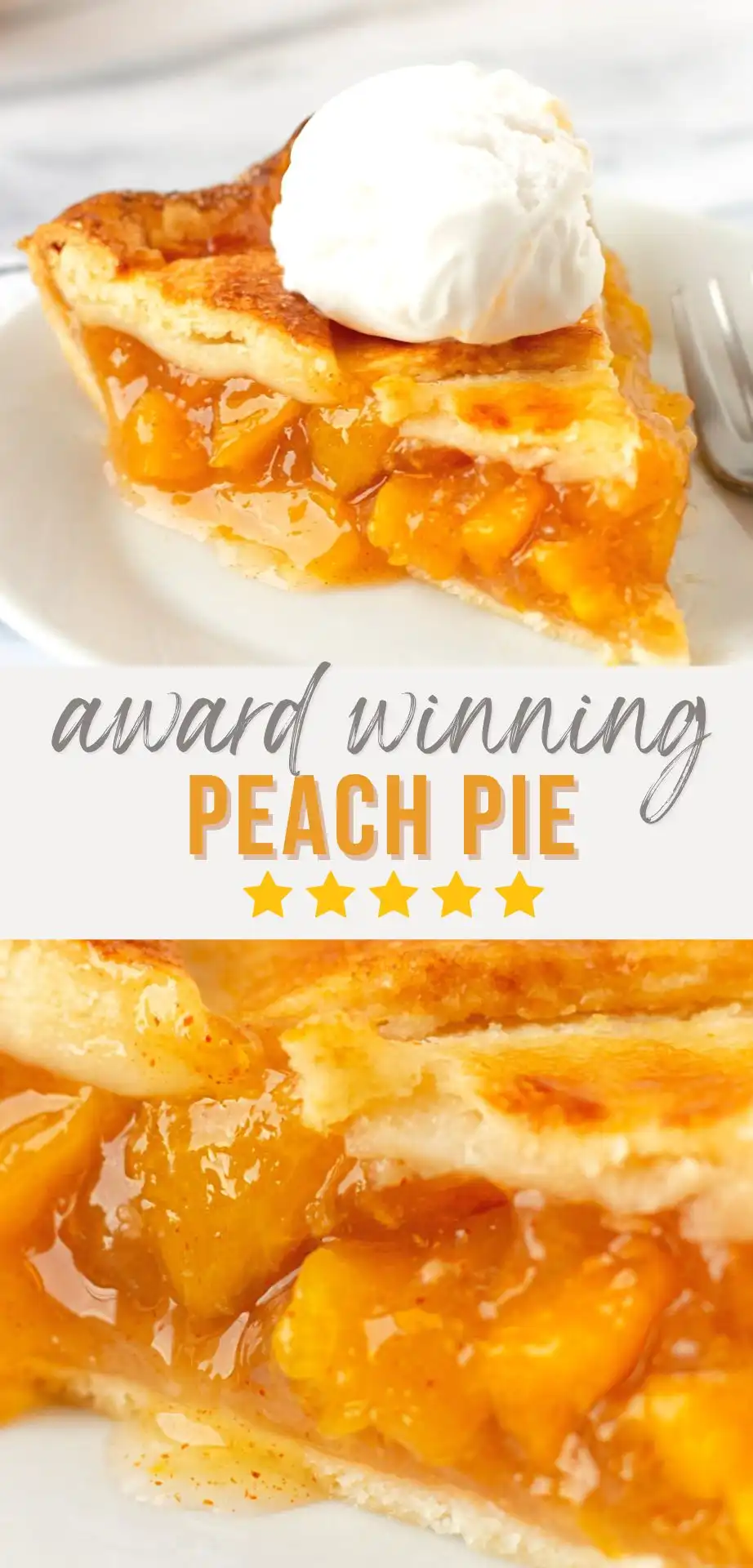
Welcome to what many bakers, food critics, and generations of peach-loving families proudly declare: The BEST Peach Pie Recipe Ever. This isn’t just another fruit pie—it’s a luminous, golden celebration of summer at its most luscious. Imagine biting into a flaky, buttery, golden-brown crust that shatters delicately, giving way to a luxuriously thick, glossy filling bursting with tender-sweet, fragrant, juicy peaches—neither mushy nor undercooked, but perfectly balanced with a whisper of cinnamon, a bright spark of lemon, and just the right touch of vanilla. Every slice offers harmony: tart and sweet, warm and fresh, rustic and refined. Whether served à la mode with house-churned vanilla bean ice cream, drizzled with bourbon caramel, or enjoyed warm with a dollop of crème fraîche, this peach pie doesn’t merely satisfy—it transports. It’s the kind of pie that earns standing ovations at potlucks, inspires handwritten recipe requests, and becomes the centerpiece of holiday tables—even in August. This is more than dessert; it’s edible nostalgia, perfected.
The History
Peach pie traces its roots back to early American colonial kitchens, where settlers adapted English fruit tart traditions using native and newly cultivated New World produce. Peaches—originally from China, carried westward along the Silk Road, then introduced to Europe by Spanish explorers—were brought to North America in the 16th century and thrived in the Southeastern U.S., especially Georgia and South Carolina. By the 18th century, “peach tarts” appeared in manuscripts like Mary Randolph’s *The Virginia House-Wife* (1824), though early versions often lacked refined thickeners and relied on long baking to reduce juices. The modern American peach pie evolved alongside advances in pastry technique, refrigeration, and ingredient accessibility—particularly the rise of all-purpose flour, commercial pectin alternatives, and regional heirloom peach varieties like Elberta, Redhaven, and O’Henry. In the 20th century, peach pie became synonymous with Southern hospitality and Midwest harvest festivals—and earned its rightful place beside apple and cherry as one of America’s “Big Three” fruit pies. Yet, for decades, many recipes suffered from common pitfalls: soggy bottoms, bland fillings, over-thickened goop, or crusts that fought back with toughness or greasiness. This recipe honors that legacy—but refuses to settle. It synthesizes centuries of wisdom—French laminated crust principles, Southern slow-simmered filling intuition, and modern food science insights—to deliver not just tradition, but transcendence.
Ingredients Breakdown
Every extraordinary peach pie begins with extraordinary ingredients—chosen not just for function, but for flavor, texture, and integrity. Here’s why each component matters—and how to select the best:
- Fresh, Ripe Peaches (7–8 cups sliced, ~10–12 medium): Non-negotiable. Use tree-ripened, fragrant, slightly yielding freestone peaches (Elberta, Contender, or Golden Jubilee are ideal). Avoid hard, green-tinged, or overly soft/mushy fruit. Peel carefully with a vegetable peeler or quick blanch-and-shock method—never skip peeling; skins add bitterness and inhibit thickening. Slice uniformly (½-inch thick) for even cooking.
- Granulated Sugar (¾ cup + 2 tbsp): Provides sweetness and structure. We use slightly less than typical to let peach flavor shine—not mask it. Adjust ±2 tbsp based on peach ripeness (taste your raw slices first!).
- Light Brown Sugar (¼ cup, packed): Adds molasses-kissed depth, moisture retention, and subtle caramel notes that harmonize with peach’s natural acidity.
- Lemon Juice (3 tbsp freshly squeezed): Brightens flavor, balances sweetness, and prevents browning. Bottled juice lacks vibrancy and can introduce off-notes.
- Lemon Zest (1 tsp, finely grated): Introduces aromatic citrus oils—undetectable individually, but essential for multidimensional brightness.
- Pure Vanilla Extract (1½ tsp): Real Madagascar bourbon vanilla—not imitation. Enhances fruit complexity without overpowering.
- Ground Cinnamon (1¼ tsp): Warm, woody, and subtly sweet—not dusty or bitter. Freshly ground from sticks is ideal.
- Ground Ginger (¼ tsp): A secret weapon—adds quiet warmth and gentle spice lift without heat.
- Salted Butter (2 tbsp, cold, cubed): For the filling—not the crust! These small cold cubes melt slowly during baking, releasing steam that helps create pockets of tender peach and enriches the sauce with luxurious mouthfeel.
- Thickener Trio (NOT just cornstarch!):
- Instant ClearJel (3 tbsp): The gold standard for fruit pies—heat-stable, freeze-thaw resistant, and produces a glossy, clear, non-stringy, non-gummy set. Far superior to cornstarch (which breaks down) or flour (which clouds and tastes starchy).
- Quick-Cooking Tapioca (1 tbsp): Adds subtle chew and helps suspend fruit evenly in the gel. Prevents “weeping” and gives structural integrity.
- Unflavored Gelatin (½ tsp, bloomed in 1 tsp cold water): A pro-level touch—boosts viscosity at serving temperature, ensuring slices hold their shape without runny gaps.
- Flaky All-Butter Pie Crust (Double-Crust, 9-inch): Made with 2½ cups (300g) chilled all-purpose flour (King Arthur recommended), 1 tsp fine sea salt, 1 tbsp granulated sugar, 1 cup (227g) very cold unsalted butter (cut into ½-inch cubes), and 6–8 tbsp ice water + 1 tsp apple cider vinegar (for tenderness and flakiness). No shortening, no lard—just pure, layered, shatteringly crisp butter.
- Egg Wash (1 large egg + 1 tbsp heavy cream + pinch of salt): For radiant, deep-golden browning and professional sheen.
- Coarse Turbinado Sugar (2 tbsp): Sprinkled atop before baking for crunch, sparkle, and caramelized sweetness.
Step-by-Step Recipe
- Prep Peaches (Day Before or Morning Of): Blanch 12 ripe peaches in boiling water for 30 seconds, transfer to ice water, slip off skins, halve, pit, and slice ½-inch thick. Place in a large bowl. Gently toss with 3 tbsp lemon juice and 1 tsp lemon zest. Refrigerate uncovered for at least 2 hours (or up to 12) to macerate and draw out excess surface moisture—critical for preventing sogginess.
- Make & Chill Dough (Minimum 2 Hours, Preferably Overnight): Whisk dry ingredients. Cut in cold butter until pea-sized crumbs form. Add ice water/vinegar 1 tbsp at a time, mixing *just* until dough begins to clump. Divide into two unequal disks (⅔ for bottom crust, ⅓ for top), wrap tightly in parchment-lined plastic, and chill ≥2 hours (or freeze up to 3 months). Cold = flaky. Rushed = tough.
- Preheat & Prep Pan: Position oven rack in lower third. Preheat to 425°F (220°C). Place a heavy-duty baking sheet on the rack below your pie pan to catch spills and radiate intense bottom heat—this is the #1 secret for crisp crusts.
- Drain & Dry Peaches Thoroughly: After chilling, pour peaches into a fine-mesh strainer over a bowl. Reserve ½ cup of the fragrant liquid. Pat peach slices *completely dry* with clean paper towels—moisture is the enemy of flakiness.
- Combine Filling: In a large non-reactive bowl, whisk together granulated sugar, brown sugar, cinnamon, ginger, and salt. Add drained peaches and gently fold. Whisk reserved peach liquid, vanilla, and bloomed gelatin into the mixture. Sprinkle ClearJel and tapioca over top. Using a silicone spatula, fold *just until evenly coated*—no overmixing! Let sit 10 minutes while you roll crust.
- Roll Bottom Crust: On a lightly floured surface, roll larger dough disk to a 12-inch circle, ⅛-inch thick. Carefully transfer to a 9-inch deep-dish pie plate. Gently press in, leaving overhang. Trim to ½-inch beyond rim. Chill 15 minutes.
- Fill & Dot: Pour filling into chilled crust. Scatter 2 tbsp cold cubed butter evenly over surface—this melts slowly, creating steam pockets and rich flavor infusion.
- Roll & Apply Top Crust: Roll smaller disk to 11-inch circle. Drape over filling. Trim excess, leaving ¾-inch overhang. Tuck top edge under bottom edge and crimp decoratively (fork, fluted fingers, or rope twist). Cut 4–5 generous steam vents (½-inch slits or decorative cutouts) in center.
- Chill Again (Non-Negotiable!): Refrigerate assembled pie for 30 minutes—or freeze for 15. Cold dough = sharp layers, minimal shrinkage, and even bake.
- Egg Wash & Sugar: Whisk egg wash. Brush *generously* over entire top crust, including crimped edges. Sprinkle turbinado sugar evenly.
- Bake Strategically: Place pie on preheated baking sheet. Bake at 425°F for 20 minutes—this sets the crust. *Without opening oven*, reduce heat to 375°F and bake 45–55 more minutes, rotating halfway, until crust is deep amber, filling bubbles *vigorously* through vents (not just around edges), and internal temperature reaches 205–210°F (use an instant-read thermometer inserted through a vent). If edges brown too fast, shield with foil or a silicone pie crust shield.
- Cool Completely—Yes, Really: Transfer to a wire rack. Cool *at least 4 hours*, preferably overnight. This allows the complex starches and gelatin to fully set. Cutting too soon = soupy disaster. Patience = perfect slices.
Tips
- Peel Perfectly: Use a Y-peeler for speed and control—or blanch: score an “X” on the bottom of each peach, boil 30 sec, then plunge into ice water. Skins will slip off effortlessly.
- Measure by Weight: 7–8 cups sliced peaches = ~1,400–1,600g. Volume varies wildly by size and juiciness—weight ensures consistency.
- Cold Is King: Keep butter, water, dough, and even your mixing bowl chilled. Work quickly. If dough gets warm, return to fridge for 10 minutes.
- No Overworking: Mix dough and filling *just* until combined. Gluten development = toughness. Lumps in dough? Good. Uniform paste? Bad.
- Vent Generously: Steam *must* escape. Small vents clog. Make them wide, deep, and numerous—especially if using a lattice or full top.
- Bottom Heat Matters: That preheated baking sheet isn’t optional—it delivers the intense, direct heat needed to set the bottom crust before the filling boils over.
- Test Doneness Correctly: Bubbling *around the edges only* means underbaked. You need thick, syrupy, lava-like bubbles erupting *through the center vents*. When in doubt, use a thermometer: 205–210°F = set.
- Cooling Is Part of Baking: Resist cutting for 4+ hours. The filling continues to thicken as it cools. Serve slightly warm—not hot—for optimal texture and flavor release.
- Leftovers? Even Better: Refrigerate covered for up to 5 days. Reheat individual slices at 350°F for 15 minutes—or serve cold. Flavors deepen overnight.
- Freeze Like a Pro: Assemble unbaked pie, freeze solid on a tray, then wrap *tightly* in plastic + foil. Bake frozen—add 20 minutes to initial high-heat phase, then proceed. Never thaw before baking.
Variations and Customizations
This foundational recipe welcomes creativity—without compromising integrity:
- Spiced Bourbon Peach: Replace 1 tbsp lemon juice with 1½ tbsp aged bourbon + ½ tsp orange zest. Add ¼ tsp freshly grated nutmeg with spices.
- White Peach & Basil: Substitute half white peaches (milder, floral) and fold in 8–10 fresh basil leaves (julienned) with the filling. Omit ginger; use cardamom instead of cinnamon.
- Maple-Pecan Streusel Top: Skip top crust. After filling, sprinkle with streusel: ½ cup chopped toasted pecans, ⅓ cup maple sugar, 3 tbsp cold butter, ¼ cup flour, pinch salt. Bake as directed.
- Vegan Delight: Use plant-based butter (Miyoko’s or Earth Balance sticks) in crust, coconut milk powder + agar-agar (1 tsp) instead of gelatin, and maple syrup (reduce granulated sugar by ¼ cup).
- Gluten-Free Grandeur: Swap flour 1:1 with King Arthur GF Measure-for-Measure blend in crust and filling. Add ½ tsp xanthan gum to dry ingredients. Chill dough longer—GF dough is more fragile.
- Mini Hand Pies: Roll dough thinner (⅛-inch), cut 5-inch circles, fill with ¼ cup filling + dot with butter, seal and crimp. Brush with egg wash, sprinkle sugar. Bake at 400°F for 20–25 min.
- Deep-Dish Double Crust (10-inch): Increase filling by 25%, use 3 cups flour for crust, and extend baking: 25 min @ 425°F + 60–70 min @ 375°F.
- Grilled Peach Fusion: Grill 4 peeled, halved peaches (cut-side down) 2–3 min until caramelized. Cool, chop, and mix with 6 cups raw sliced peaches before filling.
- Blueberry-Peach Swirl: Fold in 1 cup fresh blueberries (tossed with 1 tsp cornstarch) with the peaches for tart contrast and jewel-toned bursts.
- Champagne-Glazed Finish: After cooling, brush top crust with reduced champagne (½ cup simmered 8 min until syrupy) + 1 tsp honey. Sprinkle with edible flowers.
Health Considerations and Nutritional Value
While undeniably indulgent, this peach pie also delivers meaningful nutritional benefits—when enjoyed mindfully and as part of a balanced diet. Peaches themselves are low in calories (~60 per medium fruit) and rich in vitamins A and C, potassium, fiber (2.3g per cup, skin-on), and potent antioxidants like chlorogenic acid and beta-cryptoxanthin—linked to reduced inflammation and improved heart health. The all-butter crust provides fat-soluble vitamins (A, E, K2) and butyrate, a gut-supportive short-chain fatty acid. Using less added sugar (¾ cup total for the whole pie vs. many recipes’ 1¼+ cups) significantly lowers glycemic load, while the fiber and natural fruit sugars promote slower glucose absorption. That said, portion awareness remains key: a standard 1/8 slice (with crust) contains approximately:
• Calories: 385
• Total Fat: 18g (11g saturated)
• Carbohydrates: 54g (32g sugars, 2g fiber)
• Protein: 4g
• Vitamin A: 25% DV | Vitamin C: 15% DV | Potassium: 12% DV
To enhance wellness alignment: opt for organic peaches (lower pesticide load), use grass-fed butter (higher CLA and omega-3s), and serve with Greek yogurt instead of ice cream for added protein. Those managing blood sugar may reduce granulated sugar to ½ cup and add 1 tsp ground cinnamon (proven insulin-sensitizing effect). While not “low-cal,” this pie prioritizes real food, minimal processing, and maximal flavor—making it a nourishing celebration, not just empty calories.
Ingredients
Makes one 9-inch double-crust pie (8 servings)
- For the Filling:
– 7–8 cups (1,400–1,600g) peeled, pitted, and thinly sliced ripe freestone peaches (10–12 medium)
– ¾ cup (150g) granulated sugar
– ¼ cup (55g) light brown sugar, firmly packed
– 3 tbsp (45ml) fresh lemon juice
– 1 tsp finely grated lemon zest
– 1½ tsp pure vanilla extract
– 1¼ tsp ground cinnamon
– ¼ tsp ground ginger
– ½ tsp fine sea salt
– 2 tbsp (28g) cold unsalted butter, cubed
– 3 tbsp (24g) Instant ClearJel (NOT regular cornstarch)
– 1 tbsp (8g) quick-cooking tapioca
– ½ tsp unflavored gelatin + 1 tsp cold water (for blooming) - For the Crust:
– 2½ cups (300g) all-purpose flour (plus extra for rolling)
– 1 tsp fine sea salt
– 1 tbsp granulated sugar
– 1 cup (227g) very cold unsalted butter, cut into ½-inch cubes
– 6–8 tbsp (90–120ml) ice water
– 1 tsp apple cider vinegar - For Finishing:
– 1 large egg
– 1 tbsp (15ml) heavy cream or whole milk
– Pinch of salt
– 2 tbsp coarse turbinado sugar
Directions
- Macenate Peaches: In a large bowl, combine sliced peaches, lemon juice, and lemon zest. Cover and refrigerate uncovered for 2–12 hours.
- Make Dough: In a food processor, pulse flour, salt, and sugar. Add cold butter; pulse until mixture resembles coarse crumbs with some pea-sized pieces. Drizzle in ice water/vinegar 1 tbsp at a time, pulsing just until dough begins to clump. Turn onto parchment; divide into two disks (⅔ and ⅓). Wrap and chill ≥2 hours (overnight preferred).
- Preheat & Prep: Place heavy baking sheet on lower oven rack. Preheat oven to 425°F (220°C).
- Drain & Dry: Strain peaches, reserving ½ cup liquid. Pat slices *thoroughly* dry with paper towels.
- Mix Filling: In large bowl, whisk sugars, cinnamon, ginger, and salt. Add peaches and fold. Whisk reserved liquid, vanilla, and bloomed gelatin into mixture. Sprinkle ClearJel and tapioca over top. Fold gently until evenly coated. Rest 10 minutes.
- Roll Bottom Crust: Roll larger disk on floured surface to 12-inch circle, ⅛-inch thick. Fit into 9-inch deep-dish pie plate. Trim to ½-inch overhang. Chill 15 minutes.
- Fill: Pour filling into crust. Dot evenly with 2 tbsp cold butter cubes.
- Top Crust: Roll smaller disk to 11-inch circle. Drape over filling. Trim, tuck, and crimp edges. Cut 4–5 generous steam vents.
- Chill Again: Refrigerate pie 30 minutes (or freeze 15).
- Egg Wash: Whisk egg, cream, and salt. Brush generously over top and crimped edges. Sprinkle with turbinado sugar.
- Bake: Place pie on preheated baking sheet. Bake at 425°F for 20 minutes. Reduce heat to 375°F; bake 45–55 minutes more, until crust is deep golden and filling bubbles vigorously through vents (205–210°F internal temp). Shield edges if browning too fast.
- Cool: Cool completely on wire rack—minimum 4 hours, ideally overnight—before slicing.
FAQ
- Can I use frozen peaches?
- Yes—but thaw *completely*, drain *excessively*, and pat *bone-dry*. Frozen peaches release more water and may require +1 tbsp ClearJel. Avoid syrup-packed.
- Why ClearJel instead of cornstarch or flour?
- Cornstarch breaks down under prolonged heat, causing weeping. Flour clouds the filling and adds raw taste. ClearJel remains stable, clear, and glossy—even when frozen or reheated.
- My crust shrinks! What went wrong?
- Overworking dough, insufficient chilling, or stretching dough while fitting causes shrinkage. Always chill dough before rolling and after crimping—and never stretch it into the pan.
- Can I make this ahead?
- Absolutely. Assemble unbaked pie and freeze up to 3 months. Bake from frozen—add 20 minutes to initial bake time. Or bake, cool, and refrigerate up to 5 days.
- Why do I need to cool so long?
- The ClearJel-tapioca-gelatin matrix needs time to fully set. Cutting too soon disrupts the network, releasing liquid. Trust the wait—it’s transformative.
- How do I prevent a soggy bottom?
- Key tactics: 1) Macerate & dry peaches thoroughly, 2) Preheat baking sheet for bottom heat, 3) Use deep-dish pan (more air circulation), 4) Don’t skip the butter dots (steam lifts filling away from crust).
- Can I omit the gelatin?
- You can—but expect slightly looser set and less “hold” in warm weather. Increase ClearJel to 3½ tbsp and tapioca to 1½ tbsp as backup.
- What’s the best way to reheat?
- Individual slices: 350°F for 12–15 minutes on a parchment-lined sheet. Whole pie: 325°F for 25–30 minutes, loosely tented with foil.
- Is there a lower-sugar version?
- Yes. Reduce granulated sugar to ½ cup, add 1 extra tbsp lemon juice, and increase cinnamon to 1½ tsp. Texture remains excellent—flavor becomes brighter, more nuanced.
- Can I use canned peaches?
- Not recommended. Syrup alters pH and water content dramatically, risking mushiness and poor set. Stick with fresh or high-quality frozen.
Summary
This is the definitive, scientifically honed, soulfully crafted, and time-tested answer to the eternal quest for the ultimate peach pie—where every element serves the fruit, every technique exists to elevate texture and flavor, and every bite delivers summer in its most glorious, golden, buttery, juicy, and unforgettable form.
It’s not just the best peach pie you’ll ever make—it’s the one your family will beg for every July, the one guests photograph before tasting, and the one that proves, once and for all, that perfection in pie is not a myth… it’s a recipe, a ritual, and a revelation.