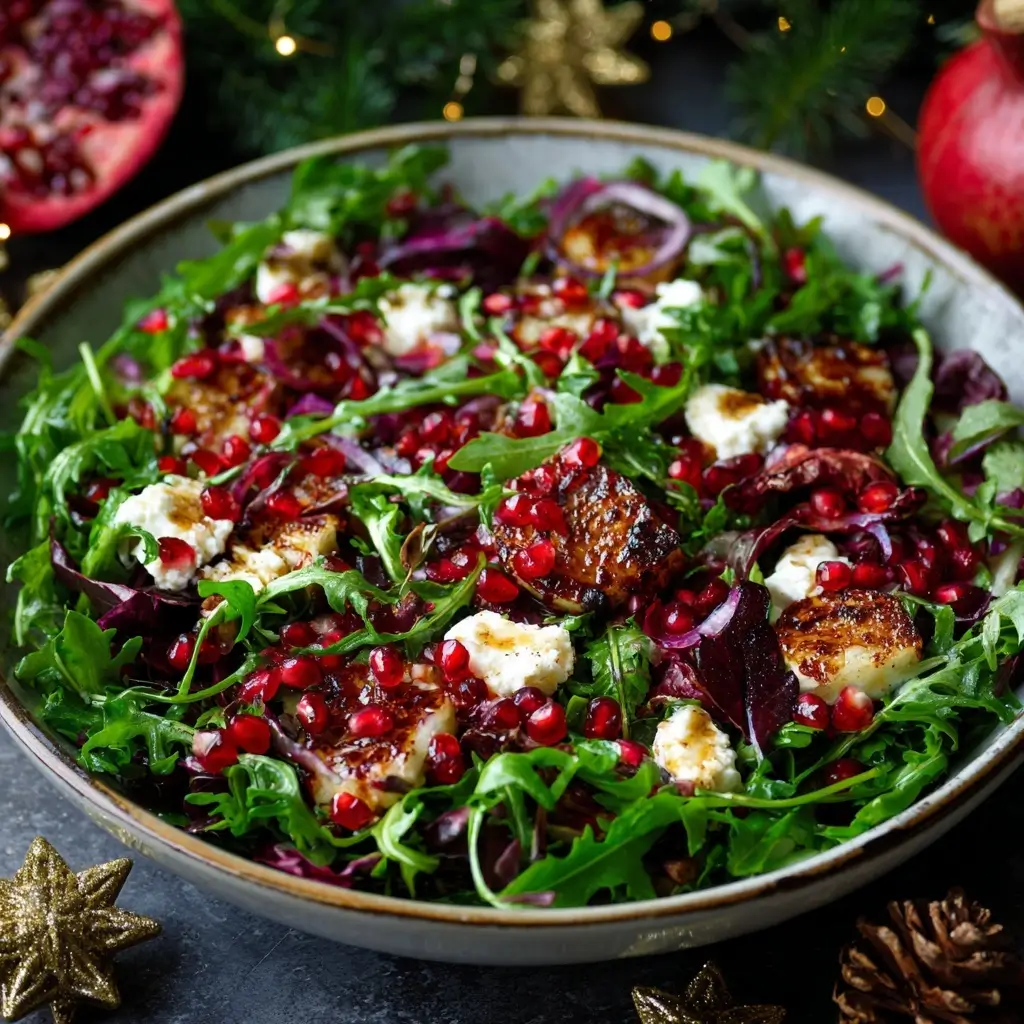
Christmas Salad with Pomegranate & Goat Cheese
The holiday season is a time for celebration, warmth, and indulgence — but that doesn’t mean you have to sacrifice freshness or flavor when it comes to your meals. Enter the Christmas Salad with Pomegranate & Goat Cheese: a vibrant, festive dish that captures the spirit of the holidays in every bite. This salad combines the sweet-tart burst of pomegranate seeds, the creamy tang of goat cheese, crunchy nuts, crisp greens, and a hint of citrus to create a show-stopping side dish or light entrée perfect for holiday gatherings, brunches, or even as a refreshing palate cleanser between rich courses. Elegant yet easy to prepare, this salad brings color, texture, and balance to your festive table, making it not just delicious but visually stunning too.
The History
While there’s no single documented origin for the “Christmas Salad with Pomegranate & Goat Cheese,” its roots can be traced back to seasonal culinary traditions across Europe and North America. Salads featuring winter produce like pomegranates, citrus, nuts, and aged cheeses have long been staples during the colder months, particularly around the holidays. Pomegranates, symbolic of abundance and prosperity in many cultures including Persian, Middle Eastern, and Mediterranean cuisines, are traditionally enjoyed during the winter solstice and New Year celebrations. Their jewel-like arils add both visual drama and nutritional value to festive dishes.
Goat cheese, with its origins dating back thousands of years to ancient pastoral communities, gained popularity in French cuisine and later spread globally for its creamy texture and mild acidity that pairs beautifully with fruits and nuts. The modern fusion of these ingredients into a celebratory salad likely emerged in the late 20th century as home cooks and chefs began embracing farm-to-table concepts, seasonal eating, and globally inspired flavors. Today, this salad has become a beloved staple at holiday tables — especially among those seeking a fresh counterpoint to heavy roasts, gravies, and desserts. Its rise in popularity reflects broader trends toward balanced, colorful, and plant-forward holiday menus without compromising on luxury or festivity.
Ingredients Breakdown
What makes this Christmas salad truly special is the thoughtful combination of textures and tastes — each ingredient plays a crucial role in building layers of flavor and visual appeal:
- Arugula (or mixed baby greens): Provides a peppery base that contrasts beautifully with the sweetness of fruit and richness of cheese.
- Pomegranate seeds (arils): Burst with juicy tartness, adding vibrant red color and antioxidant-rich nutrition.
- Goat cheese (chèvre): Creamy, slightly tangy, and melts subtly into warm elements if served with roasted components.
- Toasted walnuts or pecans: Deliver crunch and earthy depth while enhancing heart-healthy fats.
- Red onion (thinly sliced): Adds sharpness and color; soaking in cold water first reduces harshness.
- Dried cranberries or cherries: Introduce chewy texture and concentrated sweetness reminiscent of holiday baking.
- Orange segments or zest: Brighten the salad with citrus notes that complement both pomegranate and cheese.
- Olive oil and balsamic vinegar: Form the foundation of a simple yet elegant dressing.
- Honey or maple syrup: Balances acidity and enhances natural sweetness.
- Optional additions: Sliced apples, roasted beets, pears, or pomegranate molasses for extra flair.
Each component contributes to a harmonious blend of sweet, savory, creamy, tart, and crunchy — embodying the essence of seasonal cooking at its finest.
Step-by-Step Recipe
Creating this festive Christmas salad is easier than you might think. With just a few prep steps and attention to layering flavors, you’ll have a restaurant-worthy dish ready in under 30 minutes.
- Prepare the Greens: Wash 6 cups of fresh arugula or mixed baby greens thoroughly. Spin them dry using a salad spinner or pat gently with paper towels. Place in a large chilled salad bowl to keep crisp.
- Seed the Pomegranate: Cut the pomegranate in half horizontally and use the “tap-and-turn” method over a bowl: hold one half cut-side down and tap the back firmly with a wooden spoon to release the arils. Repeat with remaining halves. Remove any white pith and set aside ¾ cup of seeds.
- Toast the Nuts: In a dry skillet over medium heat, toast ½ cup of walnuts or pecans for 5–7 minutes, stirring frequently until fragrant and lightly golden. Let cool before chopping coarsely.
- Slice the Red Onion: Thinly slice ¼ cup of red onion. For milder flavor, soak slices in ice water for 10 minutes, then drain and pat dry.
- Segment the Orange: Use a paring knife to remove peel and pith from one orange, then cut between membranes to release individual segments. Chop slightly if desired.
- Crumble the Cheese: Break 4 oz of chilled goat cheese into small crumbles using a fork.
- Make the Dressing: In a small jar, combine ⅓ cup extra-virgin olive oil, 3 tablespoons balsamic vinegar, 1 tablespoon honey (or maple syrup), ½ teaspoon Dijon mustard, salt, and freshly ground black pepper. Shake well until emulsified.
- Assemble the Salad: Arrange the greens evenly in the serving bowl or platter. Scatter pomegranate arils, orange segments, red onion, dried cranberries, and toasted nuts over top. Drizzle lightly with dressing just before serving. Finish with generous dollops of goat cheese.
- Serve Immediately: Toss gently at the table so everyone can enjoy the vibrant colors before mixing. Serve chilled.
Tips
- Keep Ingredients Cold: Chill your serving plate or bowl beforehand to help maintain crispness, especially important during holiday buffets where food sits out longer.
- Toast Nuts Evenly: Watch closely while toasting — nuts burn quickly! Remove from pan immediately once golden and let cool completely before adding to salad.
- Balance Acidity: Taste your dressing before pouring — adjust honey or vinegar depending on how tart your pomegranate or oranges are.
- Avoid Soggy Greens: Do not overdress the salad. Add dressing gradually and toss only what you plan to eat right away.
- Cut Components Uniformly: Ensure all ingredients are roughly the same size for even bites and professional presentation.
- Use Fresh Citrus: Choose ripe, juicy oranges — blood oranges add an even deeper color and flavor during winter months.
- Prep Ahead: Most ingredients can be prepped up to a day in advance and stored separately in airtight containers in the fridge. Assemble just before serving.
- Add Warm Elements (Optional): For a more substantial meal, include warm roasted beets, sweet potatoes, or caramelized onions to contrast with cool greens.
Variations and Customizations
This Christmas salad is wonderfully adaptable based on dietary preferences, seasonal availability, or personal taste. Here are some creative twists to make it your own:
- Vegan Version: Omit goat cheese or replace with vegan feta or almond-based ricotta. Use maple syrup instead of honey in the dressing.
- Nut-Free Option: Swap walnuts for roasted sunflower or pumpkin seeds for crunch without allergens.
- Fruit Swaps: Try diced apples, sliced pears, mandarin segments, or fresh figs instead of or alongside pomegranate.
- Cheese Alternatives: Crumbled blue cheese, feta, burrata, or shaved Parmesan offer different flavor profiles — experiment to find your favorite.
- Grain Addition: Turn it into a heartier entrée salad by adding cooked farro, quinoa, or wild rice.
- Protein Boost: Top with grilled chicken, seared salmon, shrimp, or hard-boiled eggs for a complete meal.
- Herb Infusion: Add fresh mint, basil, or dill for aromatic brightness.
- Spice It Up: A pinch of cinnamon, nutmeg, or smoked paprika in the dressing adds warmth fitting the season.
- Roasted Vegetables: Roasted Brussels sprouts, carrots, or squash pair exceptionally well and enhance the wintery feel.
- Dressing Variants: Try lemon vinaigrette, pomegranate molasses dressing, or champagne vinegar for a lighter touch.
Health Considerations and Nutritional Value
Beyond its beauty and taste, this Christmas Salad with Pomegranate & Goat Cheese offers impressive health benefits, making it a guilt-free addition to your holiday menu.
- Pomegranates: Packed with antioxidants, particularly punicalagins and anthocyanins, which may support heart health, reduce inflammation, and boost immune function. One cup provides about 24% of daily vitamin C needs.
- Arugula: A nutrient-dense leafy green rich in vitamin K (essential for bone health and blood clotting), vitamin A, folate, and glucosinolates linked to cancer prevention.
- Nuts: Walnuts and pecans contain omega-3 fatty acids, fiber, protein, and antioxidants. Regular consumption is associated with improved cardiovascular health and cognitive function.
- Goat Cheese: Easier to digest than cow’s milk cheese for some people due to smaller fat molecules and lower lactose content. Also contains probiotics and essential minerals like calcium and phosphorus.
- Olive Oil: A cornerstone of the Mediterranean diet, known for its monounsaturated fats that promote healthy cholesterol levels and reduce risk of chronic disease.
- Low in Refined Sugars: Naturally sweet ingredients like fruit and a touch of honey mean no added processed sugars.
Per serving (approx. 1.5 cups, undressed), this salad contains approximately:
- Calories: 180–220 (depending on cheese and oil amount)
- Fat: 14–16g (mostly healthy unsaturated fats)
- Carbohydrates: 12–15g
- Fiber: 3–4g
- Protein: 5–7g
- Vitamin C: ~30% DV
- Vitamin K: ~60% DV
- Calcium: ~15% DV
For those watching sodium, choose low-salt cheese or reduce added salt in dressing. Diabetics can manage carbohydrate intake by adjusting dried fruit quantity and pairing with protein.
Ingredients
- 6 cups fresh arugula or mixed baby greens
- ¾ cup fresh pomegranate seeds (from 1 medium pomegranate)
- ½ cup toasted walnuts or pecans, chopped
- 4 oz soft goat cheese, crumbled
- ¼ cup thinly sliced red onion (soaked in ice water for 10 mins, optional)
- ⅓ cup dried cranberries or cherries
- 1 large orange, peeled and segmented
- 3 tablespoons balsamic vinegar
- ⅓ cup extra-virgin olive oil
- 1 tablespoon honey or pure maple syrup
- ½ teaspoon Dijon mustard
- Salt and freshly ground black pepper, to taste
- (Optional) Fresh herbs like mint or parsley for garnish
Directions
- In a large salad bowl, add the washed and dried arugula or mixed greens.
- Scatter the pomegranate seeds, orange segments, red onion slices, dried cranberries, and toasted nuts evenly over the greens.
- In a small mixing jar or bowl, whisk together balsamic vinegar, olive oil, honey, Dijon mustard, salt, and pepper until smooth and emulsified.
- Pour about half of the dressing over the salad and toss gently to coat leaves without crushing delicate ingredients.
- Top with generous spoonfuls of crumbled goat cheese.
- Garnish with fresh herbs if using.
- Serve immediately, offering extra dressing on the side for guests who prefer more.
Note: If preparing ahead, store dressed salad for no more than 15–20 minutes to prevent wilting. Keep components separate until assembly for best results.
FAQ
Can I make this salad ahead of time?
Yes, but with caution. You can prep individual ingredients (wash greens, toast nuts, segment citrus, make dressing) up to a day in advance and refrigerate them separately. Assemble the salad no more than 30 minutes before serving to preserve texture and appearance.
How do I store leftovers?
Leftover salad should be consumed within 24 hours. Store in an airtight container in the refrigerator, though expect some sogginess due to the dressing. Remove goat cheese before storing and add fresh when reheating or repurposing.
Is this salad suitable for vegetarians and vegans?
It’s naturally vegetarian. To make it vegan, substitute goat cheese with a plant-based alternative and ensure honey is replaced with maple syrup or agave.
Where can I find pomegranates?
Pomegranates are typically available from late fall through early spring (October–February) in most grocery stores. Look for firm, heavy fruits with uncracked skin.
Can I use bottled orange juice instead of fresh segments?
Fresh segments provide better texture and visual appeal. Bottled juice isn’t recommended for the salad itself but could be reduced into a glaze for the dressing if desired.
Why did my goat cheese melt?
Goat cheese softens easily. If serving with warm ingredients (like roasted vegetables), add the cheese just before serving or use chilled cheese straight from the fridge to maintain structure.
Can I freeze any part of this salad?
No — freezing will ruin the texture of greens, cheese, and fresh fruit. However, pomegranate arils can be frozen for future use in smoothies or oatmeal, though they lose crispness.
What wine pairs well with this salad?
A crisp white like Sauvignon Blanc or a light-bodied red such as Pinot Noir complements the acidity and richness. A sparkling rosé also makes a festive pairing.
Summary
The Christmas Salad with Pomegranate & Goat Cheese is a dazzling fusion of seasonal flavors, combining jewel-toned arils, creamy chèvre, toasted nuts, and zesty citrus over peppery greens. Elegant, nutritious, and bursting with holiday cheer, it’s the perfect centerpiece for any festive gathering.