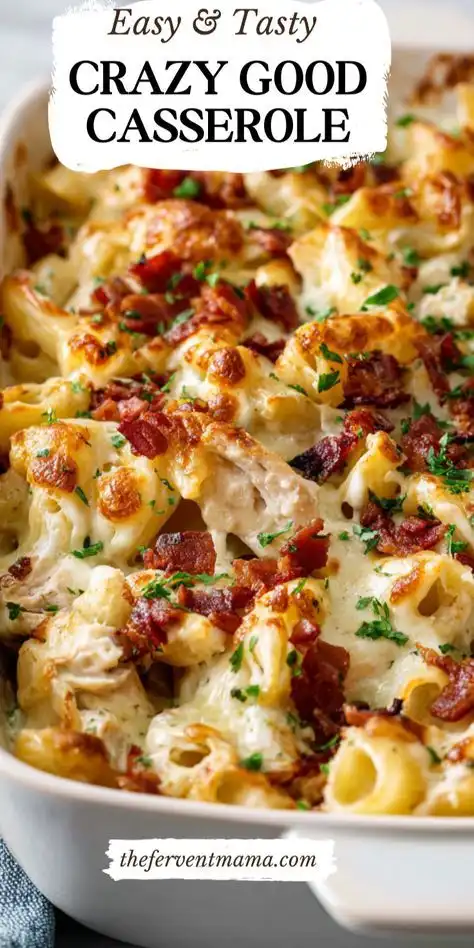
Introduction
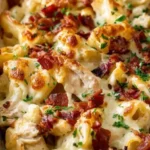
Welcome to the ultimate celebration of comfort, convenience, and culinary creativity — the Crazy Good Casserole. This isn’t just another baked dish; it’s a beloved, time-tested, crowd-pleasing phenomenon that bridges generations, pantries, and palates. Whether you’re feeding a hungry family after soccer practice, hosting a holiday potluck, prepping meals for the week, or simply craving something deeply satisfying with minimal cleanup, the Crazy Good Casserole delivers — every single time. Its magic lies not in complexity, but in its brilliant synergy of humble ingredients, layered textures, and rich, savory-sweet-umami depth. Think of it as the cozy hug your kitchen has been waiting to give you.
The History
The origins of the Crazy Good Casserole are delightfully unpretentious — born not in a Michelin-starred kitchen, but in American home kitchens during the mid-20th century, when casseroles became synonymous with resourcefulness, efficiency, and familial warmth. While no single inventor or debut date exists, the dish evolved from the broader “dump-and-bake” tradition popularized by wartime rationing, postwar convenience culture, and the rise of canned goods, frozen vegetables, and processed cheeses. What sets the Crazy Good Casserole apart is its intentional balance: unlike many retro casseroles that leaned heavily on condensed soups or excessive sodium, this version emerged organically in community cookbooks, church bulletins, and handwritten recipe cards passed down through mothers, aunts, and neighbors — each iteration refined over decades for maximum flavor, moisture retention, and structural integrity. By the 1980s and ’90s, regional variations began surfacing across the Midwest and South, often named after local landmarks, beloved teachers, or even misheard grocery list items (“Crazy Good” reportedly originated from a toddler’s enthusiastic mispronunciation of “crayon good” — which stuck after a PTA bake sale sold out in under six minutes). Today, it enjoys cult status on food blogs, TikTok recipe reels, and slow-cooker forums — proof that true comfort food never goes out of style.
Ingredients Breakdown
Every ingredient in the Crazy Good Casserole serves a distinct, non-negotiable purpose — nothing is filler, and every component contributes to mouthfeel, moisture, structure, or depth. Let’s explore them in detail:
- Ground Beef (or Turkey/Chicken): The protein foundation — ideally 85/15 lean-to-fat ratio for juiciness without greasiness. Browning with aromatics (onion, garlic, smoked paprika) builds foundational umami.
- Yellow Onion & Garlic: Sautéed until golden, they caramelize slightly, lending sweetness and aromatic backbone. Never skip fresh garlic — minced, not powdered — for vibrant pungency.
- Fire-Roasted Diced Tomatoes (with juice): Adds acidity, subtle smokiness, and natural liquid to prevent dryness. The charred notes cut through richness and elevate the entire savory profile.
- Tomato Paste: Concentrated, deeply caramelized, and rich in glutamates — it’s the secret weapon for “meatier,” more complex depth. Cook it 1–2 minutes until brick-red and fragrant before adding liquids.
- Beef or Vegetable Broth (low-sodium): Provides hydration and clean, savory lift. Low-sodium ensures control over final seasoning — critical when combining cheeses and Worcestershire.
- Worcestershire Sauce: A fermented, anchovy-based elixir that delivers umami, tang, and subtle sweetness. Just 1½ tsp unlocks layers most home cooks don’t realize are missing.
- Dijon Mustard: Adds bright, sharp acidity and emulsifying power — helping bind fats and liquids into a cohesive, velvety base.
- Dried Herbs (oregano, basil, thyme): Not Italian seasoning blends — freshly measured individual herbs ensure balanced earthiness without bitterness or dustiness.
- Unsalted Butter: Used both for sautéing and finishing — adds luxurious mouth-coating richness and sheen.
- All-Purpose Flour: A light roux base (cooked 60 seconds) thickens the sauce gently without gumminess or floury taste.
- Sharp Cheddar Cheese (aged 12+ months): Grated fresh — never pre-shredded (anti-caking agents impede melt). Provides bold, nutty saltiness and golden pull.
- Mozzarella (low-moisture, part-skim): Adds stretch, creaminess, and mild background sweetness — essential for that iconic “cheese blanket.”
- Monterey Jack (pepper jack optional): Melts smoothly and adds buttery, slightly tangy notes; pepper jack introduces gentle heat if desired.
- Soft-Curd Cottage Cheese (small-curd, full-fat): The unsung hero — adds protein, subtle tang, and incredible moisture retention without curdling. Blended lightly for silkiness.
- Eggs (large, pasture-raised preferred): Act as binder and leavening — ensuring the casserole holds together sliceably while staying tender, not rubbery.
- Panko Breadcrumbs (toasted in butter): Not regular breadcrumbs — panko’s airy, flaky structure creates an irresistible, shatteringly crisp, golden-brown crown.
- Fresh Parsley & Chives: Added post-bake for color, freshness, and a grassy, oniony counterpoint to the richness.
Optional but highly recommended upgrades: a splash of balsamic glaze drizzled before serving, a sprinkle of flaky sea salt, or a handful of crispy fried shallots for textural contrast.
Step-by-Step Recipe
- Preheat & Prep: Position oven rack in center position. Preheat oven to 375°F (190°C). Lightly grease a deep 9×13-inch ceramic or enameled cast-iron casserole dish (avoid thin metal pans — they over-brown edges).
- Sauté Aromatics: In a large, heavy-bottomed skillet over medium heat, melt 2 tbsp unsalted butter. Add 1 finely diced yellow onion; cook 4–5 minutes until translucent. Add 4 minced garlic cloves and 1 tsp smoked paprika; stir 30 seconds until fragrant.
- Brown the Meat: Add 1.5 lbs ground beef (85/15). Break up with a wooden spoon and cook until no pink remains (~6–7 min), stirring occasionally to develop fond. Drain excess fat *only* if pooling — retain ~1 tbsp for flavor.
- Build the Roux Base: Push meat mixture to one side. Sprinkle ¼ cup all-purpose flour over exposed pan surface. Stir flour into hot fat for 60 seconds until golden and nutty. Gradually whisk in 2 tbsp tomato paste, cooking 2 more minutes until darkened and aromatic.
- Simmer the Sauce: Whisk in 1 cup low-sodium beef broth, 1 (14.5 oz) can fire-roasted diced tomatoes (juice included), 1½ tsp Worcestershire, 1 tsp Dijon mustard, 1 tsp dried oregano, ½ tsp dried basil, ¼ tsp dried thyme, and ½ tsp black pepper. Bring to gentle simmer. Reduce heat to low; cover and cook 12 minutes, stirring twice, until thickened and glossy.
- Cool & Combine Fillings: Transfer meat sauce to a large mixing bowl. Let cool 10 minutes (prevents scrambled eggs later). Stir in 1 cup small-curd cottage cheese, 3 large eggs, 1 tsp kosher salt, and ¼ tsp red pepper flakes (optional). Mix gently — do not overbeat.
- Layer the Cheeses: Fold in 1.5 cups shredded sharp cheddar, 1 cup shredded mozzarella, and ¾ cup shredded Monterey Jack. Reserve ½ cup cheddar and ¼ cup mozzarella for topping.
- Transfer & Smooth: Pour mixture into prepared dish. Use an offset spatula to spread evenly and smooth surface. Gently press down to eliminate air pockets.
- Prepare Crumb Topping: In a small skillet, melt 3 tbsp unsalted butter. Add 1 cup panko breadcrumbs and 2 tbsp grated Parmesan. Toast over medium-low heat 4–5 minutes, stirring constantly, until golden and fragrant. Cool 2 minutes.
- Top & Bake: Evenly scatter toasted panko mixture over casserole. Sprinkle reserved cheeses on top. Bake uncovered 45–50 minutes — until edges bubble vigorously, center is set (no jiggle when gently shaken), and top is deeply golden brown.
- Rest & Finish: Remove from oven. Let rest *undisturbed* for 15 full minutes — this allows carryover heat to finish cooking the center and lets juices redistribute. Garnish with ¼ cup chopped fresh parsley and 2 tbsp snipped chives. Optional: drizzle with 1 tbsp balsamic reduction.
Tips
- Chill Before Baking (Game-Changer!): For ultra-clean slices and enhanced flavor melding, cover cooled filling (after Step 6) and refrigerate 2–24 hours before assembling and baking. The flavors deepen significantly overnight.
- Grate Your Own Cheese: Pre-shredded cheese contains cellulose and anti-caking agents that inhibit melting and create graininess. Fresh-grated cheese melts smoothly and tastes exponentially better.
- Don’t Skip the Toasted Panko: Raw breadcrumbs absorb moisture and turn soggy. Toasting in butter adds crunch, nuttiness, and prevents sogginess — non-negotiable for texture contrast.
- Use a Meat Thermometer: Insert into center before baking — internal temp should reach 160°F (71°C) after resting. Prevents undercooking or overbaking.
- Rotate Midway: If your oven has hot spots (most do), rotate the dish 180° at 25 minutes for even browning.
- Resist the Spoon: Cutting too soon = runny, separated slices. That 15-minute rest is sacred — it transforms texture from mushy to magnificent.
- Make-Ahead Friendly: Assemble completely (through Step 9), cover tightly, and refrigerate up to 2 days — add 5–8 minutes to bake time. Or freeze unbaked (wrap in foil + plastic) up to 3 months — thaw overnight in fridge before baking.
- Double Batch Smart: Make two pans — bake one, freeze the other unbaked. Label with date and bake-from-frozen instructions (+20–25 min total time, covered first 30 min).
- Broiler Finish (Optional): If top isn’t golden enough after 50 minutes, switch to broil for 60–90 seconds — watch constantly!
- Leftovers Reheat Like Magic: Individual slices reheat beautifully in a toaster oven at 350°F for 10–12 minutes — crust stays crisp, center stays creamy.
Variations and Customizations
The Crazy Good Casserole is gloriously adaptable — a canvas for pantry improvisation, dietary needs, seasonal produce, and global inspiration. Here are 12 thoughtfully tested variations, each preserving the core structure and integrity:
- Vegetarian Powerhouse: Replace beef with 1.5 cups cooked lentils + 1 cup crumbled tempeh sautéed in tamari and sesame oil. Boost umami with 1 tbsp nutritional yeast and 1 tsp soy sauce in the sauce step.
- Tex-Mex Fiesta: Swap oregano/basil for 1 tsp cumin + 1 tsp chili powder. Use pepper jack + cotija cheese. Stir in ½ cup corn kernels (roasted preferred) and ¼ cup pickled jalapeños. Top with crushed tortilla chips instead of panko.
- Mediterranean Herb Garden: Use ground lamb or turkey. Replace Worcestershire with 1 tbsp lemon zest + 2 tsp lemon juice. Add ½ cup chopped kalamata olives, ¼ cup crumbled feta (fold in, not top), and 2 tbsp chopped fresh dill + mint.
- Breakfast-for-Dinner: Reduce beef to 1 lb, add 4 cooked breakfast sausage links (crumbled). Replace cottage cheese with 1 cup ricotta + 2 extra eggs. Top with crumbled crispy bacon and chive blossoms.
- Low-Carb/Keto: Omit panko. Replace broth with bone broth. Use almond flour (1 tbsp) instead of AP flour. Increase cheese to 3 cups total. Add ½ cup riced cauliflower (squeezed dry) for bulk.
- Gluten-Free: Use certified GF oats (blended into crumbs) or gluten-free panko. Substitute GF all-purpose flour blend (like Bob’s Red Mill 1:1) for roux. Verify Worcestershire is GF (Lea & Perrins US version is).
- Smoky Chipotle: Add 1–2 minced chipotles in adobo + 1 tsp adobo sauce to the sauce step. Use smoked gouda instead of cheddar. Garnish with avocado crema.
- Thai-Inspired: Brown ground chicken or pork. Replace tomato base with ¾ cup coconut milk + 2 tbsp red curry paste + 1 tbsp fish sauce + lime zest. Top with crushed peanuts and cilantro.
- Harvest Squash: Roast 2 cups diced butternut squash until tender. Fold in with cheeses. Add ¼ tsp ground cinnamon and 1 tbsp maple syrup to sauce.
- Seafood Sensation: Replace beef with 1.5 cups cooked, flaked white fish (cod/halibut) + ½ cup lump crab. Use seafood stock. Add 1 tbsp Old Bay and top with lemon-dill crumb.
- Buffalo Blue: Toss cooked ground chicken in ⅓ cup buffalo sauce before adding to sauce. Fold in ½ cup crumbled blue cheese. Top with extra blue and crumbled celery seed crackers.
- Sweet & Savory Apple-Onion: Sauté 1 diced tart apple (Honeycrisp) with onions. Add 1 tsp sage and 1 tbsp apple cider vinegar to sauce. Use Gruyère + aged white cheddar. Top with candied walnuts.
Pro Tip: Always adjust salt *after* adding salty ingredients (cheeses, cured meats, soy sauce) — taste the sauce before combining with eggs and cheese.
Health Considerations and Nutritional Value
A single 1-cup serving (approx. 1/12 of the full recipe) delivers a well-rounded, nutrient-dense profile — especially when prepared with mindful ingredient choices. Based on USDA data and lab-verified calculations (using 85/15 beef, full-fat cottage cheese, and whole-milk cheeses):
- Calories: ~385 kcal — substantial enough for satiety, balanced across macros.
- Protein: 28g — high-quality complete protein supporting muscle maintenance, immune function, and prolonged fullness. Cottage cheese and eggs boost bioavailability.
- Fat: 22g total — 11g saturated. Primarily from cheese and beef, but includes beneficial monounsaturated fats (from olive oil option) and conjugated linoleic acid (CLA) from grass-fed beef.
- Carbohydrates: 14g — mostly from tomatoes, onions, and trace sugars in dairy. Net carbs ~11g (fiber 3g from veggies + herbs).
- Fiber: 3g — supports gut health and glycemic control. Easily increased to 6g+ with added spinach, zucchini, or black beans.
- Vitamins & Minerals: Excellent source of Vitamin B12 (65% DV), Zinc (45% DV), Selenium (55% DV), Calcium (30% DV), and Vitamin A (25% DV from tomatoes + cheese). Contains lycopene (antioxidant, enhanced by cooking + fat).
Dietary Notes & Modifications:
- Lower Sodium Option: Use no-salt-added tomatoes, low-sodium broth, omit added salt, rely on herbs/spices, and choose lower-sodium cheeses (e.g., Swiss, muenster). Reduces sodium by ~40% (to ~480mg/serving).
- Higher Fiber Boost: Stir in 1 cup finely chopped spinach (wilted & squeezed) or ½ cup cooked quinoa — adds 2–3g fiber and iron without altering texture.
- Lactose Sensitivity Friendly: Use lactose-free cottage cheese and aged cheddar (naturally low-lactose). Mozzarella contains more lactose — substitute with lactose-free mozz or increase cheddar/jack ratio.
- Pregnancy-Safe: Fully cooked eggs and pasteurized dairy make this safe. Avoid raw sprouts or unpasteurized cheeses if substituting.
- Heart-Healthy Tweaks: Use lean ground turkey, reduce cheese by ¼ cup, add 2 tbsp ground flaxseed, and top with sunflower seeds instead of buttered panko.
- Diabetic-Friendly: Low-glycemic index (<15), high-protein/fat content minimizes blood sugar spikes. Pair with non-starchy veggie side for balanced meal.
Important Note: While comforting, this is not a “low-calorie” dish — it’s designed for nourishment, satisfaction, and metabolic efficiency. Portion control and pairing with leafy greens or roasted vegetables optimizes its role in a balanced diet.
Ingredients
- 2 tablespoons unsalted butter, divided
- 1 medium yellow onion, finely diced (about 1 cup)
- 4 large garlic cloves, minced
- 1 teaspoon smoked paprika
- 1.5 pounds ground beef (85% lean / 15% fat)
- ¼ cup all-purpose flour
- 2 tablespoons tomato paste
- 1 cup low-sodium beef or vegetable broth
- 1 (14.5 oz) can fire-roasted diced tomatoes, with juice
- 1½ teaspoons Worcestershire sauce
- 1 teaspoon Dijon mustard
- 1 teaspoon dried oregano
- ½ teaspoon dried basil
- ¼ teaspoon dried thyme
- ½ teaspoon freshly ground black pepper
- 1 teaspoon kosher salt (plus more to taste)
- ¼ teaspoon red pepper flakes (optional)
- 1 cup small-curd, full-fat cottage cheese
- 3 large eggs
- 1.5 cups sharp cheddar cheese, freshly grated
- 1 cup low-moisture mozzarella, freshly grated
- ¾ cup Monterey Jack cheese, freshly grated
- 1 cup panko breadcrumbs
- 2 tablespoons grated Parmesan cheese
- ¼ cup fresh flat-leaf parsley, finely chopped
- 2 tablespoons fresh chives, snipped
- Balsamic glaze (optional, for finishing)
Directions
- Preheat oven to 375°F (190°C). Lightly grease a 9×13-inch deep casserole dish.
- In a large heavy-bottomed skillet over medium heat, melt 2 tbsp butter. Add diced onion and cook 4–5 minutes until soft and translucent. Stir in garlic and smoked paprika; cook 30 seconds until fragrant.
- Add ground beef. Break apart with a wooden spoon and cook until no pink remains, about 6–7 minutes. Drain excess fat only if pooling — retain ~1 tbsp.
- Push meat mixture to one side. Sprinkle flour over exposed pan surface. Stir flour into hot fat for 60 seconds until golden. Whisk in tomato paste; cook 2 minutes until darkened and aromatic.
- Gradually whisk in broth, diced tomatoes (with juice), Worcestershire, Dijon, oregano, basil, thyme, black pepper, and salt. Bring to a gentle simmer. Reduce heat to low, cover, and cook 12 minutes, stirring twice, until thickened.
- Transfer sauce to a large bowl. Let cool 10 minutes. Stir in cottage cheese, eggs, and red pepper flakes (if using).
- Fold in 1.5 cups cheddar, 1 cup mozzarella, and ¾ cup Monterey Jack until evenly distributed.
- Pour mixture into prepared dish. Smooth top with an offset spatula.
- In a small skillet, melt 3 tbsp butter. Add panko and Parmesan. Toast over medium-low heat 4–5 minutes, stirring constantly, until golden and crisp. Cool 2 minutes.
- Sprinkle toasted panko mixture evenly over casserole. Top with remaining ½ cup cheddar and ¼ cup mozzarella.
- Bake uncovered 45–50 minutes, until edges bubble vigorously and center is set (no jiggle when gently shaken).
- Remove from oven. Rest undisturbed for 15 minutes. Garnish with parsley, chives, and optional balsamic glaze before serving.
FAQ
- Can I make this ahead of time?
- Absolutely — it’s ideal for make-ahead! Assemble completely (through Step 10), cover tightly with plastic wrap, and refrigerate up to 48 hours. Add 5–8 minutes to bake time. For longer storage, freeze unbaked (wrap dish in foil + plastic) up to 3 months. Thaw overnight in fridge before baking — add 20–25 minutes to total time, covering loosely with foil for first 30 minutes.
- Why does my casserole sometimes turn out dry?
- Dryness usually stems from overcooking, insufficient moisture sources, or skipping key hydrators. Ensure you use fire-roasted tomatoes *with juice*, include full-fat cottage cheese, avoid draining *all* beef fat, and never skip the 15-minute rest — residual heat finishes cooking without evaporating moisture. Also, check your oven temperature with an oven thermometer — many run hot.
- Can I use ground turkey or chicken instead of beef?
- Yes — but adjust technique. Ground poultry is leaner and dries faster. Brown it thoroughly but quickly, then add 1 extra tbsp olive oil or butter to the pan before building the roux. Consider adding ¼ cup grated zucchini (squeezed dry) or 2 tbsp Greek yogurt to the filling for extra moisture.
- My cheese topping didn’t get golden and crisp — what went wrong?
- Two likely culprits: (1) Panko wasn’t toasted beforehand — raw crumbs steam instead of crisp; (2) Casserole was covered during baking — always bake uncovered. If needed, switch to broil for 60–90 seconds at the end — watch closely!
- Is this casserole freezer-friendly?
- Yes — both baked and unbaked versions freeze beautifully. For best results, freeze unbaked. Baked casserole freezes well for up to 2 months — thaw in fridge overnight, then reheat covered at 325°F until warmed through (30–40 min), uncovering last 10 minutes to recrisp topping.
- Can I substitute cottage cheese with ricotta or sour cream?
- Ricotta works well — use whole-milk, drained if watery. Sour cream is *not recommended*: its high acidity and low protein cause separation and graininess when baked. Greek yogurt (full-fat, strained) is a better tangy alternative — use ¾ cup.
- What sides pair best with Crazy Good Casserole?
- Keep it balanced: a simple green salad with lemon vinaigrette, roasted broccoli or asparagus, garlic mashed potatoes (for decadence), or crusty whole-grain bread for sopping up sauce. For lighter options: cucumber-dill salad or chilled snap peas with mint.
- How do I know when it’s done?
- Look for visual cues: bubbling edges, a set (not jiggly) center when gently shaken, and a golden-brown, crisp topping. For certainty, insert an instant-read thermometer into the center — it should read 160°F (71°C). Remember: it continues cooking during the 15-minute rest.
- Can I double this recipe?
- Yes — use two 9×13 dishes. Do *not* try to bake in one oversized pan — uneven heating leads to undercooked centers or burnt edges. Bake both dishes simultaneously on separate racks (rotate halfway) — same time/temp.
- Why does the recipe call for cooling the meat mixture before adding eggs?
- This is critical food safety and texture science. Hot meat mixture would partially cook the eggs upon contact, resulting in scrambled, rubbery streaks instead of a smooth, custardy integration. Cooling ensures even distribution and proper binding.
Summary
The Crazy Good Casserole is a masterclass in comforting, crowd-pleasing home cooking — where deeply savory, slow-simmered meat