Introduction
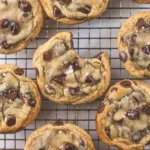
There’s a timeless magic in the perfect chocolate chip cookie—a golden-brown, crisp-edged wonder that yields to a tender, chewy center studded with pockets of molten, bittersweet chocolate. Crispy and chewy chocolate chip cookies represent the pinnacle of textural harmony in baking: the satisfying shatter of a delicate, caramelized perimeter giving way to a soft, slightly gooey, almost fudgy core. Unlike their uniformly soft or ultra-crisp cousins, this hybrid style delivers complexity in every bite—crunch that lingers, chew that satisfies, and rich chocolate that blooms with warmth. Whether enjoyed fresh from the oven with a glass of cold milk, stacked tall in a bakery display case, or tucked into a lunchbox for nostalgic comfort, these cookies embody balance, intention, and the quiet alchemy of simple ingredients transformed by precise technique. This guide isn’t just about following steps—it’s about understanding *why* each choice matters, from flour hydration to sugar ratios to chilling discipline—all in service of achieving that elusive, universally adored duality: crispy *and* chewy.
The History
The origin story of the chocolate chip cookie is as iconic as the cookie itself—and deeply rooted in American ingenuity and happy accident. In 1938, Ruth Wakefield, owner of the Toll House Inn in Whitman, Massachusetts, was preparing her popular Butter Drop Do cookies for guests. Running short on baker’s chocolate, she chopped up a Nestlé semi-sweet chocolate bar, expecting it to melt and disperse evenly into the dough like cocoa. To her surprise—and delight—the morsels held their shape, creating distinct, gooey pockets instead of a uniform brown hue. The resulting “Toll House Crunch Cookies” became an instant sensation. Nestlé struck a marketing goldmine: in 1939, they began imprinting the Toll House recipe directly onto their chocolate bar wrappers and soon launched the first pre-formed chocolate chips—revolutionizing home baking forever. While early versions leaned toward crispness (due to higher butter content and minimal chilling), the modern obsession with chewiness emerged gradually over decades—fueled by evolving preferences, scientific baking literacy (thanks to pioneers like Rose Levy Beranbaum and Harold McGee), and the rise of artisanal bakeries in the 1990s and 2000s. Today’s crispy-chewy ideal reflects a sophisticated synthesis of tradition and innovation: honoring Wakefield’s spirit of experimentation while applying rigorous understanding of gluten development, sugar crystallization, moisture retention, and thermal dynamics during baking.
Ingredients Breakdown
Every ingredient in a crispy-chewy chocolate chip cookie plays a non-negotiable, scientifically grounded role—not just flavor, but structure, texture, spread, browning, and mouthfeel. Here’s why each one is carefully selected and proportioned:
- All-Purpose Flour (2 ¼ cups / 280g): The structural backbone. Protein content (~10–11.7%) provides enough gluten for chew without toughness. Bread flour would over-develop elasticity, yielding rubbery edges; cake flour lacks sufficient strength, causing excessive spread and fragile, crumbly cookies. Sifting or whisking ensures even distribution and prevents dense pockets.
- Baking Soda (1 tsp): Not baking powder—this is critical. Baking soda (sodium bicarbonate) reacts instantly with acidic components (brown sugar’s molasses, yogurt if used, or even natural cocoa in dark chocolate) to produce carbon dioxide *early* in baking. This initial lift creates air pockets that contribute to a light, open crumb while promoting surface cracking and edge lift—key to crispness. It also accelerates Maillard browning, deepening color and nutty complexity at the edges.
- Unsalted Butter (1 cup / 227g, cold & cubed): Cold butter is essential for flakiness *and* controlled spread. As it melts slowly in the oven, steam forms between layers of dough, creating micro-layers that crisp at the surface while insulating the center. Melted butter yields flat, greasy, uniformly crisp cookies; softened (room-temp) butter creates more uniform chew—but sacrificing signature crisp edges. Cold butter + proper creaming = optimal dual texture.
- Granulated Sugar (¾ cup / 150g): Provides sweetness, but more importantly, it’s hygroscopic—drawing moisture from the dough surface during baking, encouraging rapid dehydration and caramelization at the edges. This is the primary driver of crispness, crunch, and that beautiful golden lace.
- Packed Dark Brown Sugar (¾ cup / 165g): Molasses-rich and moist, brown sugar adds acidity (for soda activation), deep caramel notes, and crucial moisture retention. Its humectant properties keep the center soft, chewy, and slightly fudgy—even days later. Using only brown sugar yields overly soft, puffy cookies; granulated alone yields brittle, thin wafers. Their 1:1 ratio is the golden mean.
- Large Eggs (2, cold): Cold eggs help maintain overall dough temperature. They provide emulsification (binding fat and water), structure (coagulating proteins), and moisture. Egg whites add slight chew and lift; yolks enrich with fat and lecithin, enhancing tenderness and mouth-coating richness. Skipping the chill step after adding eggs is a common mistake that leads to premature melting and loss of texture control.
- Pure Vanilla Extract (2 tsp): Not imitation—real vanilla adds floral, woody depth that complements chocolate’s bitterness and balances sweetness. Alcohol content also aids in even flavor dispersion.
- Fine Sea Salt (1 tsp): Enhances all flavors, suppresses cloying sweetness, and strengthens gluten network subtly. Flaky salt sprinkled *on top before baking* intensifies the crisp-salt contrast and encourages surface drying.
- High-Quality Semi-Sweet or Bittersweet Chocolate (12 oz / 340g, chopped): Chips vs. chunks matters. Pre-formed chips contain stabilizers (like soy lecithin and cocoa butter modifiers) that resist full melting—ideal for defined, glossy pools. Chopped chocolate bars (60–70% cacao) offer superior flavor complexity and variable melt patterns—some fully fluid, others retaining shape. Avoid low-cocoa “milk chocolate chips”—they burn easily and lack structural integrity. A mix of both (e.g., 8 oz chips + 4 oz chopped 68% bar) gives best of both worlds.
- (Optional but Recommended) Cornstarch (2 tbsp / 16g): A game-changer for chew. Cornstarch interferes with gluten formation, yielding a more tender crumb. It also absorbs excess moisture, preventing sogginess while contributing to a velvety, slightly denser chew—without making cookies cakey. Don’t skip it if ultimate chew is your goal.
Step-by-Step Recipe
- Chill Your Butter & Eggs: Place 1 cup unsalted butter (cut into ½-inch cubes) and 2 large eggs in the refrigerator for at least 30 minutes before starting. Cold fat is non-negotiable for texture control.
- Whisk Dry Ingredients: In a medium bowl, thoroughly whisk together 2 ¼ cups (280g) all-purpose flour, 1 tsp baking soda, 1 tsp fine sea salt, and 2 tbsp (16g) cornstarch. Set aside.
- Cream Butter & Sugars (Cold Method): In the bowl of a stand mixer fitted with the paddle attachment, combine cold cubed butter, ¾ cup (150g) granulated sugar, and ¾ cup (165g) packed dark brown sugar. Beat on medium-low speed for 2–3 minutes—just until combined and slightly sandy, *not* fluffy or pale. Over-creaming warms the butter and incorporates too much air, leading to puffiness instead of crisp edges.
- Incorporate Eggs & Vanilla: Add cold eggs one at a time, beating on low just until each is fully absorbed (about 15 seconds). Scrape down the bowl. Add 2 tsp pure vanilla extract and beat for another 10 seconds. Dough will look thick, grainy, and cohesive—not smooth.
- Gradually Add Dry Ingredients: With mixer on low, add dry ingredients in three parts, mixing only until *no streaks of flour remain*. Do not overmix—this develops gluten and causes toughness. Use a spatula for final folds to ensure even incorporation.
- Fold in Chocolate: Using a sturdy silicone spatula, gently fold in 12 oz (340g) high-quality chocolate (chips, chopped bar, or a blend) until evenly distributed. Some small flour pockets are okay; over-folding dries out the dough.
- Chill Dough—Twice: First Chill (Essential): Cover bowl tightly and refrigerate for *at least 2 hours, preferably 4–24 hours*. This solidifies butter, hydrates flour (improving flavor and texture), and allows sugars to dissolve partially—reducing spread and enhancing chew. Second Chill (For Ultimate Crisp Edges): After portioning (next step), freeze scooped dough balls for 15 minutes before baking. This extra insurance prevents immediate butter melt-on-contact with hot sheet.
- Portion & Prep: Line two large baking sheets with parchment paper or silicone mats (never greased bare metal—it causes uneven spread and burnt bottoms). Using a 3-tablespoon ice cream scoop (or ~2 oz/57g portions), portion dough into tight, round balls. Place 4 inches apart on sheets. Optional: Gently press down *very slightly* to create a disc-like shape—this promotes even edge crispness without flattening entirely.
- Preheat & Bake: Position oven racks in upper and lower thirds. Preheat oven to 375°F (190°C) for *at least 25 minutes*—a fully stabilized, hot oven ensures immediate set and rapid edge drying. Bake sheets one at a time (middle rack) for 11–13 minutes. Rotate pan halfway through. Cookies are done when edges are deeply golden brown, lacy, and set, while centers still look soft, puffed, and slightly underdone—*not* shiny or wet, but matte and just-set. They will continue to cook on the hot sheet.
- Cool Strategically: Let cookies rest on the hot baking sheet for exactly 5 minutes—this finishes the bake gently and sets the structure. Then, carefully transfer to a wire rack using a thin spatula. Cool completely (15–20 mins) before eating. Rushing this step traps steam and turns crisp edges soggy.
Tips
- Measure by Weight, Always: Volume measurements for flour vary wildly (up to 30% difference). A kitchen scale eliminates inconsistency—the single biggest cause of texture failure.
- Butter Temperature is Everything: If your butter feels pliable at room temp, it’s too warm. It should leave a slight indentation when pressed with a finger but not smear. Cut and refrigerate immediately after measuring.
- Don’t Skip the Double Chill: First chill hydrates and flavors; second chill (post-scoop freeze) is the crisp-edge secret weapon. Skipping either guarantees spread and loss of contrast.
- Oven Thermometer Required: Built-in oven thermostats are notoriously inaccurate. An oven thermometer confirms your 375°F is truly 375°F—too cool = pale, soft cookies; too hot = burnt edges, raw centers.
- Rotate & Swap Racks Mid-Bake: Even convection ovens have hot spots. Rotating ensures even browning; swapping top/bottom sheets halfway through evens out heat exposure.
- Underbake Relentlessly: Err on the side of underdone. Centers should look soft and puffed—not flat or shiny. They firm up dramatically during cooling. Overbaked cookies become uniformly hard and lose chew.
- Use Parchment or Silicone—Never Grease: Greased sheets cause excessive, uncontrolled spread and sticky, burnt undersides. Parchment provides ideal release and even browning.
- Cool on Rack, Not Counter: Trapping heat and steam under cookies on a solid surface rehydrates edges and kills crispness. Wire racks allow airflow underneath.
- Store for Texture Longevity: Keep cooled cookies in an airtight container with a slice of plain white bread. The bread releases moisture, keeping centers chewy for 4–5 days. For longer storage, freeze baked cookies (they thaw perfectly) or freeze dough balls for baking anytime.
- Warm Before Serving: For peak sensory experience, microwave individual cookies for 5–8 seconds. This briefly re-melts chocolate and softens the center while preserving crisp edges.
Variations and Customizations
The crispy-chewy foundation is incredibly versatile—adaptable for dietary needs, flavor adventures, or seasonal whims—*without compromising texture integrity*. Key principle: substitutions must preserve moisture balance, fat structure, and sugar ratios.
- Gluten-Free: Replace AP flour 1:1 with a *blend* (not single-flour) like King Arthur Measure-for-Measure or Bob’s Red Mill 1-to-1 Baking Flour. Add ½ tsp xanthan gum if not included. Increase chill time to 24 hours—GF flours hydrate slower.
- Vegan: Use cold, high-fat vegan butter (Miyoko’s or Earth Balance sticks—*not* tub spreads), flax eggs (2 tbsp ground flax + 5 tbsp water, chilled 15 mins), and dairy-free dark chocolate (Enjoy Life, Pascha). Add 1 tsp apple cider vinegar to activate soda fully.
- Reduced-Sugar: Replace ¼ cup granulated sugar with ¼ cup granulated erythritol or allulose (they caramelize like sugar). Keep full brown sugar for moisture/chew. Avoid stevia or monk fruit blends—they don’t contribute to browning or texture.
- Flavor Infusions: Add 1 tsp espresso powder (enhances chocolate), ½ tsp cinnamon + pinch cardamom (warmth), 1 tbsp orange zest + dark chocolate (bright contrast), or 2 tbsp toasted walnut pieces + ½ tsp flaky salt on top (nutty crunch).
- Textural Twists: Fold in ⅓ cup toasted oats (adds hearty chew), ¼ cup crushed pretzels (salty-crisp counterpoint), or 2 tbsp toasted sesame seeds (nutty aroma + subtle crunch).
- Seasonal Specials: Pumpkin Spice: Add 1 tsp pumpkin pie spice + 2 tbsp pumpkin purée (reduce butter by 1 tbsp). Peppermint: Fold in ¼ cup crushed candy canes + ½ tsp peppermint extract. Maple Pecan: Replace brown sugar with ¾ cup pure maple syrup (reduce butter by 2 tbsp) + 1 cup toasted pecans.
- Mini or Jumbo: For mini cookies (1 tbsp): Bake 7–9 mins at 375°F. For jumbo (¼ cup): Bake 14–16 mins—rotate halfway, tent with foil last 2 mins to prevent over-browning.
- Stuffed Surprise: Flatten a dough ball, place ½ tsp caramel or peanut butter in center, seal tightly, then chill 15 mins before baking. Ensures melty core without leakage.
Health Considerations and Nutritional Value
A realistic, nuanced look at crispy-chewy chocolate chip cookies—not as “health food,” but as a mindful indulgence rooted in ingredient quality and portion awareness.
- Nutritional Profile (Per Cookie, ~3.5 oz / 100g): Approx. 480 kcal | 28g total fat (17g sat) | 55g carbs (38g sugars) | 5g protein | 1g fiber. Values vary based on chocolate %, butter type, and add-ins. Dark chocolate (>70%) boosts flavonoids and antioxidants; nuts add healthy fats and protein.
- Sugar Consciousness: The granulated/brown sugar duo is functional—not merely sweet. Removing sugar entirely destroys texture (no crisp edges, no chew). However, reducing *total* sugar by 15–20% is possible with texture tweaks: increase cornstarch to 3 tbsp, add 1 tbsp Greek yogurt (adds tang/moisture), and extend chill time to 24 hours.
- Butter & Fat Quality: Grass-fed butter offers higher CLA (conjugated linoleic acid) and omega-3s. Ghee (clarified butter) adds rich, nutty depth and removes milk solids (slightly lower lactose). Coconut oil *cannot* substitute 1:1—it lacks water content and emulsifiers, ruining structure.
- Flour Options: Whole wheat pastry flour (50% swap) adds fiber and B-vitamins without overwhelming density. Oat flour (¼ cup) adds soluble fiber (beta-glucan) for satiety—but requires extra cornstarch to compensate for binding loss.
- Portion Control is Key: A single, well-made 3.5-oz cookie delivers profound satisfaction—more so than two smaller, mediocre ones. Serve with a small glass of whole milk (calcium + protein slows sugar absorption) or tart cherry juice (anti-inflammatory anthocyanins).
- Not “Diet-Friendly,” But Inclusive: These cookies are naturally egg-free adaptable (flax/chia), nut-free (omit add-ins), and soy-free (choose soy-free chocolate). Always label clearly for guests with allergies.
- Mindful Enjoyment: Savor slowly. Notice the crackle, the chew, the chocolate bloom. This practice enhances satiety signals and reduces likelihood of overconsumption far more than any “light” version ever could.
Ingredients
- 2 ¼ cups (280g) all-purpose flour, spooned & leveled
- 1 teaspoon baking soda
- 1 teaspoon fine sea salt
- 2 tablespoons (16g) cornstarch
- 1 cup (227g) unsalted butter, cold & cut into ½-inch cubes
- ¾ cup (150g) granulated sugar
- ¾ cup (165g) packed dark brown sugar (medium or dark)
- 2 large eggs, cold
- 2 teaspoons pure vanilla extract
- 12 ounces (340g) high-quality semi-sweet or bittersweet chocolate, chopped or chips (or a mix)
- Flaky sea salt, for sprinkling (optional but recommended)
Directions
- Place butter cubes and eggs in the refrigerator for at least 30 minutes before beginning.
- In a medium bowl, whisk together flour, baking soda, salt, and cornstarch. Set aside.
- In the bowl of a stand mixer fitted with the paddle attachment, combine cold butter, granulated sugar, and brown sugar. Beat on medium-low for 2–3 minutes, until just combined and sandy—do not over-cream.
- Add cold eggs one at a time, beating on low just until incorporated (15 seconds each). Add vanilla and beat 10 seconds more. Dough will be thick and grainy.
- With mixer on low, add dry ingredients in three additions, mixing only until no flour streaks remain. Scrape bowl as needed.
- Fold in chocolate with a spatula until evenly distributed.
- Cover bowl tightly and refrigerate dough for 4 hours—or up to 72 hours—for optimal flavor and texture.
- When ready to bake, line two large baking sheets with parchment paper. Scoop dough into 3-tablespoon (2 oz / 57g) balls. Place 4 inches apart. Optional: gently flatten each ball slightly into a disc. Freeze scooped dough for 15 minutes.
- Position oven racks in upper and lower thirds. Preheat oven to 375°F (190°C) for at least 25 minutes.
- Bake one sheet at a time on middle rack for 11–13 minutes, rotating halfway through, until edges are deep golden brown and lacy, and centers are puffed and just-set (not shiny).
- Let cookies cool on baking sheet for exactly 5 minutes, then transfer to a wire rack to cool completely (15–20 minutes).
- Store cooled cookies in an airtight container at room temperature for up to 5 days—or freeze for up to 3 months.
FAQ
- Why are my cookies flat and greasy?
- Most likely culprit: butter was too warm during creaming or dough wasn’t chilled long enough. Cold butter + thorough chilling is essential for controlled spread. Also check oven temperature—too low causes excessive melt before set.
- Can I use melted butter?
- No—if you want crispy edges and chewy centers. Melted butter creates cookies that spread aggressively, bake quickly, and lack layered structure. The cold-cream method is non-negotiable here.
- Why do you use baking soda instead of baking powder?
- Baking soda provides immediate lift and intense browning via Maillard reaction—critical for crisp edges. Baking powder’s double-acting nature delays gas production, yielding puffier, softer cookies with less defined edges.
- My cookies are crispy all the way through—how do I get more chew?
- Extend chill time to 24+ hours (hydration improves chew), ensure brown sugar is *packed*, verify you’re using cornstarch, and pull cookies from oven when centers still look softly puffed—not flat or set.
- Can I make dough ahead and bake later?
- Absolutely. Dough keeps beautifully refrigerated for 3–5 days, or frozen for up to 3 months. Scoop before freezing for grab-and-bake ease—bake straight from frozen, adding 1–2 minutes to bake time.
- Why do you recommend weighing ingredients?
- Flour volume varies up to 30% depending on how it’s scooped. A 10g error in flour can mean the difference between crisp-chewy perfection and dense, tough cookies. Scale = consistency.
- Can I substitute coconut oil or margarine?
- Coconut oil lacks water and milk solids, causing greasiness and poor browning. Margarine contains more water and stabilizers, leading to unpredictable spread and bland flavor. Stick with real, high-fat butter.
- How do I get those beautiful, cracked tops?
- Cracks form from rapid surface drying and internal steam pressure. Ensure oven is fully preheated, dough is cold, and avoid overmixing—tight gluten networks create tension that cracks as the cookie sets.
- My cookies spread too much even when chilled—what’s wrong?
- Check flour measurement (too little flour), butter temperature (was it truly cold?), and baking sheet—greased metal causes runaway spread. Also, old baking soda loses potency—replace every 6 months.
- Can I add nuts or dried fruit?
- Yes! Toast 1 cup walnuts or pecans and fold in with chocolate. For dried fruit (cranberries, cherries), chop finely and toss with 1 tsp flour first to prevent sinking. Reduce chocolate by 2 oz to maintain balance.
Summary
Crispy and chewy chocolate chip cookies are achieved through deliberate, science-informed choices: cold butter for layered crispness, a precise granulated-to-brown sugar ratio for edge caramelization and center moisture retention, double chilling for flavor development and spread control, and strategic baking at high heat for rapid surface set.
This isn’t just a recipe—it’s a masterclass in balancing opposites, where every step serves the dual-texture ideal: shatteringly crisp, deeply golden edges yielding to a tender, slightly fudgy, luxuriously chewy heart, studded with complex, molten chocolate.