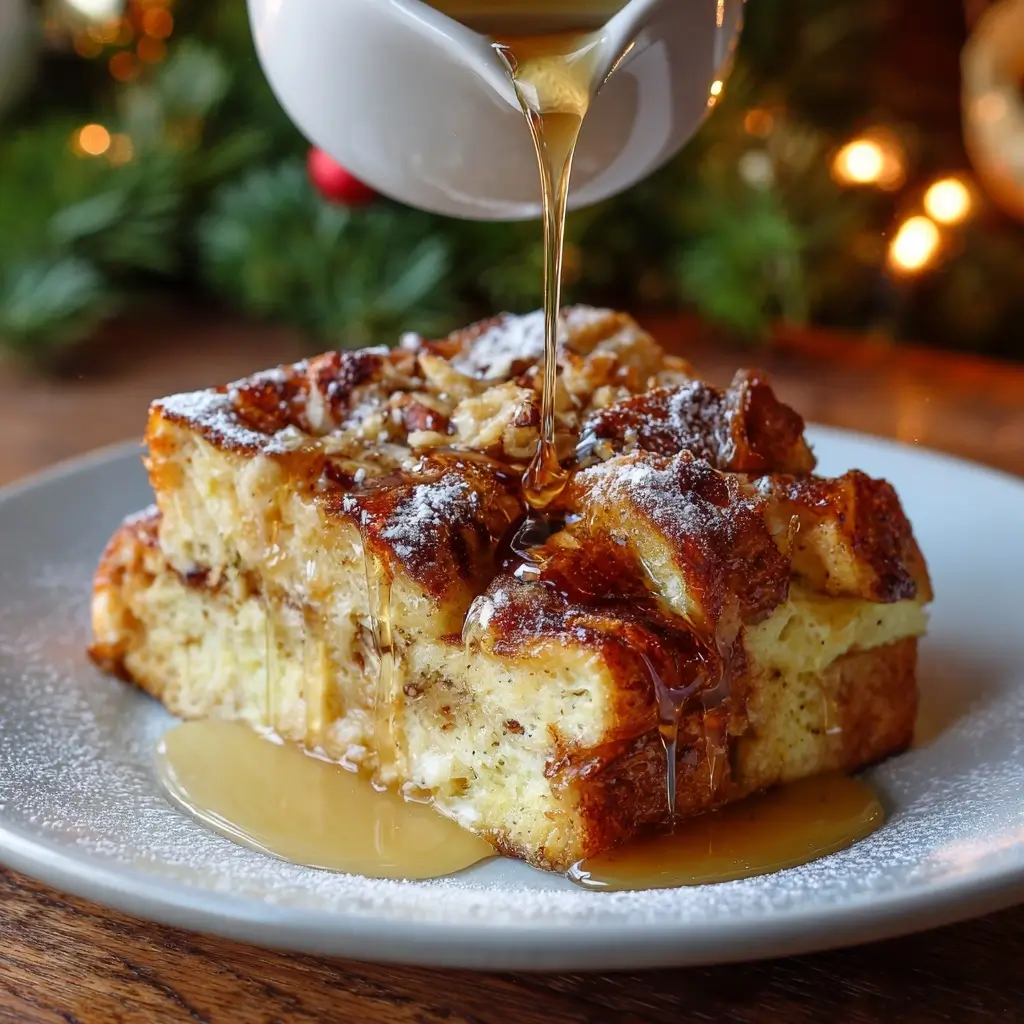
Eggnog French Toast Bread Pudding: A Decadent Holiday Delight
The History
Bread pudding has long been a staple of culinary resourcefulness, dating back to medieval England where it was originally known as “poor man’s pudding.” Made from stale bread, milk, sugar, and spices, it was an economical way to repurpose leftovers. Over time, this humble dessert evolved into a rich, indulgent treat embraced by cultures around the world. The addition of eggnog—a spiced, creamy beverage with roots in 18th-century England—into bread pudding is a relatively modern American innovation, likely emerging during the mid-20th century when eggnog became widely available in stores during the holiday season.
Eggnog itself has aristocratic origins, stemming from a posset—a warm, milky alcoholic drink enjoyed by European nobility. When it crossed the Atlantic, American colonists adapted it using locally available rum or bourbon, making it more accessible and festive. By combining eggnog with French toast-style custard and transforming it into a baked bread pudding, cooks created a luxurious hybrid dessert that captures the essence of holiday cheer. Today, Eggnog French Toast Bread Pudding stands as a beloved centerpiece at Christmas brunches, New Year’s Day feasts, and winter potlucks across North America.
Ingredients Breakdown
The magic of Eggnog French Toast Bread Pudding lies in its harmonious blend of rich, creamy, and spiced ingredients. Each component plays a crucial role in creating a dessert that’s both comforting and celebratory.
- Stale French Bread or Brioche (8 cups cubed): The foundation of any great bread pudding. Slightly dried-out bread absorbs the custard without disintegrating. Brioche adds extra richness due to its butter and egg content, while French bread offers a firmer structure.
- Good Quality Store-Bought or Homemade Eggnog (3 cups): The star ingredient. Eggnog provides a creamy base infused with nutmeg, cinnamon, vanilla, and egg yolks. Its sweetness and spice eliminate the need for additional flavorings in many recipes.
- Large Eggs (4): Essential for binding the custard and giving the pudding a firm yet tender texture when baked. They also contribute to the golden-brown top layer.
- Granulated Sugar (1/2 cup): Enhances sweetness, especially if using lightly sweetened eggnog. Can be adjusted based on preference or eggnog brand.
- Vanilla Extract (1 teaspoon): Deepens the aromatic profile and complements the natural vanilla notes in eggnog.
- Ground Nutmeg (1/2 teaspoon, plus extra for topping): A signature spice in eggnog, nutmeg adds warmth and depth. Freshly grated delivers superior flavor.
- Cinnamon (1/2 teaspoon): Adds cozy winter spice and enhances the overall holiday aroma.
- Butter (4 tablespoons, melted): Brushed between layers or mixed into the custard, butter enriches the flavor and promotes browning.
- Raisins or Currants (optional, 1/2 cup): Traditional additions that provide bursts of chewy sweetness. Golden raisins or dried cranberries can be substituted for variety.
- Rum or Bourbon (1–2 tablespoons, optional): Elevates the flavor with a sophisticated kick. Particularly popular in Southern and Caribbean-inspired versions.
- Whipped Cream or Vanilla Ice Cream (for serving): Provides a cool, creamy contrast to the warm pudding.
- Powdered Sugar (for dusting): Adds visual appeal and a touch of sweetness just before serving.
Step-by-Step Recipe
- Preheat the Oven: Begin by preheating your oven to 350°F (175°C). This ensures even baking and proper custard set.
- Prepare the Baking Dish: Generously grease a 9×13-inch baking dish or a deep gratin dish with softened butter or non-stick spray. For extra indulgence, sprinkle a thin layer of brown sugar or cinnamon-sugar mixture on the bottom.
- Prepare the Bread: Cut stale French bread or brioche into 1-inch cubes. If the bread isn’t stale, spread the cubes on a baking sheet and toast in the oven for 10–15 minutes at 300°F to dry them out slightly.
- Layer the Bread: Spread half of the bread cubes evenly in the prepared dish. If using raisins or dried fruit, scatter half over the bread. Add the remaining bread, then the rest of the fruit.
- Make the Custard: In a large mixing bowl, whisk together 4 large eggs until smooth. Gradually add 3 cups of eggnog, 1/2 cup granulated sugar, 1 teaspoon vanilla extract, 1/2 teaspoon ground nutmeg, 1/2 teaspoon cinnamon, and 4 tablespoons melted butter. Whisk vigorously until fully combined and slightly frothy. Stir in 1–2 tablespoons of rum or bourbon if desired.
- Pour and Soak: Slowly pour the custard mixture over the bread cubes, ensuring even coverage. Use a spatula to gently press down the top layer, helping the bread absorb the liquid. Let the mixture sit for 20–30 minutes at room temperature, pressing occasionally to ensure full saturation. For deeper flavor, refrigerate for up to 2 hours.
- Bake: Place the dish in the preheated oven and bake for 45–55 minutes, or until the center is set and the top is golden brown and slightly crisp. A knife inserted in the center should come out clean. If the top browns too quickly, cover loosely with aluminum foil.
- Cool and Serve: Remove from the oven and let rest for 10–15 minutes. Dust generously with powdered sugar, grate fresh nutmeg on top, and serve warm with whipped cream or vanilla ice cream.
Tips
- Use Stale Bread: Fresh bread turns mushy. Day-old or slightly toasted bread holds its shape better and absorbs custard evenly.
- Don’t Skimp on Soaking Time: Allowing the bread to soak thoroughly prevents dry pockets and ensures a custardy interior.
- Check Doneness Carefully: Overbaking leads to dryness; underbaking results in sogginess. The pudding should jiggle slightly in the center but not be liquidy.
- Add Texture: Sprinkle chopped pecans or walnuts on top before baking for a delightful crunch.
- Enhance Flavor: Infuse the eggnog custard with a strip of orange zest or a pinch of cloves for added complexity.
- Make Ahead: Assemble the pudding the night before, refrigerate, and bake in the morning for a stress-free holiday breakfast.
- Double the Batch: This dish freezes well. Cool completely, wrap tightly, and freeze for up to 3 months. Reheat in a 325°F oven.
Variations and Customizations
Eggnog French Toast Bread Pudding is incredibly versatile. Here are some creative twists to suit different tastes and dietary needs:
- Dairy-Free Version: Use coconut milk-based eggnog and dairy-free butter. Ensure the bread is vegan-friendly.
- Gluten-Free Option: Substitute gluten-free bread. Note: it may absorb custard faster, so reduce soaking time slightly.
- Chocolate Chip Eggnog Bread Pudding: Fold in 1 cup of semi-sweet chocolate chips before baking for a decadent twist.
- Spiked Version: Increase the rum or bourbon to 1/4 cup for a boozy adult treat. Alternatively, use Irish cream liqueur.
- Fruit-Forward: Replace raisins with diced apples, pears, or candied citrus peel for a fresher profile.
- Layered Presentation: Create a trifle-style version by alternating layers of pudding, whipped cream, and crushed amaretti cookies in a glass bowl.
- Savory-Sweet Twist: Add a pinch of sea salt and a few crumbled cooked bacon pieces for a bold, gourmet flavor contrast.
- Mini Individual Puddings: Bake in ramekins for elegant single servings—adjust baking time to 25–30 minutes.
Health Considerations and Nutritional Value
While undeniably rich, Eggnog French Toast Bread Pudding can be enjoyed mindfully. Here’s a breakdown per average serving (1/8 of a 9×13 pan):
- Calories: ~350–420 kcal
- Fat: 18–22g (mostly from eggs, butter, and eggnog)
- Saturated Fat: 9–12g
- Cholesterol: ~180mg (from eggs and eggnog)
- Carbohydrates: 40–48g (including 20–25g sugars)
- Protein: 8–10g (from eggs and dairy)
- Fiber: 1–2g
- Sodium: 200–300mg
Health Notes:
- This dish is high in saturated fat and sugar, so it’s best enjoyed in moderation, particularly for individuals managing cholesterol, diabetes, or heart health.
- To lighten it up: use low-fat eggnog, reduce sugar by 1/4 cup, substitute two egg whites for whole eggs, and omit added butter.
- Eggnog contains calcium and vitamin D from dairy, and eggs provide high-quality protein and choline, beneficial for brain health.
- For pregnant individuals or those avoiding raw eggs, ensure eggnog is pasteurized and the pudding is baked thoroughly to an internal temperature of 160°F.
Ingredients
- 8 cups stale French bread or brioche, cut into 1-inch cubes
- 3 cups eggnog (store-bought or homemade)
- 4 large eggs
- 1/2 cup granulated sugar
- 1 teaspoon vanilla extract
- 1/2 teaspoon ground nutmeg (plus extra for garnish)
- 1/2 teaspoon ground cinnamon
- 4 tablespoons unsalted butter, melted
- 1/2 cup raisins or dried currants (optional)
- 1–2 tablespoons dark rum or bourbon (optional)
- Whipped cream or vanilla ice cream, for serving
- Powdered sugar, for dusting
Directions
- Preheat oven to 350°F (175°C). Grease a 9×13-inch baking dish with butter or non-stick spray.
- Spread bread cubes in an even layer in the dish. Scatter raisins (if using) over the first layer, then add remaining bread and fruits.
- In a large bowl, whisk eggs until smooth. Add eggnog, sugar, vanilla, nutmeg, cinnamon, melted butter, and rum (if using). Whisk until fully blended.
- Pour custard evenly over the bread. Press down gently with a spatula to submerge all pieces. Let soak for 20–30 minutes at room temperature (or refrigerate up to 2 hours).
- Bake for 45–55 minutes, until puffed, golden, and a knife comes out clean. Cover with foil if top browns too quickly.
- Let cool 10–15 minutes. Dust with powdered sugar, grate fresh nutmeg on top, and serve warm with whipped cream or ice cream.
FAQ
Can I make this ahead of time?
Yes! Assemble the bread pudding the night before, cover, and refrigerate. Bake it the next day—perfect for holiday mornings.
Can I freeze Eggnog Bread Pudding?
Absolutely. Cool completely, wrap tightly in plastic and foil, and freeze for up to 3 months. Thaw in the fridge overnight and reheat at 325°F until warmed through.
What kind of eggnog should I use?
Any good-quality eggnog works. Spicy, premium brands enhance flavor. For homemade, ensure it’s thick and custard-like.
Why is my bread pudding soggy?
Likely causes: insufficient baking time, too much eggnog, or fresh bread that didn’t absorb properly. Always use stale bread and check internal doneness.
Can I use almond milk eggnog?
Yes, but note that plant-based eggnogs are often thinner and less rich. Look for fortified, creamy varieties and consider adding an extra egg for binding.
Is this recipe safe for kids?
If using store-bought pasteurized eggnog and baking thoroughly, yes. Omit alcohol or replace with vanilla extract or almond essence.
Can I make it without sugar?
You can reduce or substitute with erythritol or monk fruit, but keep in mind that sugar helps with texture and browning.
Summary
Eggnog French Toast Bread Pudding is the ultimate holiday comfort dessert, blending creamy eggnog, spiced custard, and buttery bread into a warm, aromatic masterpiece.
Perfect for breakfast, brunch, or dessert, this rich, make-ahead treat brings festive joy to any gathering with minimal effort and maximum flavor.