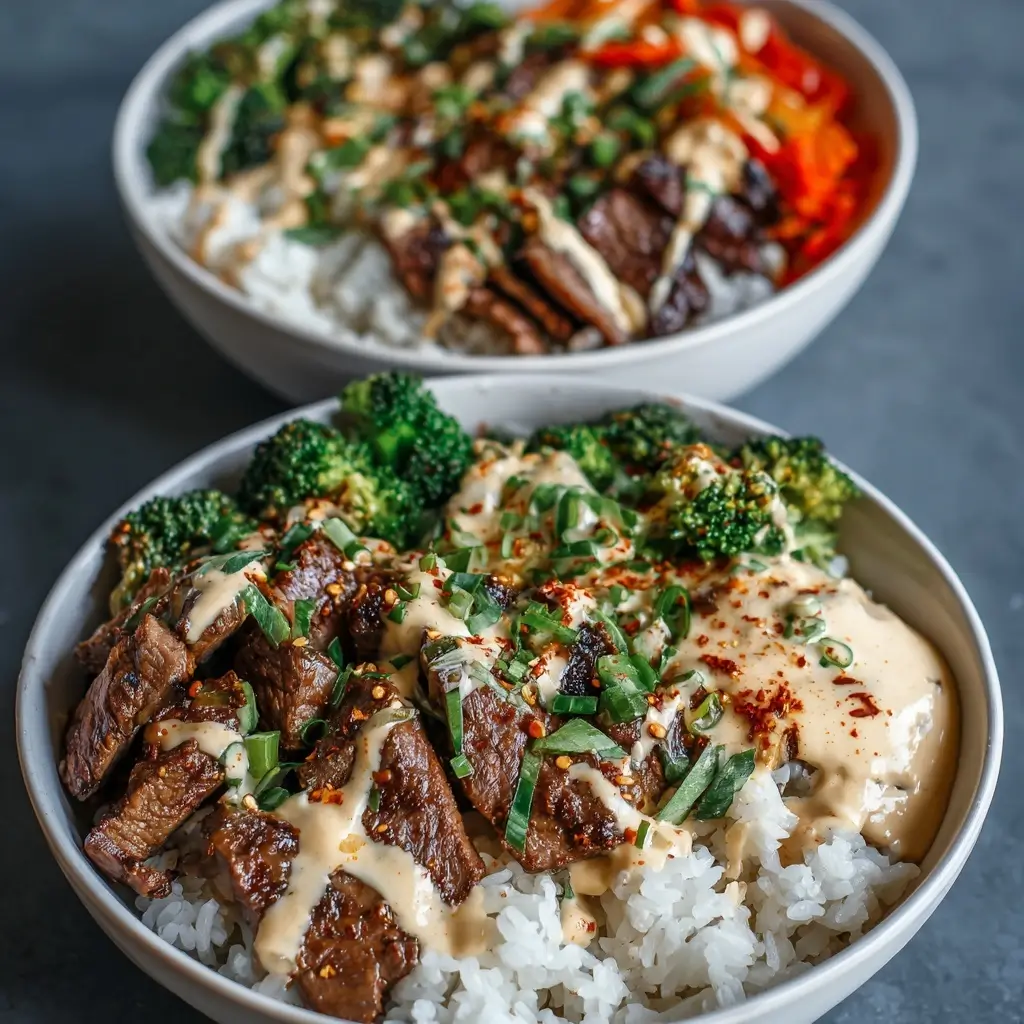
Korean BBQ Steak Rice Bowls with Spicy Cream Sauce
If you’re craving bold flavors, savory-sweet richness, and a touch of heat in every bite, then these Korean BBQ Steak Rice Bowls with Spicy Cream Sauce are your new go-to meal. This fusion dish combines the smoky, umami-laden essence of traditional Korean barbecue with tender grilled steak, fluffy jasmine rice, crisp vegetables, and an irresistible creamy-spicy sauce that ties everything together. Perfect for weeknight dinners or impressive enough for weekend entertaining, this bowl is not only satisfying but also highly customizable to suit various dietary preferences. Let’s dive deep into what makes this dish so extraordinary.
The History
Korean cuisine has long been celebrated for its complex layering of flavors—fermented, spicy, sweet, and savory—all harmonizing on the palate. The concept of Korean BBQ, known as gogi-gui, dates back centuries and involves grilling marinated meats at the table, often accompanied by an array of side dishes called banchan. While traditionally enjoyed communally, modern interpretations have brought Korean-inspired flavors into fast-casual formats like rice bowls and burritos, especially popularized in the U.S. during the 2010s with the rise of food trucks and fusion restaurants.
The Korean BBQ Steak Rice Bowl evolved from this trend, blending American-style grilled steak cuts (like ribeye or sirloin) with Korean marinades such as bulgogi or galbi sauces. Adding a spicy cream sauce—an innovation not found in traditional Korean cooking—brings a luxurious, cooling contrast that balances the heat and amplifies richness. This dish exemplifies culinary globalization: honoring tradition while embracing creativity and convenience.
Ingredients Breakdown
To create a balanced, flavorful, and texturally exciting Korean BBQ Steak Rice Bowl, each component plays a vital role:
- Steak: Ribeye or top sirloin works best due to their marbling and tenderness. Thinly sliced against the grain after cooking ensures melt-in-your-mouth texture.
- Rice: Jasmine or short-grain white rice provides a fragrant, slightly sticky base that absorbs the sauces beautifully.
- Korean BBQ Marinade: Soy sauce forms the backbone, enhanced by brown sugar for sweetness, sesame oil for nuttiness, garlic and ginger for pungency, and green onions for freshness.
- Spicy Cream Sauce: A blend of mayonnaise or Greek yogurt, gochujang (Korean red chili paste), rice vinegar, honey, and toasted sesame oil creates a luscious, tangy, and spicy condiment.
- Toppings: Julienned carrots, cucumber ribbons, shredded lettuce or cabbage, pickled radish, kimchi, sliced green onions, and toasted sesame seeds add crunch, acidity, and visual appeal.
- Garnishes: Fresh cilantro, extra gochujang drizzle, nori strips, or a fried egg can elevate the bowl further.
Optional additions include sautéed mushrooms, roasted broccoli, or avocado slices for added creaminess and nutrition.
Step-by-Step Recipe
- Marinate the Steak: In a bowl, whisk together ¼ cup soy sauce, 2 tablespoons brown sugar, 1 tablespoon sesame oil, 3 minced garlic cloves, 1 tablespoon grated ginger, and 2 chopped green onions. Place 1 pound of thinly sliced steak (about ½ inch thick) in a resealable bag or container and pour the marinade over it. Seal and refrigerate for at least 1 hour, preferably 4–6 hours for deeper flavor.
- Cook the Rice: Rinse 1 cup of jasmine rice until water runs clear. Combine with 1¾ cups water in a pot or rice cooker. Bring to a boil, reduce heat, cover, and simmer for 15 minutes. Remove from heat and let sit covered for 10 minutes. Fluff with a fork before serving.
- Grill the Steak: Heat a grill pan or skillet over high heat. Add a small amount of oil. Remove steak from marinade (shake off excess) and sear for 2–3 minutes per side until caramelized and cooked to medium doneness. Let rest for 5 minutes, then slice thinly against the grain.
- Prepare the Spicy Cream Sauce: In a small bowl, mix ½ cup mayonnaise (or Greek yogurt), 2 tablespoons gochujang, 1 tablespoon rice vinegar, 1 teaspoon honey, 1 teaspoon sesame oil, and a pinch of salt. Adjust spice and sweetness to taste. Chill until ready to use.
- Assemble the Bowls: Divide cooked rice among four bowls. Arrange grilled steak slices over the rice. Top with carrots, cucumbers, cabbage, kimchi, and green onions. Drizzle generously with spicy cream sauce. Finish with a sprinkle of toasted sesame seeds and optional garnishes like a soft-boiled or fried egg.
- Serve Immediately: Enjoy while warm for the best flavor and texture combination.
Tips
- Don’t Over-Marinate Tougher Cuts: While longer marination enhances flavor, acidic ingredients like soy sauce can start to break down proteins if left too long. Stick to 6 hours max unless using a very tender cut.
- Slice Against the Grain: This shortens muscle fibers, making the steak easier to chew and more tender.
- Use Cold Rice for Fried Variations: If turning this into a Korean BBQ fried rice bowl, use day-old chilled rice to prevent mushiness.
- Bloom the Gochujang: For deeper flavor in the sauce, lightly toast the gochujang in a dry pan for 30 seconds before mixing into the cream base.
- Balance the Heat: Gochujang varies in spiciness between brands. Taste as you go and adjust with honey or yogurt to balance the fire.
- Prep Ahead: Marinate the steak and cook rice the night before to cut down weekday prep time. Store components separately in airtight containers.
Variations and Customizations
This recipe is incredibly adaptable based on dietary needs, ingredient availability, or personal taste:
- Vegetarian/Vegan: Replace steak with marinated tofu, tempeh, or portobello mushrooms. Use vegan mayo and maple syrup instead of honey in the sauce.
- Low-Carb/Keto: Swap rice for cauliflower rice or shirataki noodles. Increase healthy fats with avocado and extra sesame oil.
- Gluten-Free: Substitute tamari or coconut aminos for soy sauce. Ensure gochujang is certified gluten-free (some contain wheat).
- Spice Level Control: Reduce or omit gochujang for mild versions; add sriracha or fresh chilies for extra heat.
- Protein Swaps: Try bulgogi-style ground beef, grilled chicken, or even shrimp marinated in the same sauce.
- Bowled vs. Burrito Style: Wrap everything in a tortilla or lettuce leaves for a handheld version.
- Add Umami Boosters: Include sautéed shiitake mushrooms, miso paste in the marinade, or a splash of fish sauce for depth.
Health Considerations and Nutritional Value
While undeniably delicious, it’s important to consider how this dish fits into a balanced diet:
- Calories: A typical serving ranges from 600–800 calories depending on portion size, steak fat content, and sauce quantity.
- Protein: High-quality protein from steak supports muscle maintenance and satiety (~30–40g per serving).
- Fats: Healthy fats come from sesame oil and marbled steak, but moderation is key. Opt for leaner cuts or plant-based proteins to reduce saturated fat.
- Carbohydrates: Primarily from rice and sugar in the marinade/sauce. Choose brown rice or cauliflower rice to increase fiber and lower glycemic impact.
- Sodium: Soy sauce and gochujang are high in sodium. Use low-sodium soy sauce and limit added salt to manage blood pressure concerns.
- Probiotics: Kimchi adds beneficial gut bacteria, aiding digestion and immunity.
- Antioxidants & Phytonutrients: Vegetables and gochujang (made from chili peppers) provide capsaicin, vitamins A and C, and anti-inflammatory compounds.
To make this dish healthier:
- Reduce sugar in marinade using monk fruit or stevia alternatives.
- Use Greek yogurt instead of mayo for the sauce to cut calories and add protein.
- Increase vegetable volume to boost fiber and micronutrient intake without adding many calories.
- Control portion sizes—stick to 4 oz of steak and ¾ cup rice per serving.
Ingredients
For the Korean BBQ Steak:
- 1 lb ribeye or top sirloin steak, thinly sliced
- ¼ cup soy sauce (or tamari for gluten-free)
- 2 tbsp packed brown sugar (or coconut sugar)
- 1 tbsp toasted sesame oil
- 3 cloves garlic, minced
- 1 tbsp fresh ginger, grated
- 2 green onions, chopped
For the Spicy Cream Sauce:
- ½ cup mayonnaise (or plain Greek yogurt)
- 2 tbsp gochujang (Korean chili paste)
- 1 tbsp rice vinegar
- 1 tsp honey (or maple syrup)
- 1 tsp toasted sesame oil
- Pinch of salt
For Assembly:
- 2 cups cooked jasmine rice (or brown/cauliflower rice)
- 1 cup julienned carrots
- 1 cup thinly sliced cucumber
- 1 cup shredded napa cabbage or romaine
- ½ cup kimchi
- ¼ cup sliced green onions
- 2 tbsp toasted sesame seeds
- Optional: fried egg, avocado slices, nori strips
Directions
- In a medium bowl, combine soy sauce, brown sugar, sesame oil, garlic, ginger, and green onions. Whisk well. Pour over sliced steak in a zip-top bag or shallow dish. Seal and marinate in the refrigerator for 1–6 hours.
- While steak marinates, cook rice according to package instructions. Set aside.
- Heat a large skillet or grill pan over high heat. Remove steak from marinade (discard leftover marinade) and cook for 2–3 minutes per side until browned and cooked through. Transfer to a cutting board, rest 5 minutes, then slice thinly across the grain.
- Make the spicy cream sauce: In a small bowl, whisk together mayonnaise, gochujang, rice vinegar, honey, sesame oil, and salt until smooth. Taste and adjust seasoning. Refrigerate until serving.
- To assemble bowls: Divide rice among four serving bowls. Top with sliced steak, carrots, cucumber, cabbage, kimchi, and green onions. Drizzle with spicy cream sauce. Garnish with sesame seeds and any additional toppings like a fried egg or avocado.
- Serve immediately while warm. Store leftovers in airtight containers in the fridge for up to 3 days.
FAQ
Can I make this ahead of time?
Yes! Marinate the steak and cook the rice up to one day in advance. Store separately. Assemble just before eating to maintain texture.
What can I use instead of gochujang?
Gochujang is essential for authentic flavor, but in a pinch, mix sriracha with a little miso paste and sugar. However, the depth will differ.
Is this dish spicy?
The spicy cream sauce brings moderate heat, but it’s balanced by creaminess. Adjust gochujang amount to preference or serve sauce on the side.
Can I use frozen vegetables?
Fresh is best for crunch, but thawed and drained frozen peas or edamame can work in a pinch. Avoid frozen carrots/cucumbers as they become soggy.
How do I store leftovers?
Keep components separate in airtight containers in the fridge for up to 3 days. Reheat steak and rice gently; add fresh veggies and sauce when serving.
Can I grill the steak outdoors?
Absolutely! Grilling imparts a smoky flavor that complements the marinade perfectly. Just be careful not to overcook thinner slices.
Summary
Korean BBQ Steak Rice Bowls with Spicy Cream Sauce deliver an explosion of sweet, savory, smoky, and spicy flavors in a convenient, customizable format. Packed with protein, vibrant vegetables, and a creamy kick, this dish brings restaurant-quality excitement to your kitchen table.