Introduction
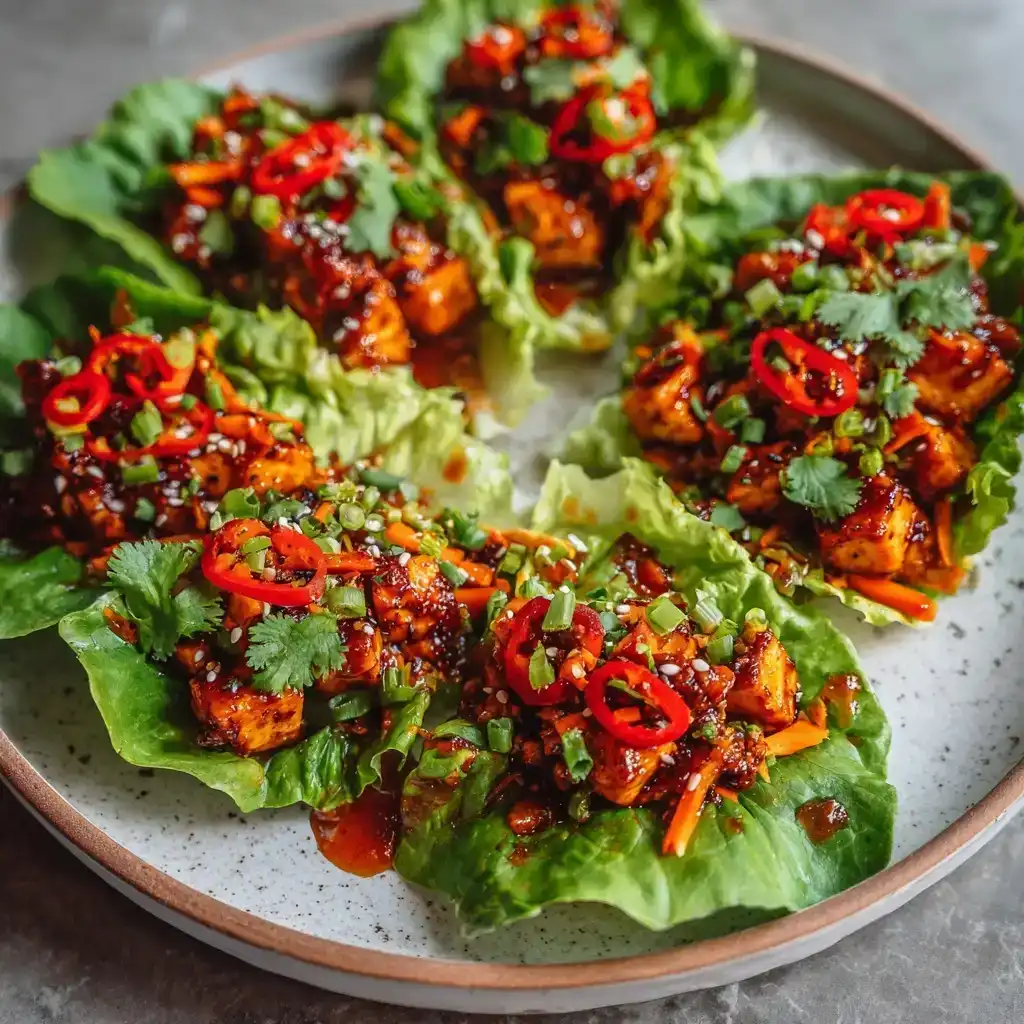
Welcome to the vibrant, bold, and refreshingly crisp world of Korean Spicy Tofu Lettuce Wraps—a modern fusion dish that marries the deep umami richness of Korean gochujang with the clean, cooling crunch of fresh lettuce and the tender, protein-packed heartiness of pan-seared tofu. More than just a meal, this dish embodies the Korean culinary philosophy of *bap-sang*—balanced harmony—where heat, sweetness, acidity, saltiness, and freshness coexist in perfect equilibrium. Whether you’re seeking a weeknight dinner that’s ready in under 30 minutes, a plant-forward option for Meatless Mondays, or an elegant yet approachable appetizer for entertaining, these wraps deliver explosive flavor without compromise. Light yet deeply satisfying, nourishing yet indulgent, they’re a testament to how thoughtful ingredient layering and mindful technique can transform simple pantry staples into something extraordinary.
The History
Korean Spicy Tofu Lettuce Wraps don’t appear in ancient royal court records—but their roots run deep through centuries of Korean food culture. Lettuce wraps (*ssam*) trace back to the Joseon Dynasty (1392–1897), where nobles and commoners alike enjoyed grilled meats and seasoned vegetables wrapped in leafy greens like red leaf lettuce, perilla (*kkaennip*), and steamed cabbage. This practice wasn’t just about flavor—it was functional: the cool, fibrous leaves helped neutralize the richness of fatty meats and aided digestion. Tofu (*dubu*), introduced to Korea from China around the 10th century, became a dietary cornerstone due to its affordability, versatility, and alignment with Buddhist vegetarian traditions. Over time, regional variations emerged—especially in the southern provinces where spicy ferments flourished. The modern iteration of spicy tofu wraps gained momentum in the 2000s alongside Korea’s global food renaissance, propelled by viral K-food blogs, cooking shows like *Baek Jong-won’s Food Truck*, and the rise of health-conscious, gluten-free, and vegan dining trends. Today, chefs in Seoul’s Hongdae district serve deconstructed ssam bowls with crispy tofu and house-made gochujang; LA’s Koreatown pop-ups reinvent them with black garlic aioli and shiso; and home cooks worldwide adapt them using accessible ingredients—proving that tradition evolves not by erasing the past, but by honoring its principles with contemporary creativity.
Ingredients Breakdown
Every element in this dish serves a distinct sensory and functional role—no ingredient is arbitrary. Here’s what makes each component indispensable:
- Tofu (Extra-Firm or Medium-Firm): Chosen for its ability to hold shape during high-heat cooking while absorbing marinade deeply. Pressing removes excess water, allowing superior browning and texture contrast—crisp exterior, creamy interior.
- Gochujang (Korean Fermented Chili Paste): The soul of the dish. A complex blend of fermented soybeans, glutinous rice, red chili powder, and salt, it contributes deep umami, slow-building heat, subtle sweetness, and rich, earthy funk. Authentic brands like Chung Jung One or Sunchang are non-negotiable for layered flavor.
- Gochugaru (Korean Red Chili Flakes): Adds bright, fruity heat and vivid crimson color. Unlike generic cayenne, gochugaru has a nuanced smokiness and mild pungency—essential for balancing gochujang’s intensity.
- Soy Sauce (Low-Sodium Preferred): Provides savory depth and salt balance. Korean-style soup soy sauce (*guk-ganjang*) adds even more complexity, but regular low-sodium soy works beautifully.
- Rice Vinegar & Lime Juice: Acidity is critical—not just for brightness, but for cutting through fat and amplifying other flavors. Rice vinegar lends delicate sweetness; lime adds zesty citrus lift.
- Garlic & Fresh Ginger: Minced finely (not powdered) for aromatic potency. Garlic brings pungent warmth; ginger offers peppery freshness and digestive benefits.
- Sesame Oil (Toasted): Used *only at the end*—never cooked—preserving its nutty, fragrant volatile compounds. It’s the aromatic “finish,” not the base oil.
- Green Onions & Toasted Sesame Seeds: Textural and visual punctuation. Scallions offer grassy sharpness; sesame seeds add nutty crunch and visual appeal.
- Lettuce (Butter, Red Leaf, or Little Gem): Must be chilled, dry, and pliable—not brittle. Butter lettuce provides delicate sweetness and cup-like structure; red leaf adds peppery nuance; Little Gem offers sturdy crunch. Avoid iceberg—it lacks flavor and structural integrity.
- Optional but Recommended Enhancers: Pickled radish (*danmuji*) for tangy-sweet contrast; kimchi (well-drained) for fermented depth; roasted peanuts or cashews for textural counterpoint; microgreens or shiso for herbal sophistication.
Step-by-Step Recipe
- Press the Tofu (15–30 minutes): Remove tofu from packaging and drain. Wrap tightly in several layers of clean paper towels or a lint-free kitchen towel. Place on a plate, top with another plate, and weight with a heavy can or skillet. Let sit to extract moisture—this ensures maximum surface area for caramelization and prevents steaming.
- Prepare the Spicy Tofu Sauce (5 minutes): In a small bowl, whisk together 3 tbsp gochujang, 1 tbsp gochugaru, 2 tbsp low-sodium soy sauce, 1 tbsp rice vinegar, juice of ½ lime, 1 tsp grated fresh ginger, 2 minced garlic cloves, 1 tsp brown sugar (or maple syrup for vegan), and ½ tsp black pepper. Set aside—letting it rest allows flavors to meld.
- Cut & Dry Tofu (2 minutes): Unwrap pressed tofu and pat *very* dry with fresh paper towels. Cut into ¾-inch cubes or ½-inch thick triangles for optimal bite and surface-to-volume ratio.
- Pan-Seal the Tofu (8–10 minutes): Heat 1½ tbsp neutral oil (like grapeseed or avocado) in a wide nonstick or well-seasoned cast-iron skillet over medium-high heat until shimmering. Add tofu in a single layer—do not crowd. Cook undisturbed for 3–4 minutes until golden-brown and crusty. Flip gently with a thin spatula and repeat on remaining sides until all surfaces are deeply caramelized. Reduce heat to medium if browning too quickly.
- Glaze & Simmer (4–5 minutes): Pour the prepared sauce over hot tofu. Stir gently to coat, then reduce heat to low. Let simmer uncovered for 3–4 minutes, stirring occasionally, until sauce thickens into a glossy, clingy glaze and coats each piece evenly. Avoid boiling vigorously—it can break down tofu texture. Optional: Add 1 tsp water if sauce thickens too fast.
- Finish with Aromatics (1 minute): Remove from heat. Stir in 1 tsp toasted sesame oil and 1 tbsp thinly sliced green onions. Let cool slightly—warm (not piping hot) filling prevents wilting the lettuce.
- Prep the Lettuce (3 minutes): Wash lettuce leaves thoroughly in cold water. Spin or pat *completely dry*—any moisture dilutes the sauce and causes slipping. Chill leaves in the fridge for 10 minutes before serving for extra crispness and structural integrity.
- Assemble with Intention (2 minutes): Place 1–2 warm tofu pieces in the center of each leaf. Top with a pinch of toasted sesame seeds, extra scallions, optional pickled radish slivers, and a tiny wedge of lime. Fold like a soft taco—cupping with fingers—and enjoy immediately for optimal temperature and texture contrast.
Tips
- Pressing Matters—But Don’t Over-Press: 15 minutes yields ideal texture; 45+ minutes can make tofu overly dense and rubbery. For speed, use a tofu press—or improvise with two plates and a heavy book.
- Sauce Consistency is Key: If your gochujang is very thick (common in winter), warm the jar in hot water for 2 minutes before measuring. Thin the sauce with ½ tsp water *before* adding to tofu if needed—but never after cooking, as it’ll steam the tofu.
- Browning > Burning: Use medium-high—not high—heat. Watch for golden edges, not blackened corners. If smoke appears, lower heat and pause briefly.
- Let It Rest Before Serving: Allow glazed tofu to cool 2–3 minutes off-heat. This lets sauce set and prevents lettuce from sweating or tearing.
- Dry Greens Are Non-Negotiable: Wet lettuce = soggy wrap = flavor dilution. Use a salad spinner, then lay leaves on a clean towel and refrigerate uncovered for best results.
- Layer Temperature Contrasts: Serve tofu warm (not hot), lettuce chilled, garnishes room-temp. That interplay defines the experience.
- Make-Ahead Strategy: Press tofu and prep sauce up to 2 days ahead. Store sauce separately in an airtight container in the fridge. Cook tofu fresh—texture suffers when reheated.
- Nonstick Is Your Friend—But Cast Iron Works Too: For deeper Maillard reaction, use well-seasoned cast iron. Just ensure oil is hot enough before adding tofu to prevent sticking.
- Season As You Go: Taste sauce before adding to tofu. Adjust with a pinch of sugar (for heat balance), splash of vinegar (for brightness), or dash of soy (for savoriness).
- Leftovers? Reinvent Them: Leftover glazed tofu shines atop rice bowls, stirred into ramen broth, folded into omelets, or blended into a spicy tofu dip with Greek yogurt or silken tofu.
Variations and Customizations
This recipe is a canvas—not a commandment. Embrace flexibility while respecting foundational balance:
- Vegan/Vegetarian Upgrades: Swap honey (if used) for brown rice syrup or date paste. Add crumbled tempeh or marinated king oyster mushrooms for meatier texture. Garnish with hemp hearts instead of sesame seeds for omega-3 boost.
- Gluten-Free Adaptation: Use certified GF tamari or coconut aminos instead of soy sauce. Verify gochujang label—some contain wheat; brands like Mother-in-Law’s or Annie Chun’s GF line are safe.
- Low-Carb/Keto Version: Replace brown sugar with ¼ tsp monk fruit blend or erythritol. Boost healthy fats with avocado slices inside the wrap or drizzle with chili-infused olive oil.
- Protein-Packed Twist: Add pan-seared edamame, shredded rotisserie chicken, or flaked baked salmon for omnivore appeal. Marinate proteins in the same sauce for cohesion.
- Umami Bomb Edition: Stir 1 tsp dried shiitake powder or ½ tsp nutritional yeast into the sauce. Finish with a sprinkle of furikake or bonito flakes (omit for vegan).
- Heat-Level Control: Mild—use half gochugaru, add 1 tsp pear puree to mellow gochujang. Medium—keep ratios as written. Fiery—add ½ tsp gochujang powder or a drop of Korean chili oil (*maewoon yangnyeom*).
- Global Fusion Riffs: Thai-inspired—swap gochujang for nam prik noom + lime zest. Mexican-Korean—add chipotle powder + cilantro + pickled red onion. Japanese—sub miso-ginger glaze + yuzu kosho + shiso.
- Textural Play: Add crispy fried shallots, crushed roasted seaweed (*nori*), puffed wild rice, or quick-pickled cucumber ribbons for multi-dimensional mouthfeel.
- Meal-Prep Friendly Format: Serve as a deconstructed “lettuce bar”—pre-portion tofu, arrange multiple lettuce varieties, and set out 5–6 condiment bowls (gochujang mayo, kimchi relish, sesame-lime slaw, etc.) for interactive assembly.
- Special Occasion Elevation: Grill tofu over charcoal for smoky nuance. Use heirloom lettuce like oak leaf or lollo rosso. Garnish with edible flowers, black garlic oil, or gold-dusted sesame seeds.
Health Considerations and Nutritional Value
Korean Spicy Tofu Lettuce Wraps are nutritionally intelligent by design—naturally low in saturated fat and refined carbs, while delivering synergistic phytonutrients, plant-based protein, and gut-supportive fermentation. A standard serving (1 cup tofu mixture + 4 large butter lettuce leaves) provides approximately:
- Calories: ~280–320 kcal (highly dependent on oil and sauce quantity)
- Protein: 18–22g (complete protein from tofu, enhanced by fermented soy in gochujang)
- Fiber: 4–6g (from lettuce, garlic, ginger, and optional veggies)
- Healthy Fats: 12–15g (primarily unsaturated—from sesame oil, tofu, and any added nuts/seeds)
- Vitamins & Minerals: Rich in calcium, iron, magnesium, vitamin K (from greens), vitamin C (from lime/ginger), and B vitamins (from fermented gochujang)
- Functional Benefits:
- Anti-Inflammatory Powerhouse: Gingerols (ginger), capsaicin (chili), allicin (garlic), and polyphenols (gochujang fermentation) collectively modulate inflammatory pathways.
- Gut Microbiome Support: Gochujang and optional kimchi contain live lactic acid bacteria (LAB)—proven to enhance microbial diversity and intestinal barrier integrity.
- Blood Sugar Balance: Low glycemic load + high fiber + vinegar’s acetic acid effect improves insulin sensitivity and slows glucose absorption.
- Thyroid & Hormone Awareness: Soy isoflavones in tofu are safe for most people—even those with thyroid conditions—when consumed moderately and with iodine-rich foods (like seaweed garnish). Consult a healthcare provider if managing Hashimoto’s or on thyroid medication.
- Sodium Note: Naturally higher due to fermented seasonings—mitigate by using low-sodium soy, rinsing gochujang briefly (not recommended for flavor loss), or balancing with potassium-rich toppings (avocado, tomato, spinach).
- Dietary Accommodations: Naturally vegan, vegetarian, dairy-free, egg-free, and nut-free (unless customized). Easily adapted for gluten-free, soy-free (use sunflower seed “tofu” or chickpea tofu), or nightshade-free (sub gochujang with miso-tahini + smoked paprika + apple cider vinegar).
- Mindful Consumption Tips: Pair with fermented side (kimchi, sauerkraut) for digestive synergy. Chew slowly—the act of wrapping and eating by hand promotes mindful awareness and satiety signaling. Hydrate with barley tea (*bori-cha*) or infused water to support detox pathways activated by capsaicin.
Ingredients
- 1 (14-oz) block extra-firm or medium-firm tofu, pressed for 15–30 minutes
- 1½ tbsp neutral high-smoke-point oil (grapeseed, avocado, or refined peanut)
- 3 tbsp authentic Korean gochujang (Chung Jung One, Sunchang, or Mother-in-Law’s)
- 1 tbsp Korean gochugaru (coarse or fine—your preference)
- 2 tbsp low-sodium soy sauce (or tamari for GF)
- 1 tbsp unseasoned rice vinegar
- Juice of ½ fresh lime (about 1 tbsp)
- 1 tsp freshly grated ginger (about ½-inch knob)
- 2 medium garlic cloves, finely minced (about 1 tsp)
- 1 tsp brown sugar or pure maple syrup
- ½ tsp freshly ground black pepper
- 1 tsp toasted sesame oil (added off-heat)
- ¼ cup thinly sliced green onions (scallions), white and green parts
- 2 tbsp toasted white sesame seeds
- 8–12 large, fresh, chilled lettuce leaves (butter, red leaf, or Little Gem)
- Optional garnishes: Quick-pickled daikon radish (*danmuji*), kimchi (well-drained), lime wedges, micro shiso or cilantro, roasted peanuts
Directions
- Press tofu using a tofu press or weighted plate method for 15–30 minutes. Pat *very* dry with paper towels.
- In a small mixing bowl, whisk together gochujang, gochugaru, soy sauce, rice vinegar, lime juice, grated ginger, minced garlic, brown sugar, and black pepper until smooth and fully emulsified. Set aside.
- Cut pressed, dried tofu into ¾-inch cubes. Heat neutral oil in a 12-inch nonstick or cast-iron skillet over medium-high heat until shimmering (about 1 minute).
- Add tofu in a single layer without overcrowding. Cook undisturbed for 3–4 minutes until deeply golden and crusty on one side. Gently flip with a thin, flexible spatula and repeat on remaining sides until all surfaces are caramelized (total cook time: 8–10 minutes).
- Reduce heat to medium. Pour sauce over hot tofu. Stir gently to coat, then reduce heat to low. Simmer uncovered for 3–4 minutes, stirring every 60 seconds, until sauce thickens into a glossy, clingy glaze that coats each piece evenly.
- Remove from heat. Stir in toasted sesame oil and half the green onions. Let rest 2–3 minutes to allow sauce to set and temperature to mellow slightly.
- Wash lettuce leaves thoroughly under cold water. Spin dry *aggressively* in a salad spinner, then lay flat on a clean kitchen towel. Refrigerate uncovered for 10 minutes to chill and crisp.
- To serve, place 1–2 warm tofu pieces in center of each chilled lettuce leaf. Top with remaining green onions, sesame seeds, and any optional garnishes. Fold like a soft taco and enjoy immediately.
FAQ
- Can I bake the tofu instead of pan-frying?
- Yes—but texture differs. Toss pressed, cubed tofu in 1 tsp oil and ¼ tsp cornstarch for crispness. Bake at 425°F (220°C) on parchment-lined sheet for 25–30 minutes, flipping halfway, until golden and firm. Glaze in skillet afterward for best adhesion.
- Is there a substitute for gochujang?
- Not truly—but for emergency swaps: mix 1½ tbsp red miso + ½ tbsp sriracha + ½ tsp rice vinegar + ¼ tsp brown sugar. It won’t replicate fermentation depth, but delivers heat, umami, and sweetness. Never use generic “Korean chili paste” without checking ingredients—many contain artificial additives and lack real fermentation.
- Why does my sauce separate or become grainy?
- Gochujang varies in water content by brand and season. If sauce looks broken, whisk in ½ tsp warm water or rice vinegar while still warm. Avoid refrigerating unused sauce for >3 days—it may thicken excessively or lose vibrancy.
- Can I make this ahead for meal prep?
- Absolutely. Press tofu and prep sauce 2 days ahead. Store sauce in fridge. Cook tofu fresh (best texture), or bake ahead and re-crisp in air fryer (375°F for 3 minutes) before glazing. Assemble wraps *just before eating*.
- My tofu stuck to the pan—what went wrong?
- Three likely causes: 1) Tofu wasn’t dry enough (water creates steam), 2) Pan wasn’t hot enough before adding tofu (oil must shimmer), or 3) You stirred too soon—wait for natural release. Try nonstick or well-seasoned cast iron, and resist moving tofu for full 3 minutes.
- Are these wraps suitable for kids?
- Easily adaptable! Reduce gochugaru to ½ tsp, omit raw garlic, add 1 tsp pear or apple puree to sauce for sweetness, and serve with cool cucumber sticks and plain rice. Let them assemble their own—engagement increases acceptance.
- How do I store leftovers?
- Store glazed tofu separately in an airtight container in the fridge for up to 4 days. Reheat gently in skillet or microwave (covered, 30-second bursts). Do *not* store assembled wraps—lettuce will wilt. Keep lettuce dry and chilled separately.
- What’s the best lettuce for texture and holding power?
- Butter lettuce wins for tenderness and cup-like shape. Red leaf adds peppery nuance and beautiful color. Little Gem offers crunch and sturdiness—ideal for heavier fillings. Avoid iceberg (flavorless, tears easily) and romaine hearts (too rigid and bitter).
- Can I freeze this dish?
- Not recommended. Freezing breaks down tofu’s cell structure, yielding mushy texture. Sauce may also separate. Best enjoyed fresh—but components freeze well individually: freeze pressed, uncooked tofu blocks for up to 3 months (thaw in fridge, then re-press).
- Is this dish traditionally Korean?
- It’s a contemporary interpretation rooted in tradition—not a centuries-old classic, but authentically Korean in spirit. It honors *ssam* culture, fermentation wisdom, and the Korean value of *jeong*—thoughtful care in preparation. Chefs in Seoul call it “modern ssam,” and that’s worth celebrating.
Summary
Korean Spicy Tofu Lettuce Wraps are a masterclass in balanced, vibrant, and nutritionally intelligent cooking—uniting caramelized tofu, complex fermented heat, and cool, crisp greens into a harmonious, handheld experience that satisfies cravings while honoring wellness.
With customizable heat levels, seamless dietary adaptations, and make-ahead ease, this dish bridges tradition and innovation, making it as perfect for a solo Tuesday night as it is for sharing joyfully around a festive table.