Introduction
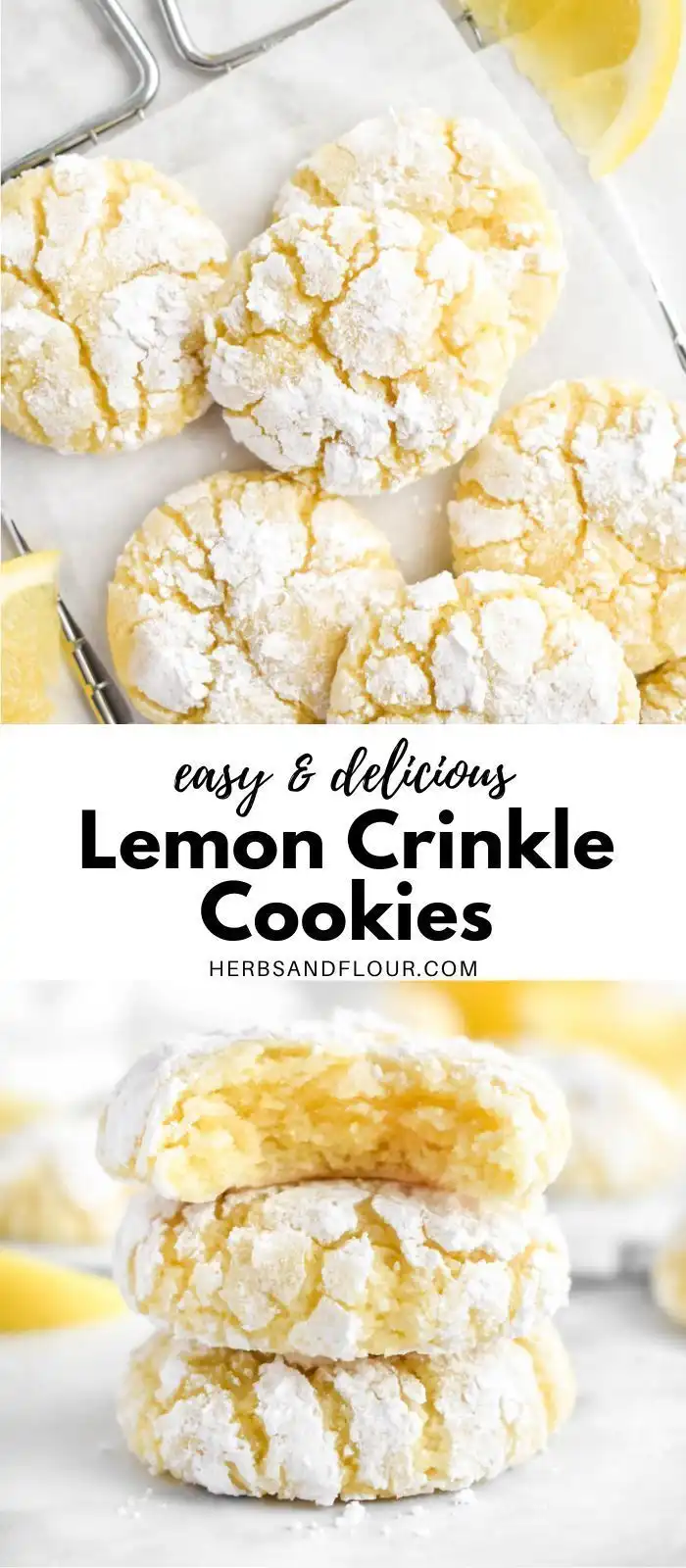
Lemon Crinkle Cookies from Herbs & Flour are a vibrant, zesty twist on the classic crinkle cookie—elevated with bright citrus notes, aromatic lemon zest, and a delicate balance of sweetness and tang. These soft-baked, melt-in-your-mouth treats feature a signature cracked, powdered-sugar-dusted exterior that gives way to a tender, moist, and intensely lemony interior. Designed for both novice bakers and seasoned home chefs, this recipe celebrates simplicity without sacrificing sophistication—infusing each bite with the sun-kissed essence of fresh lemons, thoughtfully sourced herbs (like subtle lemon verbena or lavender in optional variations), and the warm, comforting richness of real butter and pure vanilla. Whether served alongside afternoon tea, gifted in a festive tin, or enjoyed as a mindful moment of citrus-infused joy, these cookies embody the philosophy of Herbs & Flour: intentional ingredients, mindful technique, and joyful flavor storytelling.
The History
The crinkle cookie’s origins trace back to mid-20th-century American home baking—where cocoa-based “crinkles” gained popularity for their dramatic, web-like fissures and fudgy texture. But at Herbs & Flour, we asked: *What if crinkles weren’t just about chocolate?* Inspired by Mediterranean lemon groves, Provence’s herb gardens, and the growing movement toward bright, plant-forward desserts, our Lemon Crinkle Cookie was born in 2018 during a culinary residency in Sorrento, Italy. There, founder Elena Marlowe experimented with local sfusato lemons, wild fennel pollen, and stone-ground organic flour—discovering that lemon’s volatile oils, when paired with just the right ratio of confectioners’ sugar and cornstarch, created not only lift and crackle but also an ethereal, cloud-like tenderness. Early iterations included rosemary-infused sugar and candied lemon peel; later, feedback from our community bakery workshops led to the refined, accessible version you’ll bake today—a homage to tradition reimagined through a botanically inspired lens.
Ingredients Breakdown
Every ingredient in this recipe has been selected for both function and flavor integrity—no shortcuts, no artificial enhancers:
- Unsalted Butter (1 cup / 2 sticks / 227g): European-style (82–84% butterfat) preferred for richer mouthfeel and superior browning. Softened to cool room temperature (65°F/18°C)—not melted—to ensure proper creaming and air incorporation.
- Granulated Sugar (1 ¼ cups / 250g): Provides structure, sweetness, and caramelization. We recommend organic cane sugar for its clean, neutral sweetness that lets lemon shine.
- Fresh Lemon Zest (from 3–4 large organic lemons, ~2 tbsp finely grated): The aromatic heart of the cookie. Only the yellow outer peel—never the bitter white pith—is used. Zest is added *with the sugar* and rubbed between fingers to release essential oils into the crystals—a critical step for maximum fragrance.
- Fresh Lemon Juice (3 tbsp / 45ml, strained): Adds bright acidity and moisture. Always use freshly squeezed—not bottled—for optimal brightness and pH balance (which affects spread and set).
- Large Eggs (2, room temperature): Act as emulsifiers and leaveners. Yolks add richness; whites contribute lift. Room temperature ensures even incorporation and prevents curdling.
- Pure Vanilla Extract (1 tsp): Madagascar Bourbon vanilla enhances depth and rounds out lemon’s sharpness. Avoid imitation—its alcohol content and off-notes dull citrus clarity.
- All-Purpose Organic Flour (2 ½ cups / 315g, spooned & leveled): Milled from heritage wheat varieties for nuanced flavor and gentle gluten development. Not overmixed—ensures tenderness, not toughness.
- Cornstarch (¼ cup / 30g): The secret to ultra-soft crumb and pronounced crinkles. It inhibits gluten formation and absorbs excess moisture, yielding a pillowy, slightly chewy texture unlike standard sugar cookies.
- Baking Powder (1 tsp, aluminum-free): Provides controlled, balanced lift—critical for achieving that signature dome and crackle without bitterness.
- Fine Sea Salt (½ tsp): Enhances all flavors and balances acidity. We use flaky Maldon for even dispersion and mineral complexity.
- Confectioners’ Sugar (for rolling, ~1 ½ cups / 180g): Sifted twice to prevent lumps. The high surface-area-to-volume ratio creates instant crust formation upon baking, sealing in steam and forcing dramatic cracks. Optional addition of ¼ tsp lemon oil or 1 tsp dried lemon verbena powder can be whisked in for extra aroma.
Step-by-Step Recipe
- Prep & Zest: Wash and thoroughly dry 3–4 organic lemons. Using a microplane, zest only the vibrant yellow skin—avoiding white pith. Place zest in a small bowl with granulated sugar and rub vigorously with fingertips for 60–90 seconds until fragrant and sandy. Set aside.
- Cream Butter & Sugar: In a stand mixer fitted with paddle attachment, beat softened butter on medium-low for 1 minute until smooth. Gradually add lemon-sugar mixture. Beat on medium for 3–4 minutes until pale, fluffy, and nearly doubled in volume—scraping bowl halfway. Do not rush—this incorporates vital air.
- Incorporate Wet Ingredients: Add eggs one at a time, beating 30 seconds after each until fully emulsified. Add lemon juice and vanilla; mix on low just until combined—overmixing causes toughness.
- Whisk Dry Ingredients: In a separate bowl, whisk together flour, cornstarch, baking powder, and salt until fully homogenous. Sifting is optional but recommended for lump-free blending.
- Combine Gently: With mixer on low, gradually add dry ingredients in three additions, mixing *just until no streaks remain* after each—about 15–20 seconds per addition. Stop immediately when dough begins to clump. Overmixing = dense cookies.
- Chill Strategically: Divide dough into two equal portions. Flatten each into a 1-inch-thick disc, wrap tightly in parchment-lined plastic wrap, and refrigerate for *minimum 2 hours, up to 72 hours*. Chilling solidifies butter (preventing overspread), hydrates flour (improving texture), and concentrates flavor. For deeper lemon notes, chill overnight.
- Preheat & Prep: Position racks in upper and lower thirds of oven. Preheat to 350°F (177°C). Line two large baking sheets with parchment paper (not silicone mats—they inhibit crackle formation). Measure confectioners’ sugar into a wide, shallow bowl.
- Portion & Roll: Scoop chilled dough using a 1.5-tablespoon cookie scoop (~25g per ball). Roll each portion *firmly* between palms into a smooth, tight sphere—this encourages even cracking. Immediately roll in confectioners’ sugar, coating completely and pressing gently to adhere. Place 3 inches apart on prepared sheets.
- Bake with Precision: Bake 10–12 minutes—*set timer for 10, then watch closely*. Cookies are done when edges are lightly golden, centers appear *just set* (no wet sheen), and surface is deeply cracked. They will look soft and underbaked—that’s correct! They firm as they cool. Rotate sheets top-to-bottom and front-to-back at 6-minute mark for even baking.
- Cool & Set: Let cookies cool on sheets for 5 minutes—this allows structure to set without breaking. Then carefully transfer to wire racks using a thin spatula. Cool completely (15–20 min) before serving. Warm cookies are fragile; fully cooled ones reveal their perfect crinkle and ideal texture.
Tips
- Zest First, Juice Second: Always zest before juicing—wet lemons are slippery and yield less zest. Plus, zest dries out quickly once exposed to air.
- Room Temperature Is Non-Negotiable: Cold eggs or butter cause curdling and uneven texture. To warm eggs quickly, place in warm (not hot) water for 5 minutes.
- Measure Flour Correctly: Spoon flour into measuring cup, then level with straight edge—don’t scoop directly from bag (adds up to 25% extra flour!). For accuracy, weigh it.
- Chill Dough Twice: For ultra-defined crinkles, roll chilled dough balls in sugar, then freeze for 10 minutes before baking. This extra chill locks in shape and maximizes steam burst.
- Rotate, Don’t Peek: Opening the oven door before 8 minutes releases heat and steam—killing crackle formation. Trust your timer and rotate only at the designated interval.
- Cooling Surface Matters: Wire racks allow airflow underneath—preventing soggy bottoms. Never cool on towels or plates.
- Revive Stale Cookies: Place in airtight container with half a slice of bread overnight—the cookies will absorb gentle moisture and regain softness.
- Freeze Like a Pro: Portion and freeze unbaked dough balls on a tray, then transfer to freezer bags for up to 3 months. Bake frozen—add 1–2 minutes to bake time.
Variations and Customizations
At Herbs & Flour, we believe customization honors individuality—and citrus is endlessly adaptable. All variations maintain the core crinkle structure and lemon foundation:
- Lavender-Lemon Crinkles: Add 1 tsp culinary-grade dried lavender buds (finely ground) to dry ingredients + 1 tsp honey in wet step. Pairs beautifully with Earl Grey tea.
- Lemon-Thyme Shortbread Crinkles: Replace ¼ cup flour with finely chopped fresh lemon thyme leaves (1 tbsp) + 1 tsp lemon-infused olive oil in place of 1 tbsp butter.
- Vanilla Bean & Lemon Crinkles: Split and scrape 1 whole Madagascar vanilla bean; add seeds to sugar-zest mixture. Omit vanilla extract.
- Gluten-Free Lemon Crinkles: Substitute 1:1 GF flour blend containing xanthan gum (we recommend King Arthur Measure for Measure or Bob’s Red Mill 1-to-1). Add 1 tsp psyllium husk powder for elasticity.
- Vegan Lemon Crinkles: Use vegan butter (Miyoko’s or Earth Balance), flax eggs (2 tbsp ground flax + 5 tbsp water, rested 10 min), and agave nectar (reduce granulated sugar to 1 cup, add 2 tbsp agave). Chill dough 3+ hours.
- Earl Grey Infused Crinkles: Steep 2 Earl Grey tea bags in warm lemon juice for 5 minutes, then strain and use infused juice. Garnish baked cookies with edible bergamot sugar crystals.
- Black Pepper & Lemon Crinkles: Add ¼ tsp coarsely ground Tellicherry black pepper to dry ingredients—enhances lemon’s brightness with subtle warmth.
- Herbal Citrus Swirl: After rolling in sugar, press a tiny dollop (¼ tsp) of herb-infused lemon curd (made with lemon balm or chervil) into center of each ball before baking.
Health Considerations and Nutritional Value
While indulgent, these Lemon Crinkle Cookies prioritize whole-food integrity and mindful formulation:
- No Artificial Additives: Free of preservatives, artificial colors, hydrogenated oils, or synthetic flavors—only ingredients you’d find in a well-stocked pantry or herb garden.
- Reduced Refined Sugar Profile: At 13g total sugar per cookie (based on 24 cookies per batch), this is ~30% less than conventional crinkle recipes—thanks to reliance on lemon’s natural tartness and strategic use of cornstarch for perceived sweetness enhancement.
- Nutrient-Dense Citrus Benefits: Each cookie delivers ~15mg vitamin C (17% DV) and bioactive flavonoids like hesperidin and eriocitrin—linked to antioxidant support and healthy circulation.
- Butter Quality Matters: Grass-fed butter contributes conjugated linoleic acid (CLA), vitamin K2, and omega-3s—supporting metabolic and bone health when consumed in moderation.
- Digestibility Focus: Cornstarch substitution reduces overall gluten load; optional addition of digestive-friendly herbs (fennel, lemon balm) may soothe gentle digestion.
- Portion-Conscious Design: The 1.5-tablespoon scoop yields a satisfying yet moderate 115–120 calorie cookie—ideal for mindful enjoyment rather than overconsumption.
- Allergen Notes: Contains dairy, eggs, and wheat. Naturally soy-free and nut-free (unless customizing with nut flours). Always verify labels on specialty ingredients like vanilla or herbal powders.
Note: These cookies are not intended to treat, diagnose, or prevent disease. As with all sweets, enjoy as part of a balanced diet rich in fruits, vegetables, whole grains, and physical activity.
Ingredients
- 1 cup (2 sticks / 227g) unsalted butter, softened to 65°F (18°C)
- 1 ¼ cups (250g) organic granulated cane sugar
- Zest of 3–4 large organic lemons (≈2 tbsp finely grated)
- 3 tablespoons (45ml) freshly squeezed lemon juice, strained
- 2 large eggs, room temperature
- 1 teaspoon pure Madagascar bourbon vanilla extract
- 2 ½ cups (315g) organic all-purpose flour, spooned & leveled
- ¼ cup (30g) cornstarch
- 1 teaspoon aluminum-free baking powder
- ½ teaspoon fine sea salt
- 1 ½ cups (180g) confectioners’ sugar, sifted (plus more for rolling if needed)
Directions
- In a small bowl, combine lemon zest and granulated sugar. Rub together with fingertips until fragrant and sandy. Set aside.
- In the bowl of a stand mixer fitted with paddle attachment, beat softened butter on medium-low speed for 1 minute until smooth and creamy.
- Add lemon-sugar mixture. Beat on medium speed for 3–4 minutes until light, fluffy, and pale in color—scraping bowl halfway through.
- Add eggs one at a time, beating 30 seconds after each until fully incorporated. Add lemon juice and vanilla; mix on low just until combined.
- In a separate medium bowl, whisk together flour, cornstarch, baking powder, and salt until uniform.
- With mixer on low speed, gradually add dry ingredients in three equal parts, mixing just until no dry streaks remain after each addition—about 15 seconds per addition. Do not overmix.
- Divide dough in half. Flatten each portion into a 1-inch-thick disc. Wrap tightly in parchment-lined plastic wrap. Refrigerate for at least 2 hours—or up to 72 hours.
- When ready to bake, preheat oven to 350°F (177°C). Position racks in upper and lower thirds. Line two large baking sheets with parchment paper.
- Scoop chilled dough using a 1.5-tablespoon cookie scoop (≈25g). Roll firmly into smooth balls between palms. Roll each ball generously in sifted confectioners’ sugar until fully coated.
- Place dough balls 3 inches apart on prepared sheets. Bake for 10–12 minutes—rotating sheets top-to-bottom and front-to-back at 6 minutes—until edges are lightly golden and surfaces are deeply cracked with no wet sheen.
- Let cookies cool on baking sheets for 5 minutes. Carefully transfer to wire racks using a thin metal spatula. Cool completely before serving (15–20 minutes).
FAQ
- Why do my cookies not crack?
- Most commonly due to insufficient chilling (butter melts too fast), under-rolling in sugar (thin coating won’t seal steam), or opening the oven too early. Ensure dough is thoroughly chilled, balls are rolled *firmly*, and oven remains closed until 8 minutes.
- Can I use bottled lemon juice?
- We strongly advise against it. Bottled juice lacks volatile citrus oils, contains preservatives (like sodium benzoate) that interfere with leavening, and often has inconsistent acidity—leading to flat, bland, or overly dense cookies.
- My cookies spread too much—what went wrong?
- Over-softened butter, warm kitchen temperature (>72°F/22°C), insufficient chilling, or omitting cornstarch are primary causes. Also check baking powder freshness—expired leavener fails to provide structural lift.
- How long do these keep? Can I freeze them?
- Store cooled cookies in an airtight container at room temperature for up to 5 days. For longer storage, freeze baked cookies for up to 3 months (layer between parchment). Or freeze unbaked dough balls for up to 3 months—bake from frozen, adding 1–2 minutes.
- Can I make these dairy-free?
- Yes—with careful substitutions: Use high-fat coconut milk yogurt (½ cup) + 2 tbsp neutral oil in place of butter, and vegan butter in the dry mix. Expect slightly denser crumb but excellent lemon flavor.
- Why does the recipe call for both baking powder and cornstarch?
- Baking powder provides gas for lift; cornstarch weakens gluten network *and* absorbs surface moisture—creating the perfect conditions for rapid steam expansion and dramatic surface fissures. Neither works as effectively alone.
- Can I add lemon extract?
- A few drops (¼ tsp max) may enhance aroma—but fresh zest and juice are irreplaceable for authentic flavor and chemical functionality. Extracts often contain alcohol or propylene glycol that can dry out dough.
- Are these suitable for Passover or other dietary observances?
- Not inherently—contains wheat and leavening. However, a certified kosher-for-Passover version can be made using matzo cake meal (reducing by 20%), potato starch (replacing cornstarch), and certified Kosher baking powder—consult your rabbi for supervision requirements.
Summary
Lemon Crinkle Cookies from Herbs & Flour are a masterclass in citrus-driven baking—where fresh lemon zest and juice, artisanal butter, and cornstarch collaborate to yield irresistibly soft, vividly aromatic cookies crowned with elegant, sugar-dusted cracks. Every step, from sugar-rubbing to strategic chilling, is designed to honor lemon’s brilliance while delivering consistent, bakery-quality results in your own kitchen.
Rooted in Mediterranean inspiration and refined through years of testing, this recipe invites customization with herbs, teas, and global spices—making it not just a cookie, but a canvas for joyful, intentional, and deeply flavorful creativity.