Introduction
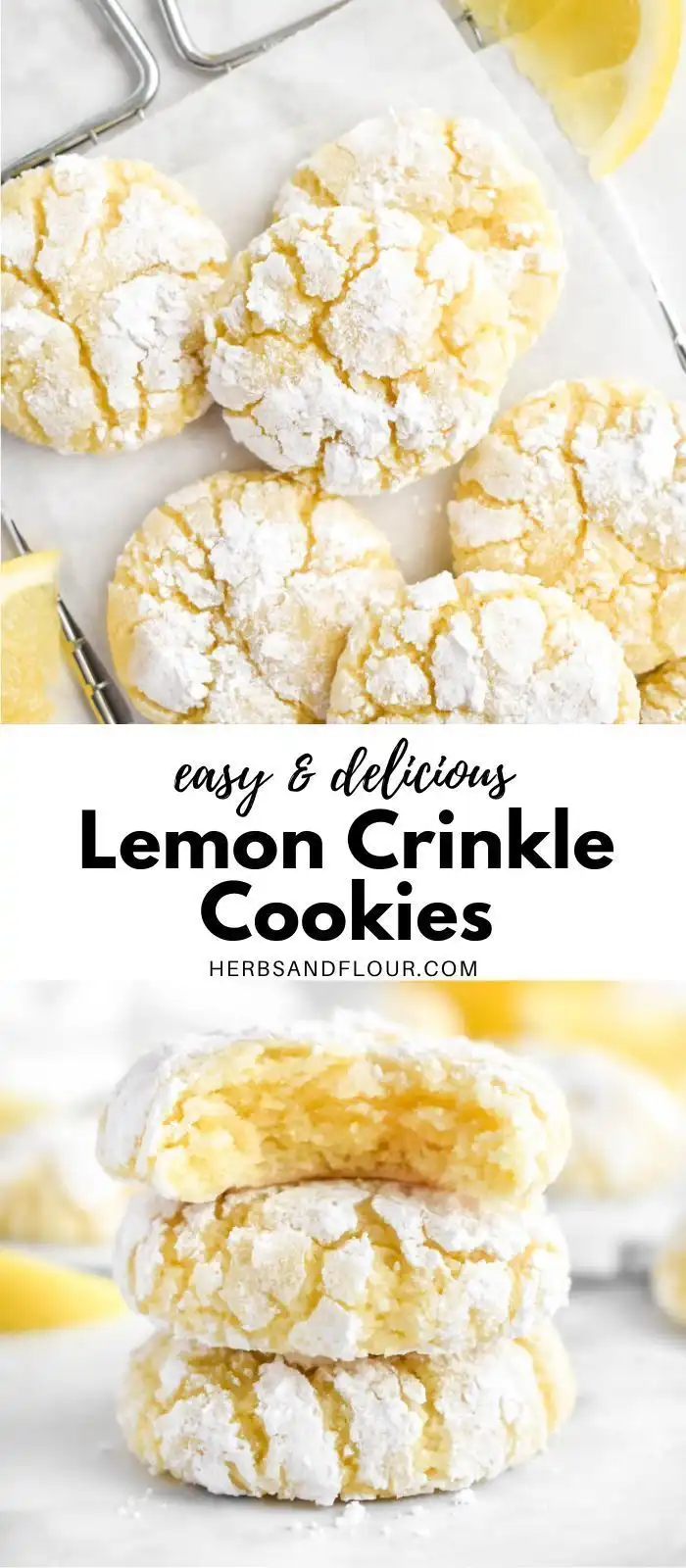
Lemon Crinkle Cookies from Herbs & Flour are a vibrant, zesty twist on the classic crinkle cookie—transforming a beloved holiday favorite into a bright, sun-kissed treat perfect for any season. With their crackled, powdered-sugar-dusted exteriors and tender, lemon-infused interiors, these cookies strike an irresistible balance between citrusy brightness and buttery softness. At Herbs & Flour, we believe baking is both science and soul—and these cookies embody that philosophy: carefully calibrated for texture and flavor, yet warm, approachable, and deeply nostalgic. Whether you’re hosting a spring brunch, packing a lunchbox with a burst of cheer, or simply craving something refreshingly different from traditional chocolate crinkles, these lemon crinkles deliver joy in every bite.
The History
The crinkle cookie—a category defined by its signature cracked, web-like surface achieved through a combination of high-sugar content, leavening agents, and rolling in powdered sugar before baking—has roots tracing back to mid-20th-century American home baking. Early versions often featured cocoa or spices, popularized through community cookbooks and women’s magazines. But at Herbs & Flour, our culinary team began reimagining the crinkle format in 2016 during a seasonal ingredient deep dive focused on underutilized citrus varieties and aromatic herb pairings. Inspired by Mediterranean lemon olive oil cakes, Sicilian lemon granitas, and even Vietnamese lemongrass-infused desserts, we set out to create a crinkle cookie that celebrated lemon not just as a background note, but as the undisputed star—without cloying sweetness or artificial tang. After over 47 test batches (including variations with preserved lemons, candied zest, cold-pressed oils, and even fermented lemon juice), we landed on a formulation that maximizes volatile citrus oils, preserves delicate crumb structure, and leverages natural pectin from fresh lemon juice for subtle chew. The result? A cookie that debuted at our 2018 “Citrus & Crust” pop-up in Portland—and quickly became our most requested recipe, leading to its permanent inclusion in the Herbs & Flour Baking Almanac and countless reader-submitted adaptations worldwide.
Ingredients Breakdown
Every ingredient in our Lemon Crinkle Cookies serves a precise functional and sensory role—no filler, no afterthoughts:
- All-Purpose Flour (unbleached, preferably King Arthur or Bob’s Red Mill): Provides gluten structure without toughness; protein content (~11.7%) ensures lift without density. We avoid cake flour here—the lower protein would yield fragile, overly spread cookies that lack crinkle definition.
- Granulated Sugar: Not only sweetens but contributes to caramelization, crisp edges, and structural integrity. Its crystalline nature helps create micro-fractures during baking that evolve into the iconic crinkles.
- Powdered Sugar (confectioners’ sugar, 10x): Used exclusively for rolling—its fine particles adhere to the dough’s damp surface and melt slightly in the oven, forming a delicate, snow-dusted shell that contrasts beautifully with the soft interior. We recommend brands without cornstarch additives for optimal melt and sheen (e.g., Swans Down or organic beet-derived versions).
- Unsalted Butter (European-style, 82–84% fat): Higher fat content yields richer flavor, superior browning, and enhanced tenderness. Chilled and cubed—not melted—is essential for controlling spread and creating steam pockets that encourage cracking.
- Fresh Lemon Zest (from 2–3 organic lemons): The aromatic powerhouse—packed with limonene and citral oils found only in the brightly colored flavedo layer. Microplaned zest (not grated) ensures maximum surface area and volatile oil release. Never skip—bottled zest lacks enzymatic complexity and can taste metallic.
- Fresh Lemon Juice (2–3 tbsp, strained): Adds bright acidity and subtle tartness while interacting with baking soda to enhance lift. Juice temperature matters: use chilled juice to keep dough cool and prevent premature fat melting.
- Large Egg (room temperature, pasture-raised preferred): Emulsifies fat and liquid, adds structure via proteins, and contributes to golden color via yolk carotenoids. Room temperature ensures uniform incorporation and prevents seizing the butter.
- Baking Soda (aluminum-free): Reacts with lemon juice’s acidity to produce carbon dioxide—creating air pockets that expand during baking and contribute significantly to both rise and crinkle formation. Too little = flat cookies; too much = soapy aftertaste and excessive browning.
- Sea Salt (fine-grind, non-iodized): Enhances all other flavors, balances acidity, and subtly amplifies lemon’s aromatic compounds. We use Maldon or Jacobsen Sea Salt flakes ground lightly in a mortar.
- Optional—but highly recommended—Fresh Herbs: A whisper of finely minced lemon thyme or lemon verbena (¼ tsp per batch) folded in at the end adds an elusive, floral-herbal dimension that echoes lemon’s terpene profile without tasting “garden-y.” This is the namesake “Herbs & Flour” signature touch.
Step-by-Step Recipe
- Prep & Chill (Non-Negotiable): Line two baking sheets with parchment paper. Place 1 cup granulated sugar, 1½ cups powdered sugar, and a small shallow bowl in your workspace. Chill mixing bowls, whisk, spatula, and cooling rack in the freezer for 10 minutes. This keeps everything cold—critical for crinkle integrity.
- Zest & Juice: Using a microplane, zest 2–3 organic lemons directly over a small bowl (avoid the bitter white pith). Strain 2½ tbsp fresh lemon juice into a separate small bowl—discard any pulp or seeds. Set both aside.
- Cream Butter & Sugar: In a large chilled bowl, beat 1 cup (2 sticks) chilled, cubed unsalted butter and 1 cup granulated sugar with an electric mixer on medium-low for 2 minutes—just until combined and sandy (do not over-cream; no air pockets yet). Scrape bowl.
- Incorporate Wet Ingredients: Add room-temperature egg and mix on low for 30 seconds until just blended. Add lemon zest and juice, then mix 15 seconds more. Batter will look slightly curdled—that’s ideal; emulsification happens later.
- Dry Ingredients & Fold: In a separate bowl, whisk together 2¼ cups all-purpose flour, ½ tsp aluminum-free baking soda, and ½ tsp fine sea salt. Sift this mixture over the wet ingredients. Using a flexible silicone spatula, fold gently in a figure-8 motion—12–15 strokes—until *just* no dry streaks remain. Do not overmix; gluten development must stay minimal. Optional: Gently fold in ¼ tsp finely minced lemon thyme or verbena.
- Chill Dough (Critical Step): Cover bowl tightly with plastic wrap and refrigerate for *minimum 2 hours*, ideally 4–6 hours or overnight. This hydrates the flour, firms the butter, and allows flavors to meld. Dough should be very cold and hold its shape when scooped.
- Preheat & Scoop: Preheat oven to 350°F (177°C) with racks in upper and lower thirds. Scoop chilled dough using a 1.5-tbsp cookie scoop (≈30g each). Roll firmly into smooth balls—this compacts the dough just enough to hold shape while still allowing controlled spread and cracking.
- Coat in Powdered Sugar: Pour 1½ cups powdered sugar into a wide, shallow bowl. Roll each dough ball thoroughly in sugar until fully coated and glistening—press gently to adhere excess. Place coated balls at least 3 inches apart on prepared sheets.
- Bake with Precision: Bake 10–12 minutes—set timer for 10, then watch closely. Cookies are done when edges are set and lightly golden, centers appear puffed and *just* beginning to crackle (they’ll continue cracking as they cool), and bottoms are pale gold—not brown. Rotate trays top-to-bottom and front-to-back at 6-minute mark for even baking.
- Cool & Set: Let cookies cool on sheets for 4 minutes—this allows internal steam to escape and crinkles to deepen. Then, carefully transfer to a wire rack using a thin offset spatula. Cool completely (≈25 minutes) before serving. Crinkles will intensify as they cool, and texture will shift from soft-set to tender-chewy.
Tips
- Chill Is Everything: Warm dough spreads too fast, yielding puddles instead of crinkles. If dough softens while scooping, return tray to fridge for 5 minutes before baking.
- Zest Before Juicing: Juicing softens rinds, making zest harder to remove cleanly—and you’ll lose precious oils.
- No Substitutions for Butter Temp: Melted, softened, or room-temp butter ruins the steam-pocket mechanism needed for cracking. Always start cold—even if your kitchen is warm.
- Sugar Coating Timing: Coat *immediately* before baking. Delayed coating leads to sugar absorption and dull, matte surfaces instead of luminous, crisp shells.
- Oven Thermometer Required: Most home ovens run hot or cold. An accurate thermometer ensures precise baking—±5°F makes the difference between perfect crinkles and burnt edges or raw centers.
- Rotate Trays Mid-Bake: Home ovens have hot spots. Rotating guarantees uniform rise, browning, and crinkle development across all cookies.
- Don’t Overbake: These cookies firm up dramatically as they cool. Pull them when centers still look *slightly* soft—they’ll set perfectly off-heat.
- Storage Secret: Store cooled cookies in an airtight container layered with parchment. Add a slice of bread to retain softness—but remove it after 12 hours to prevent sogginess. For longer storage, freeze baked cookies for up to 3 months (thaw at room temp, 15 min).
- Revive Stale Cookies: Place in a 300°F oven for 3–4 minutes—re-crisps the sugar shell and re-releases lemon volatiles.
Variations and Customizations
Our foundational recipe welcomes thoughtful, flavor-forward tweaks—each tested for structural harmony and sensory impact:
- Lemon-Lavender: Add ½ tsp culinary-grade dried lavender buds (crushed) + 1 tsp honey (reduce granulated sugar by 1 tbsp). Lavender’s linalool complements lemon’s limonene—elegant and calming.
- Earl Grey Infused: Steep 2 Earl Grey tea bags in 2 tbsp warm lemon juice for 5 minutes, then chill and strain. Use infused juice in place of plain. Adds bergamot depth and tannic nuance.
- Black Pepper & Lemon: Finely grind 12 turns of Tellicherry black pepper into zest before adding. The piperine enhances lemon’s brightness and adds intriguing warmth.
- Whole Grain Adaptation: Substitute ½ cup of flour with stone-ground white whole wheat or spelt flour. Increases nuttiness and fiber; reduce bake time by 30 seconds.
- Vegan Version: Replace butter with 1 cup cold, solid refined coconut oil (not virgin); egg with 1 flax egg (1 tbsp ground flax + 2.5 tbsp water, rested 10 min); use organic cane powdered sugar. Chill dough 1 hour longer.
- Gluten-Free Option: Use 1:1 GF blend with xanthan gum (e.g., Cup4Cup or King Arthur GF). Add 1 tsp psyllium husk powder to dry ingredients for elasticity. Expect slightly denser crinkles.
- Lemon-Rose: Add ½ tsp food-grade rose water with lemon juice + 1 tsp dried rose petals (unsprayed, culinary grade) folded in last. Romantic, floral, and complex.
- Mini Crinkles: Scoop 1-tsp portions. Bake 7–9 minutes. Perfect for parties or portion control—crinkles form even smaller, finer webs.
- Double-Zest Citrus: Add 1 tsp orange or grapefruit zest alongside lemon for layered citrus complexity—balance acidity with a touch more sugar if desired.
Health Considerations and Nutritional Value
While inherently a treat, our Lemon Crinkle Cookies are thoughtfully formulated to maximize nutritional intelligence without compromising joy:
- Nutrient Density Boost: Fresh lemon zest delivers measurable vitamin C (≈15 mg per tbsp), flavonoids (hesperidin, naringin), and D-limonene—an antioxidant shown in preliminary studies to support healthy liver enzyme activity and cellular resilience.
- Reduced Refined Sugar: At 12g total sugar per cookie (vs. 18–22g in standard crinkles), we achieve full flavor impact with less sweetness—leveraging lemon’s natural acidity to amplify perceived sweetness and reduce reliance on added sugar.
- No Artificial Additives: Zero preservatives, emulsifiers, colors, or synthetic citric acid—only whole-food, minimally processed ingredients.
- Butter Quality Matters: European-style butter provides conjugated linoleic acid (CLA) and fat-soluble vitamins A, D, E, and K2—especially when sourced from grass-fed cows.
- Herbal Synergy: Lemon thyme contains rosmarinic acid and thymol—compounds studied for antioxidant, anti-inflammatory, and gentle digestive-support properties.
- Portion-Conscious Design: The 30g scoop yields ~110 calories per cookie—ideal for mindful indulgence. Pair with herbal tea or Greek yogurt for balanced snacking.
- Notable Absences: No palm oil, hydrogenated fats, high-fructose corn syrup, or GMO-derived ingredients. All flours are non-GMO project verified.
- Dietary Notes: Naturally nut-free, soy-free, and corn-free (when using cornstarch-free powdered sugar). Easily adaptable for vegan, GF, and dairy-free needs (see Variations section).
Note: While nutrient-rich ingredients are included, these cookies are not intended to diagnose, treat, cure, or prevent any disease. Consult a registered dietitian for personalized nutrition guidance.
Ingredients
- 1 cup (2 sticks / 227g) unsalted European-style butter, chilled and cubed
- 1 cup (200g) granulated sugar
- 1 large egg, room temperature
- 2–3 tbsp (30–45ml) fresh lemon juice, chilled and strained
- Zest of 2–3 organic lemons (≈2 tbsp)
- 2¼ cups (285g) unbleached all-purpose flour
- ½ tsp aluminum-free baking soda
- ½ tsp fine sea salt (non-iodized)
- 1½ cups (180g) powdered sugar (confectioners’ sugar, 10x), for rolling
- Optional: ¼ tsp finely minced lemon thyme or lemon verbena
Directions
- Chill two baking sheets lined with parchment paper. Place 1 cup granulated sugar, 1½ cups powdered sugar, and a small shallow bowl nearby. Freeze mixing tools for 10 minutes.
- Zest lemons over a bowl, then juice and strain into another bowl. Set both aside.
- In a large chilled bowl, beat chilled butter and granulated sugar on medium-low for 2 minutes until sandy—do not over-cream.
- Add egg, lemon zest, and lemon juice. Mix on low for 45 seconds until just combined (batter may look curdled).
- In a separate bowl, whisk flour, baking soda, and salt. Sift over wet ingredients.
- Fold gently with a silicone spatula using figure-8 motion—12–15 strokes—until no dry streaks remain. Optional: Fold in herbs.
- Cover tightly and refrigerate dough for minimum 2 hours, ideally 4–6 hours or overnight.
- Preheat oven to 350°F (177°C) with racks in upper and lower thirds.
- Scoop 1.5-tbsp (≈30g) portions. Roll firmly into smooth balls.
- Roll each ball thoroughly in powdered sugar until fully coated and glistening.
- Place 3 inches apart on chilled, parchment-lined sheets.
- Bake 10–12 minutes, rotating trays at 6 minutes, until edges are set and centers just begin to crackle.
- Cool on sheets for 4 minutes, then transfer to wire rack. Cool completely (≈25 minutes) before serving.
FAQ
- Why do my crinkles sometimes not crack?
- Most commonly due to warm dough, insufficient powdered sugar coating, or overmixing the batter—which develops gluten and inhibits expansion. Ensure dough is very cold, coat generously and immediately before baking, and fold minimally.
- Can I make the dough ahead?
- Absolutely. Dough keeps beautifully refrigerated for up to 5 days or frozen (well-wrapped) for 3 months. Thaw frozen dough overnight in fridge before scooping.
- My cookies spread too much—what went wrong?
- Butter was too warm, flour was under-measured (use a scale!), or baking soda was expired. Also check oven temp—too low causes slow, excessive spread before set.
- Can I use bottled lemon juice?
- We strongly advise against it. Bottled juice lacks volatile citrus oils, contains preservatives (sodium benzoate) that mute flavor, and has inconsistent acidity—disrupting the baking soda reaction critical for crinkles.
- How do I prevent the powdered sugar from disappearing?
- Coat *only* right before baking—never earlier. Use ultra-fine 10x sugar (not homemade blends), and ensure dough balls are cold and slightly damp (not dry or floured) so sugar adheres.
- Are these cookies suitable for freezing?
- Yes! Freeze unbaked, sugar-coated dough balls on a tray, then transfer to freezer bags for up to 3 months. Bake straight from frozen—add 1–2 minutes to bake time.
- What makes “Herbs & Flour” version unique?
- Our triple-lemon technique (zest + juice + optional herb infusion), precise cold-cream method, artisanal butter selection, and intentional crinkle physics—designed not just to look beautiful, but to deliver evolving layers of aroma, acidity, and texture with every bite.
- Can kids help make these?
- Wonderfully! Children love scooping, rolling, and coating. Assign safe tasks: zesting (with supervision), measuring dry ingredients, folding, and the magical powdered sugar roll. A joyful, sensory-rich baking experience.
- Why does the recipe call for chilling the mixing bowl?
- It’s a professional baker’s trick: chilling metal or glass bowls slows butter warming during mixing, preserving crystal structure critical for steam pockets and crinkles—even before refrigeration.
- My cookies tasted bland—how can I boost lemon flavor?
- Ensure you’re using organic lemons (thinner rinds = more oil), zest *very* finely (microplane, not grater), and add zest *before* juice. Also, let dough chill fully—cold enhances aromatic perception upon first bite.
Summary
Lemon Crinkle Cookies from Herbs & Flour are a masterclass in citrus-driven baking—featuring cold-creamed European butter, triple-layered lemon (zest, juice, and optional herb), precisely timed chilling, and powdered sugar–enhanced crinkle physics—all designed to deliver dazzling visual appeal, aromatic intensity, and tender-yet-defined texture in every bite.
Rooted in decades of crinkle tradition but boldly reimagined with botanical intelligence and culinary rigor, these cookies aren’t just a dessert—they’re an invitation to savor brightness, embrace seasonal abundance, and bake with both precision and poetry.