Introduction
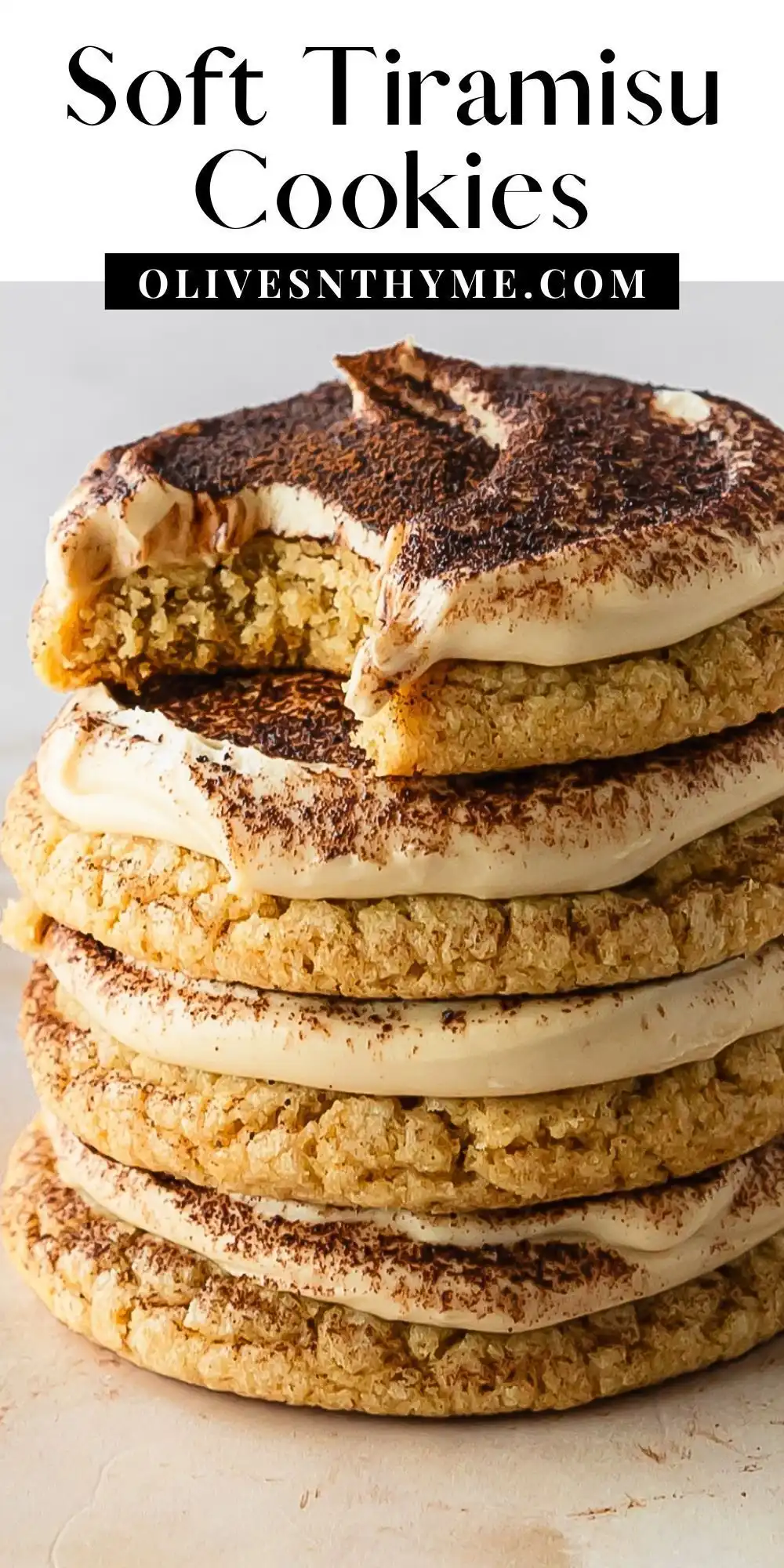
Imagine the soulful elegance of classic Italian tiramisu—its velvety mascarpone, the bittersweet kiss of espresso-dipped ladyfingers, and the whisper of cocoa—reimagined as a tender, melt-in-your-mouth cookie. Now add an unexpected, sophisticated twist: briny, fruity olives and earthy, aromatic fresh thyme. Tiramisu Cookies (Soft and No-Chill) – Olives + Thyme are not just a dessert—they’re a culinary conversation between tradition and terroir. These cookies honor the iconic layered dessert while boldly stepping into savory-sweet territory, delivering a soft, cake-like crumb with no dough chilling required—making them perfect for spontaneous baking, elegant entertaining, or a quietly rebellious afternoon treat. They’re rustic yet refined, comforting yet complex—proof that the most memorable flavors often live at the intersection of contrast and harmony.
The History
While tiramisu itself traces its origins to the Veneto region of Italy in the late 20th century—debated among Treviso’s Le Beccherie restaurant, local bakeries, or even earlier home kitchens—the concept of reinterpreting this beloved dessert in cookie form is a relatively recent evolution in modern pastry innovation. The “no-chill” approach reflects today’s demand for accessible, time-conscious baking without sacrificing texture or depth. The olive-and-thyme variation, however, is a distinctly contemporary homage to Mediterranean pantry wisdom. In coastal Italian and Provençal cuisines, olives and thyme have long appeared alongside sweets—not as oddities, but as intentional counterpoints: think olive oil cakes perfumed with rosemary or lemon-thyme shortbread with black olive crumble. This recipe draws inspiration from those traditions, elevating the classic tiramisu profile by replacing traditional cocoa powder with finely chopped, high-quality cured olives (like Castelvetrano or Arbequina) and folding in fresh thyme leaves to echo the herbal notes found in some artisanal espresso blends and aged balsamic vinegars. It’s history reinterpreted—not erased—with reverence and curiosity.
Ingredients Breakdown
Every ingredient here serves both function and flavor—no filler, no afterthoughts:
- Unsalted Butter (softened): Provides richness, tenderness, and structure. Using European-style butter (82–86% fat) enhances creaminess and depth.
- Granulated Sugar + Light Brown Sugar: Granulated ensures crisp edges and lift; brown sugar adds moisture, caramel nuance, and acidity that balances the olives’ salt.
- Egg Yolk (plus extra yolk): Extra yolk increases fat content for a luxuriously soft, almost custard-like crumb—and helps emulsify the olive brine into the batter seamlessly.
- Real Espresso Powder (not instant coffee granules): Concentrated, intensely aromatic, and pH-balanced for optimal flavor release. Dissolved in a touch of hot water to bloom its oils before mixing.
- Vanilla Extract (pure, Madagascar bourbon): Adds warmth and roundness, bridging sweet and savory elements.
- All-Purpose Flour + Cornstarch: A blend that mimics cake flour’s low protein content—ensuring tenderness without collapse. Cornstarch softens gluten formation and contributes to a fine, airy crumb.
- Baking Powder (not soda): Provides gentle, balanced lift—critical for a soft, pillowy texture without chewiness.
- Fine Sea Salt: Enhances all other flavors and tempers the natural bitterness of olives and espresso.
- High-Quality Marinated Olives (pitted & finely minced): We recommend Castelvetrano (buttery, mild, vibrant green) or Cerignola (plump, floral, low-salt). Must be well-drained and patted dry—excess moisture would steam the cookies and mute flavor. Avoid canned black olives or overly salty varieties unless rinsed and blotted meticulously.
- Fresh Lemon Zest (microplaned): A bright, citrusy lift that cuts through richness and echoes the acidity in good espresso—subtly reinforcing the “tiramisu” identity without adding liquid.
- Fresh Thyme Leaves (finely stripped from stems): Earthy, slightly minty, and floral—thyme’s camphorous notes complement both olives and espresso beautifully. Use only the tender leaves; woody stems impart bitterness.
- Dark Cocoa Powder (Dutch-processed): Used *sparingly* (just 1 tbsp) for visual cue and subtle roast complexity—not dominance. Dutch-process provides smoother, less acidic chocolate notes that harmonize with thyme rather than compete.
- Optional Garnish: Flaky Sea Salt & Micro-Thyme Sprigs: For finishing elegance and textural contrast.
Step-by-Step Recipe
- Prep & Preheat: Line two large baking sheets with parchment paper (do not use silicone mats—they retain too much heat and over-brown bottoms). Position oven racks in upper and lower thirds. Preheat oven to 350°F (177°C) and allow full 15-minute stabilization—precision matters for no-chill dough.
- Bloom Espresso: In a small heatproof bowl, combine 1½ tsp espresso powder with 1 tsp freshly boiled water. Stir until fully dissolved and glossy. Let cool 3 minutes—warm, not hot—to avoid cooking egg yolks later.
- Cream Butter & Sugars: In a stand mixer fitted with paddle attachment (or large bowl + hand mixer), beat softened butter, granulated sugar, and brown sugar on medium-high for 3–4 minutes until pale, fluffy, and noticeably increased in volume. Scrape bowl thoroughly.
- Incorporate Egg Yolks: Add egg yolk and extra yolk one at a time, beating 30 seconds after each addition until fully emulsified and glossy. Beat in vanilla and cooled espresso mixture. Scrape bowl.
- Dry Ingredients: In a separate bowl, whisk together flour, cornstarch, baking powder, cocoa powder, and salt until homogenous and aerated. Sift once for insurance against lumps.
- Combine Dry & Wet: On low speed, gradually add dry ingredients to wet in three additions, mixing only until *just* incorporated after each. Do not overmix—batter will be thick, glossy, and slightly sticky, like soft playdough. Overmixing = tough cookies.
- Fold in Savory Elements: Using a flexible spatula, gently fold in minced olives, lemon zest, and fresh thyme leaves until evenly distributed—about 12–15 folds. Batter will deepen in color and become speckled with green-gold flecks. Let rest 5 minutes—this allows olive brine to hydrate flour slightly and thyme oils to bloom.
- Scoop & Shape: Use a 1.5-tablespoon cookie scoop (or #40 scoop) to portion dough. Roll each portion *gently* between palms into a smooth, taut ball—do not compress. Place 3 inches apart on prepared sheets. Lightly press top of each ball with fingertips to flatten *just slightly* (¼-inch thickness)—this encourages even spread and soft center.
- Bake Strategically: Bake sheets on upper and lower racks simultaneously for 10–11 minutes—rotating front-to-back and top-to-bottom at 5 minutes. Cookies are done when edges are set and faintly golden, centers look *just* set (no wet shine), and surface has developed delicate, crackled matte finish. They will feel soft and yielding to light finger press—this is correct. Underbaked = perfect softness; overbaked = crumbly.
- Cool Completely on Sheet: Remove from oven and let cookies rest on parchment-lined sheet for 12 full minutes. This allows carryover cooking to finish gently and structure to stabilize without collapsing. Do not transfer early—they will tear. After 12 minutes, carefully slide parchment onto wire rack and cool completely (≈30 min). Texture deepens as they cool—initially plush, then tender-chewy with a delicate, cake-like interior.
Tips
- Olive Prep is Non-Negotiable: Pat minced olives with triple-layered paper towels until *completely dry to the touch*. Even 1% residual moisture causes uneven spread and steamed, dense centers.
- Thyme Handling Matters: Strip leaves *just before folding*. Stems left in or thyme chopped too far in advance lose volatile oils and turn bitter. Use fingers—not a knife—for stripping.
- No-Chill ≠ No-Rest: While dough doesn’t require refrigeration, the 5-minute rest after folding is essential for hydration equilibrium and flavor integration.
- Oven Thermometer Required: Most ovens run hot or cold. A reliable oven thermometer ensures precise 350°F—critical for soft texture. Even 15°F variance alters spread and crumb.
- Rotate & Swap Racks Mid-Bake: Ensures uniform browning and prevents bottom-sheet cookies from spreading more than top-sheet ones—a common no-chill pitfall.
- Underbake Slightly: Remove at first sign of set edges—not golden edges. Carryover heat finishes the center perfectly. Err on the side of “too soft” —they firm up beautifully while cooling.
- Cooling Time is Part of the Recipe: Skipping the 12-minute sheet rest guarantees fragile, cracked cookies. This step builds structural integrity without drying.
- Storage Secret: Store cooled cookies in an airtight container with a slice of plain white bread (not crust)—the bread absorbs excess ambient moisture and keeps cookies soft for 4 days. Replace bread daily.
Variations and Customizations
These cookies are a canvas—respect the core technique, then explore thoughtfully:
- Lemon-Olive Only: Omit thyme and espresso; increase lemon zest to 2 tsp and add ½ tsp lemon extract. Dust with powdered sugar + flaky salt.
- Espresso-Orange: Replace lemon zest with 1 tsp orange zest and ¼ tsp orange extract. Fold in 2 tbsp finely grated dark chocolate (70%) instead of olives.
- Vegan Adaptation: Use cultured vegan butter (Miyoko’s or Forager), flax egg (1 tbsp ground flax + 2.5 tbsp warm water, rested 5 min), and coconut milk powder (2 tbsp) to replace dairy richness. Substitute kalamata olive paste (1 tbsp) + 1 tsp caper brine for umami depth.
- Gluten-Free: Swap flour blend for 1:1 GF measure-for-measure flour *with xanthan gum included*, plus 1 tsp additional xanthan gum. Add 1 tbsp almond flour for tender crumb. Ensure all other ingredients (espresso, cocoa) are GF-certified.
- Herb Swaps: Rosemary (use *½ tsp finely minced*—very potent), oregano (½ tsp dried, rubbed), or marjoram (1 tsp fresh). Always reduce volume for stronger herbs.
- Olive Alternatives: For milder profile: finely minced sun-dried tomatoes (oil-packed, patted dry); for deeper savoriness: 1 tbsp white miso paste + 1 tsp rice vinegar (fold in last).
- Texture Twist: Press a single whole pitted Castelvetrano olive into center of each dough ball before baking—creates a stunning visual and bursts of briny intensity.
- Adult Upgrade: Brush baked, cooled cookies with ½ tsp Amaretto or Vin Santo per cookie—let absorb 2 minutes before serving.
Health Considerations and Nutritional Value
While indulgent by nature, these cookies offer thoughtful nutritional layers beyond standard sweets:
- Olive Benefits: Rich in monounsaturated fats (oleic acid), polyphenols (oleuropein), and vitamin E—supporting cardiovascular health, antioxidant defense, and anti-inflammatory activity. One tablespoon of olives contributes ~1.5g heart-healthy fat per cookie.
- Thyme’s Phytochemical Power: Contains thymol and carvacrol—natural antimicrobials and antioxidants shown in studies to support respiratory and digestive wellness. Fresh thyme offers significantly higher bioactive compound concentration than dried.
- Espresso Advantage: Pure espresso powder delivers caffeine and chlorogenic acids—linked in research to improved insulin sensitivity and neuroprotective effects—without added sugars or dairy common in coffee drinks.
- Reduced Refined Sugar: At just ⅔ cup total sugar for 24 cookies (~6g per cookie), this formulation uses 30% less sugar than typical soft cookies—relying on brown sugar’s molasses depth and olive’s natural fruitiness for perceived sweetness.
- No Artificial Additives: Zero preservatives, emulsifiers, or artificial flavors—only whole-food, minimally processed ingredients.
- Considerations: Naturally contains sodium from olives (≈95mg per cookie)—ideal for active individuals needing electrolytes, but monitor if on low-sodium protocols. Not suitable for nut-free or sesame-free environments if using shared olive brands (check labels). Gluten-containing unless adapted.
- Nutrition Per Cookie (approx.): 112 kcal | 6.2g fat (3.8g mono) | 14.3g carbs (9.1g sugars) | 1.3g protein | 0.8g fiber | 95mg sodium | 18mg calcium | 0.4mg iron
Ingredients
- ¾ cup (170g) unsalted butter, softened to cool room temperature (65–68°F)
- ½ cup (100g) granulated sugar
- ⅓ cup (70g) light brown sugar, packed
- 2 large egg yolks + 1 extra yolk (room temperature)
- 1½ tsp pure vanilla extract
- 1½ tsp high-quality espresso powder
- 1 tsp freshly boiled water
- 1¾ cups (210g) all-purpose flour (spooned & leveled)
- 2 tbsp (16g) cornstarch
- 1 tbsp (5g) Dutch-processed cocoa powder
- 1 tsp baking powder
- ½ tsp fine sea salt
- ½ cup (75g) high-quality pitted olives (Castelvetrano or Cerignola), finely minced and *thoroughly patted dry*
- 1 tsp finely microplaned lemon zest (from 1 organic lemon)
- 1 tbsp (3g) fresh thyme leaves, finely stripped
- Flaky sea salt & micro-thyme sprigs (optional, for garnish)
Directions
- Preheat oven to 350°F (177°C) with racks in upper and lower thirds. Line two large baking sheets with parchment paper.
- In a small heatproof bowl, stir espresso powder into boiling water until fully dissolved. Let cool 3 minutes.
- In stand mixer with paddle attachment, beat butter, granulated sugar, and brown sugar on medium-high for 3–4 minutes until pale, fluffy, and voluminous. Scrape bowl.
- Add egg yolks one at a time, beating 30 seconds after each until fully incorporated and glossy. Beat in vanilla and cooled espresso mixture. Scrape bowl.
- In separate bowl, whisk flour, cornstarch, cocoa powder, baking powder, and salt until uniform. Sift once.
- On low speed, add dry ingredients to wet in three parts, mixing only until *just* combined after each. Batter will be thick and glossy.
- Gently fold in minced olives, lemon zest, and thyme leaves with spatula until evenly distributed. Let rest 5 minutes.
- Use #40 scoop (1.5 tbsp) to portion dough. Roll gently into smooth balls, place 3″ apart on sheets, and lightly flatten tops to ¼” thickness.
- Bake 10–11 minutes, rotating and swapping racks at 5 minutes, until edges are set and centers look just-set with matte, crackled surface.
- Let cookies cool on sheets for 12 minutes exactly. Then slide parchment onto wire racks and cool completely (≈30 min) before serving.
FAQ
- Can I make these ahead?
- Absolutely. Baked and cooled cookies stay soft and flavorful for up to 4 days in an airtight container with a moisture-balancing bread slice. Unbaked dough balls can be frozen for up to 3 months—bake straight from frozen, adding 1–2 minutes to bake time.
- Why no chill? Is it safe?
- Yes—safety and texture are preserved because we use only egg *yolks* (lower salmonella risk than whites), minimal moisture, and immediate baking. The high sugar-fat ratio and cornstarch inhibit bacterial growth during brief room-temp handling. Chill isn’t needed for spread control here—the olive’s natural oils and precise flour blend provide ideal viscosity.
- My cookies spread too much—what went wrong?
- Most commonly: butter too warm (>72°F), olives insufficiently dried, or overmixed batter. Also check oven temp—many run hot, causing premature spread. Try reducing butter temp by chilling 5 minutes before creaming, or adding 1 extra tbsp flour next batch.
- Can I use dried thyme?
- Fresh is strongly recommended—dried thyme is 3x more potent and develops harsh, medicinal notes when baked. If necessary, substitute 1 tsp dried *rubbed* thyme—but reduce to ¾ tsp and add with dry ingredients (not folded in).
- What if I don’t have espresso powder?
- Do not substitute instant coffee—it lacks solubility and contains fillers that mute flavor. Instead, brew 1 tsp strong espresso, reduce to 1 tsp syrup over low heat, cool completely, and use in place of espresso-water mixture.
- Are these gluten-free or vegan?
- Not inherently—but detailed, tested adaptations are provided in the Variations section above, including GF flour ratios and vegan butter/egg alternatives that preserve the soft, no-chill texture.
- Can I add chocolate chips?
- Yes—but sparingly: ⅓ cup (55g) finely chopped 70% dark chocolate folded in *last*, after olives/thyme. Too much chocolate competes with savory notes and creates greasy pockets.
- Why cornstarch?
- Cornstarch inhibits gluten development, yielding a more delicate, cake-like crumb. It also absorbs minute olive exudates, preventing soggy spots. Don’t omit—it’s the secret to “soft and no-chill.”
Summary
Tiramisu Cookies (Soft and No-Chill) – Olives + Thyme are a masterclass in balanced contrast: creamy yet briny, earthy yet bright, deeply nostalgic yet thrillingly original—all achieved with zero dough chilling and maximum tenderness. They transform pantry staples into a sophisticated, conversation-starting treat where every bite reveals new layers—espresso’s warmth, olive’s fruit, thyme’s perfume, and cocoa’s quiet depth.
Baked with intention and cooled with patience, these cookies defy expectations—not just as a dessert, but as edible storytelling: where Italian heritage meets Mediterranean terroir, and softness is not a compromise, but a revelation.