Introduction
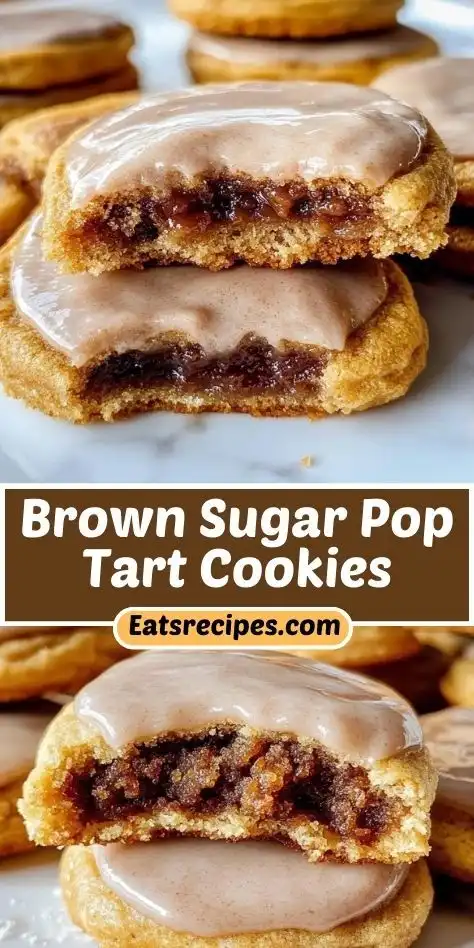
Brown Sugar Pop Tart Cookies are a whimsical, nostalgic fusion dessert that bridges the beloved convenience of toaster pastries with the warm, buttery charm of homemade cookies. Imagine the iconic flaky, fruit-filled, frosted, and sprinkled Pop-Tart—but reimagined as a soft-baked, chewy-crisp, brown sugar–infused cookie with a hidden jam swirl, glossy glaze, and playful confetti finish. These aren’t just copycat treats; they’re an elevated homage—crafted with real butter, brown sugar depth, high-quality preserves, and artisanal attention to texture and flavor balance. Whether you’re channeling childhood breakfast memories, planning a themed bake sale, or simply craving a comforting yet inventive sweet, these cookies deliver joy in every bite: tender crumb, caramelized edges, fruity bursts, and just the right amount of sparkle.
The History
The story of Brown Sugar Pop Tart Cookies begins not in a Kellogg’s lab—but in the vibrant crossroads of internet baking culture and retro food nostalgia. Pop-Tarts themselves debuted in 1964 as a shelf-stable, toaster-ready solution for busy American families, quickly becoming a cultural icon through bold flavors, colorful packaging, and unforgettable jingles. Decades later, home bakers began deconstructing and reinventing processed classics—giving rise to “gourmet remixes” like cereal milk ice cream, Twinkie cakes, and Oreo-stuffed brownies. Around the mid-2010s, food bloggers and TikTok creators started experimenting with Pop-Tart-inspired baked goods, notably “Pop Tart Bars” (a sheet-pan version) and “Pop Tart Muffins.” The breakthrough came when pastry chefs noticed how brown sugar’s molasses notes beautifully complemented classic strawberry and raspberry jams—adding warmth, moisture, and complexity missing in the original pastry. By 2019, the “Brown Sugar Pop Tart Cookie” emerged as a distinct genre: a drop-cookie format with laminated-like layers, achieved through strategic chilling and swirling techniques. It gained viral traction on Pinterest and Instagram for its visual appeal (vibrant pink swirls peeking through golden dough), ease of scaling, and emotional resonance—tapping into millennial and Gen Z longing for comfort, creativity, and a touch of playful irony. Today, it stands as a testament to how heritage ingredients and modern technique can transform mass-market icons into deeply personal, share-worthy confections.
Ingredients Breakdown
Every element in this recipe serves a precise functional and sensory purpose—no filler, no afterthoughts:
- Unsalted Butter (1 cup / 2 sticks, cold & cubed): Provides richness, flakiness potential, and structure. Cold temperature is non-negotiable—it creates steam pockets during baking, yielding tender layers and slight lift. European-style butter (82–84% fat) is highly recommended for superior flavor and browning.
- Packed Light Brown Sugar (1 cup): The star sweetener—not just for sweetness, but for acidity (from molasses) that activates baking soda, moisture retention (hygroscopic properties), and deep caramel notes. Dark brown sugar may be substituted for intensified molasses flavor, though it adds more moisture and slight bitterness.
- Granulated Sugar (½ cup): Balances brown sugar’s intensity, aids in cookie spread and crispness at the edges, and contributes to structural integrity via sugar crystallization.
- Large Egg (1, room temperature): Adds binding power, emulsification, and leavening support. Room temperature ensures even incorporation and prevents butter from seizing.
- Vanilla Extract (2 tsp, pure): Enhances aromatic complexity and rounds out molasses sharpness. Mexican or Tahitian vanilla adds floral nuance; avoid imitation.
- All-Purpose Flour (2¾ cups, spooned & leveled): The structural backbone. Spooning (not scooping) prevents over-measuring and dense cookies. For gluten-sensitive bakers, a 1:1 certified gluten-free blend (like King Arthur Measure for Measure) works exceptionally well when chilled thoroughly.
- Ground Cinnamon (1¼ tsp): Not traditional in Pop-Tarts—but a brilliant enhancement. It echoes spice notes found in brown sugar, adds warmth without heat, and complements berry jams beautifully. Toasting the cinnamon briefly in a dry pan pre-mixing intensifies its aroma.
- Baking Soda (½ tsp): Reacts with brown sugar’s acidity to create subtle lift and tenderness. Too much causes soapy aftertaste; too little yields flat, dense cookies.
- Fine Sea Salt (¾ tsp): Critical for flavor balancing—suppresses bitterness, heightens sweetness, and enhances overall perception of richness. Kosher salt may be used, but reduce by 25% due to larger crystal size.
- High-Quality Fruit Preserves (¾ cup): Must be thick, seedless, and low in added water (e.g., Bonne Maman, Smucker’s Natural, or small-batch local jams). Avoid jellies (too runny) or syrups (too thin)—they’ll bleed and cause spreading. Strawberry, raspberry, blackberry, or mixed berry all work; cherry adds dramatic color contrast. For adult variations: fig, apricot, or spiced plum.
- Confectioners’ Sugar Glaze Base (1½ cups sifted): Sifting eliminates lumps for a silky finish. Paired with heavy cream (not milk) for richness and stability, plus a pinch of salt to cut sweetness.
- Decorative Elements: Rainbow nonpareils, jimmies, or sanding sugar—applied while glaze is wet. For elegance: edible gold dust, crushed freeze-dried berries, or toasted coconut flakes.
Step-by-Step Recipe
- Chill the Butter & Prep Ingredients: Place cubed unsalted butter in the freezer for 15 minutes before starting. Meanwhile, measure all dry ingredients precisely. Line two large baking sheets with parchment paper or silicone baking mats—do not grease.
- Cream Butter & Sugars: In the bowl of a stand mixer fitted with the paddle attachment, beat cold butter, brown sugar, and granulated sugar on medium-low speed for 2–3 minutes until *just combined*—do not over-cream. The mixture should look crumbly and slightly sandy, not fluffy. Over-creaming incorporates too much air, causing excessive spread and loss of chewy density.
- Add Wet Ingredients: Add egg and vanilla; mix on low for 30 seconds until incorporated. Scrape down the bowl thoroughly with a flexible spatula.
- Incorporate Dry Ingredients: In a separate bowl, whisk together flour, cinnamon, baking soda, and salt. Gradually add to the wet mixture on low speed, mixing *only until no dry streaks remain* (about 45–60 seconds). Overmixing develops gluten → tough cookies. The dough will be shaggy and moist but hold together when pinched.
- Chill Dough (Critical Step): Divide dough in half. Shape each portion into a 1-inch-thick disc. Wrap tightly in plastic wrap and refrigerate for *at least 2 hours—or up to 72 hours*. This hydrates the flour, firms the butter, and relaxes gluten—ensuring perfect shape retention and even baking.
- Preheat & Prepare Jam Swirl: Preheat oven to 350°F (175°C) with racks positioned in upper and lower thirds. Let chilled dough discs sit at room temperature for 5 minutes for easier rolling. Place preserves in a small microwave-safe bowl; heat for 10–15 seconds until just fluid (not hot). Stir well and cool slightly.
- Roll & Layer: On a lightly floured surface, roll one dough disc into a 12×9-inch rectangle (~¼-inch thick). Spread half the warm preserves evenly over the surface, leaving a ½-inch border. Carefully roll the dough into a tight, even log (jelly-roll style), sealing the seam with a fork or damp finger. Repeat with second disc and remaining preserves. You now have two filled logs.
- Chill Logs Again: Gently wrap each log in plastic wrap and refrigerate for 30 minutes (or freeze for 15 minutes) to firm before slicing—this prevents smearing and preserves swirl integrity.
- Slice & Bake: Using a sharp, thin-bladed knife (dipped in hot water and wiped dry between cuts), slice logs into ¼-inch-thick rounds. Place 2 inches apart on prepared sheets. Bake for 11–13 minutes—rotating pans top-to-bottom and front-to-back at the 6-minute mark—until edges are golden brown and centers appear *just set* (they’ll firm as they cool). Do not overbake—cookies continue cooking on the hot sheet.
- Cool Completely: Let cookies rest on baking sheets for 5 minutes, then transfer to wire racks. Cool fully (at least 45 minutes) before glazing—warm cookies will melt the glaze.
- Glaze & Decorate: Whisk confectioners’ sugar, heavy cream (1–2 tbsp at a time), and salt until smooth and pourable (like thick honey). Dip the top of each cooled cookie into glaze, letting excess drip off. Immediately sprinkle with decorations. Allow glaze to set completely (1–2 hours) before stacking or storing.
Tips
- Butter Temperature Is Everything: If butter softens beyond cool-to-the-touch (above 65°F/18°C), chill dough longer—or pulse dough in food processor with 1 tbsp ice water to re-firm.
- No Rolling Pin? No Problem: Use a clean wine bottle or sturdy glass jar wrapped in plastic wrap as a rolling pin substitute.
- Swirl Success Secret: For ultra-defined marbling, freeze rolled logs for 20 minutes, then slice with a serrated knife using a gentle sawing motion.
- Consistent Sizing = Even Baking: Use a #20 cookie scoop (3 tbsp) to portion dough before rolling—then trim ends of logs to uniform length before slicing.
- Altitude Adjustment: Above 3,000 ft: Reduce brown sugar by 1 tbsp, add 1 extra tbsp flour, and increase oven temp by 15°F.
- Glaze Troubleshooting: Too thick? Add cream ½ tsp at a time. Too thin? Sift in 1 tsp more confectioners’ sugar. For shine: Add ¼ tsp light corn syrup to glaze mixture.
- Storage Wisdom: Store unglazed cookies airtight at room temp up to 5 days; glazed cookies up to 3 days (glaze softens texture over time). Freeze baked, unglazed cookies for up to 3 months—glaze after thawing.
- Revive Stale Cookies: Place in a 300°F oven for 3–4 minutes—they’ll regain crisp edges and soft centers.
Variations and Customizations
This recipe is a versatile canvas—flavor, texture, and occasion adaptable:
- Flavor Twists: Maple-Brown Butter: Brown ½ cup butter in a saucepan until nutty and golden; cool completely before creaming. Replace 2 tbsp brown sugar with pure maple syrup (reduce other liquids by 1 tsp). Lemon-Raspberry: Add 1 tbsp finely grated lemon zest to dough + 1 tsp lemon juice to preserves. Spiced Chai: Replace cinnamon with 1 tsp chai spice blend (cardamom, ginger, cloves, black pepper).
- Dietary Adaptations: Vegan: Substitute cold vegan butter (Miyoko’s or Earth Balance), flax egg (1 tbsp ground flax + 2.5 tbsp water), and maple syrup–sweetened preserves. Lower-Sugar: Use monk fruit–erythritol blend (1:1 ratio) for both sugars; reduce preserves to ½ cup and add 1 tbsp chia seeds to thicken.
- Texture Experiments: Crunchy Edge: Roll sliced cookies in coarse turbinado sugar before baking. Soft-Baked: Underbake by 1 minute and chill 10 minutes post-bake. Stuffed Center: Press a ¼ tsp jam dollop into center of each slice before baking—creates a molten core.
- Themed Decorations: Holiday: Red/green nonpareils + white glaze (Christmas); orange sprinkles + cinnamon-sugar rim (Halloween); pastel pearls + lavender glaze (Easter). Adult Sophistication: Black sesame glaze + matcha powder dusting; bourbon-infused glaze + candied pecans.
- Shape Shifters: Instead of logs, press dough into a 9×13-inch pan, swirl jam throughout, and bake as bars (cut into rectangles after cooling). Or use cookie cutters for festive shapes—re-roll scraps once only.
- Mini Version: Slice logs into ⅛-inch rounds and bake for 8–9 minutes—perfect for parties, lunchboxes, or tasting menus.
Health Considerations and Nutritional Value
While undeniably indulgent, mindful ingredient choices and portion awareness allow Brown Sugar Pop Tart Cookies to fit thoughtfully into balanced eating patterns:
- Nutrition Snapshot (per standard cookie, ~2.5″ diameter): Approx. 185 kcal | 24g carbs (14g sugars) | 9g fat (5.5g sat) | 2g protein | 0.5g fiber | 85mg sodium. Values vary based on jam choice (lower-sugar preserves reduce sugar by ~3g), butter type, and glaze thickness.
- Functional Benefits: Brown sugar provides trace minerals (calcium, potassium, iron) from molasses—though not a significant source. Cinnamon offers antioxidant polyphenols (e.g., cinnamaldehyde) linked to blood sugar modulation in clinical studies (though cookie-level impact is minimal). Real fruit preserves contribute pectin (a soluble fiber supporting gut health) and anthocyanins (anti-inflammatory plant pigments in berries).
- Smart Swaps for Wellness Goals: For heart health: Replace half the butter with avocado oil (adds monounsaturated fats). For blood sugar balance: Use 70% whole wheat pastry flour (adds fiber, slows glucose absorption) and pair cookies with Greek yogurt or nuts to lower glycemic load. For reduced inflammation: Add 1 tsp ground flaxseed to dry ingredients (omega-3 ALA).
- Mindful Enjoyment Practices: Savor one cookie slowly—notice aroma, texture, tart-sweet balance. Pair with herbal tea (hibiscus or rooibos) instead of sugary beverages. Bake a half-batch to avoid overconsumption. Freeze extras to enjoy mindfully over weeks—not all at once.
- Notable Absences: Zero artificial colors, preservatives, hydrogenated oils, or high-fructose corn syrup—unlike commercial Pop-Tarts. This recipe prioritizes whole-food integrity, making it nutritionally superior despite similar aesthetics.
Ingredients
- 1 cup (2 sticks / 227g) unsalted butter, cold & cubed
- 1 cup (200g) packed light brown sugar
- ½ cup (100g) granulated sugar
- 1 large egg, room temperature
- 2 tsp pure vanilla extract
- 2¾ cups (345g) all-purpose flour, spooned & leveled
- 1¼ tsp ground cinnamon
- ½ tsp baking soda
- ¾ tsp fine sea salt
- ¾ cup (200g) high-quality seedless fruit preserves (strawberry, raspberry, or blackberry)
- 1½ cups (180g) confectioners’ sugar, sifted
- 2–3 tbsp heavy cream (or full-fat coconut milk for dairy-free)
- Pinch of fine sea salt (for glaze)
- Rainbow nonpareils, jimmies, or decorative sugar, for topping
Directions
- Place cubed butter in freezer for 15 minutes. Line two large baking sheets with parchment paper or silicone mats.
- In stand mixer with paddle attachment, beat cold butter, brown sugar, and granulated sugar on medium-low for 2–3 minutes until crumbly and combined (do not over-cream).
- Add egg and vanilla; mix on low 30 seconds. Scrape bowl.
- In separate bowl, whisk flour, cinnamon, baking soda, and salt. Gradually add to wet ingredients on low; mix 45–60 seconds until just combined.
- Divide dough in half. Shape each into 1-inch-thick disc. Wrap in plastic; refrigerate ≥2 hours (up to 72 hours).
- Preheat oven to 350°F (175°C). Microwave preserves 10–15 sec until fluid; cool slightly.
- Roll one disc into 12×9-inch rectangle. Spread half preserves evenly, leaving ½-inch border. Roll into tight log; seal seam. Repeat with second disc.
- Wrap logs in plastic; refrigerate 30 min (or freeze 15 min).
- Using sharp knife dipped in hot water, slice logs into ¼-inch rounds. Place 2″ apart on sheets.
- Bake 11–13 minutes, rotating pans at 6 min, until edges golden and centers just set.
- Cool on sheets 5 min, then transfer to wire racks. Cool completely (≥45 min).
- Whisk confectioners’ sugar, 2 tbsp cream, and pinch salt until smooth. Add more cream if needed. Dip cookie tops; sprinkle immediately. Let glaze set 1–2 hours.
FAQ
- Can I use salted butter?
- Yes—but omit the added sea salt in the dough and reduce by ¼ tsp in the glaze. Unsalted gives superior control over sodium levels and flavor clarity.
- Why did my cookies spread too much?
- Most common causes: butter too warm, insufficient chilling, over-creaming, or under-measured flour. Always measure flour by spooning into cup and leveling—never scoop directly.
- Can I make the dough ahead?
- Absolutely. Refrigerate up to 3 days or freeze logs (wrapped tightly in plastic + foil) up to 3 months. Thaw overnight in fridge before slicing.
- My jam leaked everywhere! How do I prevent that?
- Use thick, low-moisture preserves—and ensure logs are well-chilled before slicing. Also, avoid overfilling: ¾ cup total is ideal for this yield.
- Can I bake frozen slices?
- Yes! Place frozen slices on parchment-lined sheet and bake at 350°F for 13–15 minutes—no thawing needed. Add 1–2 minutes to bake time.
- What if I don’t have a stand mixer?
- Use a large bowl and sturdy wooden spoon or pastry cutter. Cut cold butter into flour/sugar mixture until pea-sized crumbs form, then stir in wet ingredients gently.
- How do I get that shiny, professional glaze?
- Use heavy cream (not milk), sift sugar meticulously, and add ¼ tsp light corn syrup to the glaze mixture for lasting sheen and smoothness.
- Are these suitable for kids’ lunchboxes?
- Yes—especially if made with natural preserves and decorated minimally. Pack in insulated lunchbox with ice pack; glaze holds well for 6–8 hours at room temp.
- Can I use fresh fruit instead of preserves?
- Not recommended—fresh fruit adds excess water, causing spread and sogginess. Cook down chopped berries with 1 tsp sugar and ½ tsp lemon juice until thick and jammy (cool completely before swirling).
- Why does the recipe emphasize “spooned & leveled” flour?
- Scooping packs flour densely—adding up to 25% more per cup. This leads to dry, crumbly, overly thick cookies. Spooning replicates commercial weight standards.
Summary
Brown Sugar Pop Tart Cookies are a masterclass in nostalgic reinvention—melding the joyful familiarity of fruit-filled toaster pastries with the soul-satisfying depth of brown sugar–infused, bakery-style cookies, complete with elegant swirls, glossy glaze, and whimsical toppings. Every step, from precise chilling to intentional swirling and mindful glazing, honors both tradition and innovation—delivering not just a treat, but a multi-sensory experience rooted in craft, comfort, and creative delight.