Easy Meals: Cattle Drive Casserole
Introduction
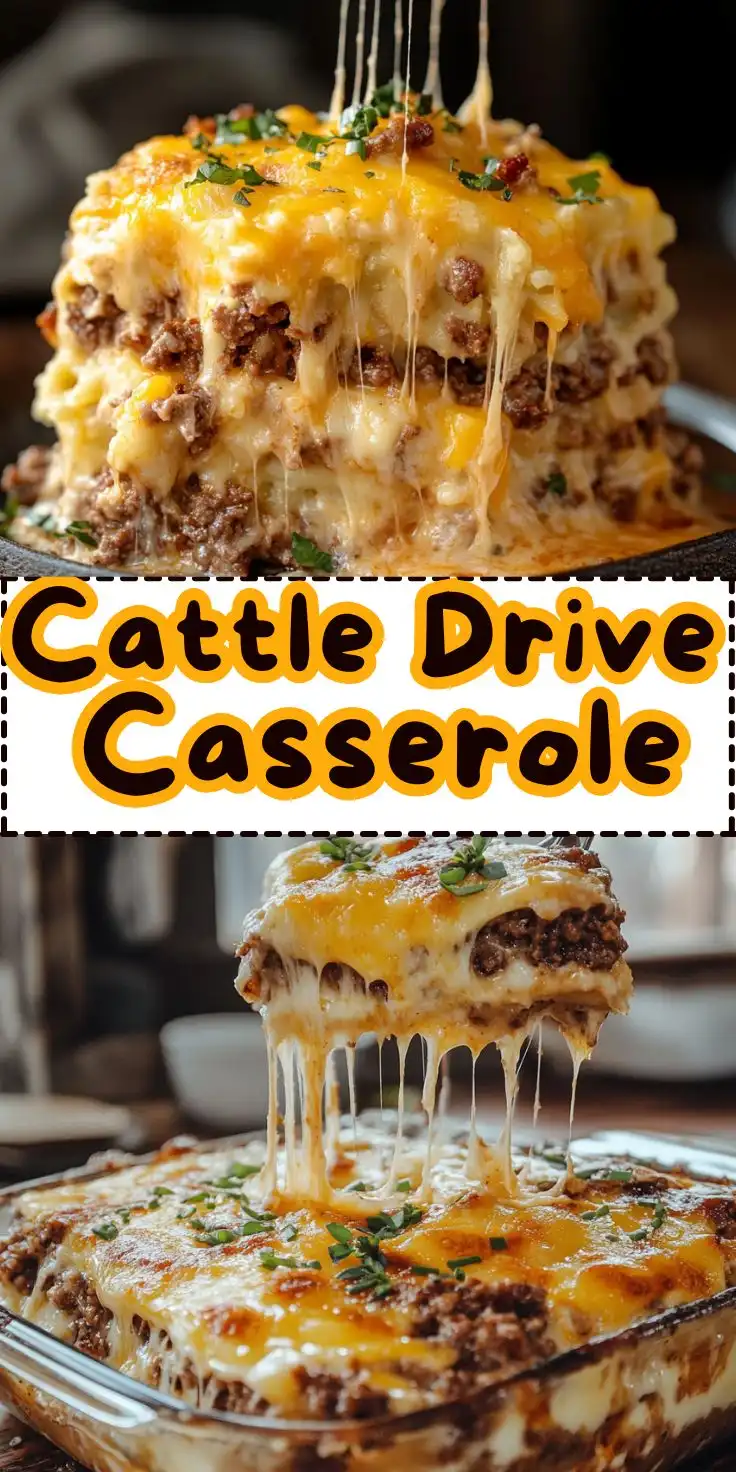
The Cattle Drive Casserole is a hearty, no-fuss, one-dish wonder that embodies the spirit of rustic American comfort food—robust, satisfying, and built for feeding a crowd (or stocking the freezer for busy weeknights). Born from the practical needs of ranchers, home cooks, and budget-conscious families, this casserole combines savory ground beef, tender elbow macaroni, creamy cheese sauce, and simple pantry staples into a golden-baked masterpiece. Its name evokes the rugged charm of the Old West—where meals had to be filling, flavorful, and made with what was on hand—and today, it delivers all that and more: minimal prep, forgiving technique, kid-friendly appeal, and effortless scalability. Whether you’re juggling school drop-offs, hosting game-day guests, or simply craving something warm and deeply comforting without the hassle, the Cattle Drive Casserole stands ready—stirred, layered, baked, and beloved.
The History
While not officially documented in 19th-century chuckwagon logs, the Cattle Drive Casserole is a modern culinary descendant of frontier resourcefulness and mid-century American casserole culture. In the late 1800s, cattle drivers relied on durable, non-perishable staples like dried beans, salted beef, flour, and hard cheese—ingredients that could withstand weeks on the trail. Though they didn’t bake casseroles over campfire coals, their ethos—“use what you have, stretch what you’ve got, feed everyone well”—laid the philosophical groundwork. Fast-forward to the 1950s, when casseroles surged in popularity thanks to advances in canned goods, convenience foods (like condensed soups), and the rise of the electric oven. Home economists and women’s magazines championed layered, baked dishes as symbols of domestic efficiency and modern motherhood. The Cattle Drive Casserole likely emerged organically in regional cookbooks and community fundraisers across Texas, Oklahoma, and Kansas—often appearing under names like “Cowboy Mac,” “Range Rider Bake,” or “Trail Boss Casserole.” Over decades, it evolved beyond its humble origins: homemade cheese sauces replaced canned soup, whole-grain pasta options appeared, and global flavors began weaving in—but its soul remains unchanged: a resilient, adaptable, deeply nourishing dish rooted in practicality and shared sustenance.
Ingredients Breakdown
Every ingredient in the Cattle Drive Casserole serves a purpose—flavor, texture, binding, richness, or balance—and understanding their roles helps elevate your results:
- Ground Beef (85/15 or 90/10): Provides rich umami depth and protein backbone. Leaner blends reduce grease but may yield drier texture; higher-fat versions add juiciness and flavor. Grass-fed or organic options deepen complexity.
- Elbow Macaroni (or short-cut pasta like cavatappi or shells): Classic choice for optimal sauce cling and bite. Its curved shape traps cheese and meat, delivering balanced mouthfuls. Undercook slightly (by 1–2 minutes) before baking to prevent mushiness during the oven’s final set.
- Onion & Garlic: Aromatics that build foundational flavor. Yellow onions offer sweetness and structure; minced garlic adds pungent warmth. Sautéing until translucent (not browned) ensures mellowness—not bitterness.
- All-Purpose Flour: Acts as a roux base for the cheese sauce—thickening without graininess. Toasting it briefly with butter prevents raw flour taste and enhances nuttiness.
- Whole Milk (or half-and-half for extra luxury): Adds creaminess and balances acidity. Low-fat milk works but yields a lighter, less velvety sauce; avoid non-dairy milks unless specially formulated for cooking (e.g., barista oat milk), as many curdle or thin unpredictably.
- Sharp Cheddar Cheese (freshly grated): The star of the sauce. Sharpness cuts through richness; freshness ensures meltability. Pre-shredded cheeses contain anti-caking starches (e.g., cellulose) that impede smooth melting—always grate yourself for silkier texture and bolder flavor.
- Colby Jack or Monterey Jack: Adds mild creaminess and superior stretch. Blending with cheddar creates ideal balance—sharpness + suppleness.
- Dijon Mustard (optional but highly recommended): A secret weapon! Just ½ tsp adds subtle tang, brightness, and emulsifying power—helping the cheese sauce stay smooth and resist separation.
- Worcestershire Sauce: Deepens savoriness with fermented notes (tamarind, anchovy, molasses). A few dashes lend complexity without detectable “fishiness.”
- Paprika (smoked or sweet): Contributes earthy aroma and warm color. Smoked paprika adds a gentle campfire nuance—a subtle nod to its namesake.
- Salt & Black Pepper: Essential for seasoning layers—not just the sauce, but the beef and pasta water too. Underseasoned casseroles fall flat; remember: cheese mutes salt, so err slightly on the side of generosity.
- Breadcrumb Topping (Panko or buttered Ritz-style crackers): Adds textural contrast—crisp, golden, and buttery. Panko yields airy crunch; crushed butter crackers bring nostalgic sweetness and richness.
Step-by-Step Recipe
- Preheat & Prep: Position oven rack in center. Preheat oven to 375°F (190°C). Lightly grease a 9×13-inch baking dish (glass or ceramic preferred for even heating).
- Cook the Pasta: Bring a large pot of generously salted water to a rolling boil. Add 12 oz elbow macaroni and cook for 6–7 minutes (1–2 minutes shy of package’s “al dente” time). Drain thoroughly in a colander, rinse briefly with cool water to halt cooking, and set aside.
- Sauté Aromatics & Brown Beef: In a large Dutch oven or deep skillet over medium heat, add 1 tbsp olive oil or butter. Sauté 1 finely diced yellow onion until soft and translucent (~5 min). Add 4 minced garlic cloves; stir 30 seconds until fragrant. Push mixture to edges, then add 1.5 lbs ground beef. Break apart with a wooden spoon and cook, stirring occasionally, until no pink remains and fat begins to render (~8–10 min). Drain excess grease *only if very greasy*—a tablespoon of rendered fat enhances flavor and helps build the roux.
- Build the Roux: Sprinkle ¼ cup all-purpose flour evenly over hot beef mixture. Stir constantly for 1–2 minutes to cook out raw flour taste and create a light golden paste. This step is crucial—it’s the foundation for thickening your cheese sauce without lumps.
- Whisk in Dairy: Gradually pour in 2.5 cups whole milk while whisking vigorously to eliminate lumps. Bring mixture to a gentle simmer, stirring frequently. Let bubble softly for 3–4 minutes until slightly thickened (it should coat the back of a spoon).
- Melt the Cheese: Reduce heat to low. Gradually whisk in 2 cups freshly grated sharp cheddar and 1 cup grated Colby Jack, a handful at a time, allowing each addition to fully melt before adding more. Stir in ½ tsp Dijon mustard, 1 tsp Worcestershire sauce, 1 tsp smoked paprika, 1 tsp black pepper, and 1.5 tsp kosher salt (adjust to taste). Remove from heat once smooth and glossy.
- Combine & Layer: In a large mixing bowl, gently fold the drained pasta into the cheese-beef mixture until evenly coated. Taste and adjust seasoning—add more salt, pepper, or a splash of hot sauce if desired. Transfer mixture to prepared baking dish, spreading evenly with a spatula.
- Add Topping: In a small bowl, mix ½ cup panko breadcrumbs with 3 tbsp melted butter, ¼ tsp garlic powder, and a pinch of parsley. Sprinkle evenly over casserole surface. For variation: substitute with 1 cup crushed buttery crackers (Ritz or Town House) mixed with 2 tbsp melted butter and ¼ tsp onion powder.
- Bake: Place dish in preheated oven. Bake uncovered for 25–30 minutes, until top is golden brown, edges are bubbling, and internal temperature reaches 165°F (74°C) when checked with an instant-read thermometer.
- Rest & Serve: Remove from oven and let stand for 10–15 minutes before serving. This critical step allows the sauce to re-set, preventing a runny first scoop and enhancing sliceability. Garnish with fresh chives or chopped parsley if desired.
Tips
- Make-Ahead Magic: Assemble the casserole (without topping) up to 24 hours ahead. Cover tightly and refrigerate. Add 5–10 extra minutes to bake time if going straight from fridge to oven. For freezer prep: assemble, top, wrap in double layers of foil + plastic wrap, and freeze up to 3 months. Thaw overnight in fridge before baking—or bake frozen (add 20–25 min covered with foil, then uncover for final 15 min).
- Avoid Curdling: Never boil the cheese sauce after cheese is added—high heat causes proteins to seize. Keep heat low, whisk gently, and remove from burner before incorporating cheese. Adding mustard or a splash of lemon juice helps stabilize emulsion.
- Texture Control: If sauce seems too thick before adding pasta, whisk in ¼–½ cup warm milk. If too thin after combining, return to stovetop for 1–2 minutes on low, stirring constantly. Pasta will absorb more liquid as it bakes, so aim for “just right” consistency before transferring.
- Golden Crust Secret: For deeper browning, broil for the final 1–2 minutes—but watch closely! Alternatively, brush breadcrumb topping with melted butter before baking for extra sheen and crispness.
- Layering Matters: Don’t skip sautéing aromatics—they build flavor depth no amount of seasoning can replicate. Likewise, undercooking pasta ensures perfect texture post-bake.
- Tool Tip: Use a heavy-bottomed Dutch oven for sauce-making—it distributes heat evenly and prevents scorching. A balloon whisk eliminates lumps faster than a fork or spoon.
- Leftover Love: Refrigerated leftovers keep for 4–5 days. Reheat individual portions in the microwave with a splash of milk to restore creaminess—or bake chilled slices at 350°F (175°C) for 15–20 minutes until heated through.
Variations and Customizations
This casserole is gloriously adaptable—swap, stretch, or spice it to match dietary needs, pantry contents, or adventurous cravings:
- Protein Swaps: Try ground turkey, chicken, pork, Italian sausage (mild or hot), or plant-based crumbles (Linda McCartney or Beyond Meat). For vegetarian version: replace beef with 2 cups cooked lentils + 1 cup sautéed mushrooms + 1 tsp soy sauce for umami depth.
- Pasta Alternatives: Use whole wheat elbows, gluten-free brown rice pasta, chickpea pasta (higher protein/fiber), or even small-curd cottage cheese folded in at the end for a “hidden veggie” twist.
- Cheese Reinventions: Swap cheddar for Gouda + fontina for nutty creaminess; use pepper jack for heat; add crumbled blue cheese for bold funk; or stir in ½ cup cream cheese for extra tang and thickness.
- Veggie Boost: Stir in 1.5 cups finely chopped spinach (wilted and squeezed dry), roasted bell peppers, zucchini ribbons, or corn kernels (fresh, frozen, or grilled). Add ½ cup diced tomatoes (well-drained) for brightness.
- Global Twists:
- Mexican Drive: Add 1 tsp cumin, 1 tsp chili powder, ¼ cup pickled jalapeños, and top with crushed tortilla chips + cotija cheese.
- Italian Range: Use Italian sausage, add ½ cup marinara, stir in ¼ cup chopped fresh basil, and top with mozzarella + parmesan.
- Smoky BBQ Trail: Mix in ⅓ cup BBQ sauce with beef, top with crispy fried onions and a drizzle of extra BBQ before serving.
- Dietary Modifications:
- Gluten-Free: Use GF pasta + GF flour (like Bob’s Red Mill 1-to-1) for roux. Ensure Worcestershire is GF-certified (Lea & Perrins U.S. version is, but UK is not).
- Dairy-Free: Substitute unsweetened almond or oat milk, dairy-free cheese shreds (Violife or Daiya), and vegan butter. Add 1 tbsp nutritional yeast for cheesy depth.
- Lower-Carb: Replace pasta with cauliflower “rice” (steamed & squeezed dry) or spiralized zucchini (salted, rested 10 min, then pressed). Reduce bake time to 20 minutes.
- Breakfast Drive: Add 6 beaten eggs + ¼ cup milk to warm cheese-beef mixture before folding in pasta—or layer in a greased dish with cooked potatoes and top with cheese. Bake at 350°F for 35–40 min until set.
Health Considerations and Nutritional Value
A standard serving (1/6 of recipe, approx. 1.5 cups) provides a balanced blend of macronutrients and essential micronutrients—with room for mindful customization:
- Nutrition Snapshot (per serving, using lean beef & whole milk): ~480–520 kcal | 28–32g protein | 22–26g carbohydrates (3–4g fiber) | 28–32g total fat (14–16g saturated) | 750–900mg sodium | Rich in calcium, vitamin B12, zinc, selenium, and choline.
- Protein Power: Ground beef contributes high-quality complete protein, supporting muscle maintenance and satiety. Pairing with dairy further boosts amino acid profile.
- Calcium & Bone Health: Two cups of cheese deliver ~50% of daily calcium needs—enhanced by vitamin D from fortified milk and absorption-supportive magnesium in whole grains (if using whole wheat pasta).
- Sodium Awareness: Naturally moderate, but can climb with added salt, Worcestershire, or salty toppings. Reduce by using low-sodium broth instead of some milk, omitting added salt, choosing low-sodium cheese, and skipping seasoned breadcrumbs.
- Fat Quality: While saturated fat is present, grass-fed beef offers higher omega-3s and CLA (conjugated linoleic acid)—linked to anti-inflammatory benefits. Using part lean beef + part ground turkey reduces overall saturated fat without sacrificing moisture.
- Fiber & Digestive Wellness: Standard pasta is low-fiber, but swapping in legume-based or whole-grain pasta increases fiber to 6–8g/serving—supporting gut health and glycemic control.
- For Heart Health: Limit cheese to 1.5 cups total, emphasize vegetables, use olive oil instead of butter, and add herbs (oregano, rosemary) rich in polyphenols.
- For Blood Sugar Balance: Combine with a side salad (fiber + vinegar dressing) and choose lower-glycemic pasta alternatives. The protein and fat content naturally slow carbohydrate absorption.
- Food Safety Note: Always cook ground beef to 160°F (71°C) internally, and ensure final casserole reaches 165°F (74°C). Refrigerate leftovers within 2 hours.
Ingredients
- 12 oz elbow macaroni (or pasta of choice)
- 1.5 lbs ground beef (85/15 recommended)
- 1 tbsp olive oil or unsalted butter
- 1 large yellow onion, finely diced
- 4 garlic cloves, minced
- ¼ cup all-purpose flour (or gluten-free 1:1 blend)
- 2.5 cups whole milk (or half-and-half)
- 2 cups sharp cheddar cheese, freshly grated
- 1 cup Colby Jack or Monterey Jack, freshly grated
- ½ tsp Dijon mustard
- 1 tsp Worcestershire sauce
- 1 tsp smoked paprika (or sweet paprika)
- 1 tsp freshly ground black pepper
- 1.5 tsp kosher salt (plus more for pasta water)
- ½ cup panko breadcrumbs
- 3 tbsp unsalted butter, melted
- ¼ tsp garlic powder (for topping)
- 2 tbsp fresh chives or parsley, for garnish (optional)
Directions
- Preheat oven to 375°F (190°C). Grease a 9×13-inch baking dish.
- Bring 4 quarts water to boil. Add 2 tbsp salt. Cook macaroni 1–2 minutes less than package directions. Drain, rinse briefly, and set aside.
- In a large Dutch oven over medium heat, warm oil/butter. Sauté onion 5 min until soft. Add garlic; stir 30 sec.
- Add ground beef. Cook, breaking apart, until no pink remains (~8–10 min). Drain excess fat only if very greasy.
- Sprinkle flour over mixture. Stir constantly 1–2 min to form roux.
- Gradually whisk in milk. Simmer 3–4 min until thickened (coats spoon).
- Reduce heat to low. Whisk in cheeses gradually until smooth. Stir in mustard, Worcestershire, paprika, pepper, and salt.
- Remove from heat. Fold in cooked pasta until fully coated.
- Transfer to baking dish. Smooth top.
- Mix panko, melted butter, and garlic powder. Sprinkle evenly over casserole.
- Bake uncovered 25–30 min until golden and bubbly (165°F internal temp).
- Let rest 10–15 min before serving. Garnish with chives or parsley.
FAQ
- Can I make this casserole ahead?
- Absolutely! Assemble completely (including topping), cover tightly, and refrigerate up to 24 hours. Add 5–10 minutes to bake time. For longer storage, freeze unbaked (up to 3 months); thaw overnight before baking.
- Why did my cheese sauce break or become grainy?
- Most commonly caused by overheating after cheese is added, using pre-shredded cheese (with anti-caking agents), or insufficient emulsifier (mustard helps!). Always melt cheese off direct heat, whisk gently, and use freshly grated varieties.
- Can I use canned soup instead of making the cheese sauce from scratch?
- You can—but it’s not recommended. Condensed cheddar soup often contains high sodium, preservatives, and artificial flavors. Homemade sauce tastes fresher, controls ingredients, and delivers superior texture and richness. That said, in a true pinch: substitute 1 can (10.5 oz) condensed cheddar soup + ½ cup milk, and reduce added salt accordingly.
- My casserole turned out dry. What went wrong?
- Likely causes: overcooked pasta (absorbs too much sauce), under-seasoned sauce (cheese mutes salt), insufficient dairy, or baking too long/uncovered. Next time: undercook pasta, add ¼ cup extra milk to sauce, check early, and tent with foil if top browns too fast.
- Is this casserole freezer-friendly?
- Yes! Assemble, top, wrap tightly in plastic wrap + heavy-duty foil. Freeze up to 3 months. To bake: thaw overnight in fridge, then bake as directed (add 5 min if needed). Or bake frozen: cover with foil, bake at 350°F for 45 min, uncover, bake 15–20 min more.
- Can I double this recipe?
- Yes—use two 9×13-inch dishes or one large roasting pan (12×17-inch). Increase bake time by 5–8 minutes and rotate pans halfway through for even browning.
- What sides pair well with Cattle Drive Casserole?
- Keep it simple and complementary: a crisp green salad with vinaigrette (cuts richness), steamed broccoli or roasted asparagus (adds color/nutrients), garlic bread or dinner rolls (for scooping), or tangy dill pickle spears (bright contrast).
- How do I reheat leftovers without drying them out?
- Individual portions: microwave with a splash of milk or water, covered, at 50% power in 30-sec intervals. For oven reheating: place in baking dish, cover with foil, add 2 tbsp milk or broth, bake at 325°F for 20–25 min until heated through.
Summary
The Cattle Drive Casserole is a timeless, versatile, and deeply satisfying one-dish meal rooted in American ingenuity—designed for simplicity, big flavor, and crowd-pleasing reliability. With smart substitutions, make-ahead flexibility, and nutrition-conscious tweaks, it adapts seamlessly to modern kitchens while honoring its hearty, homespun heritage.