Introduction
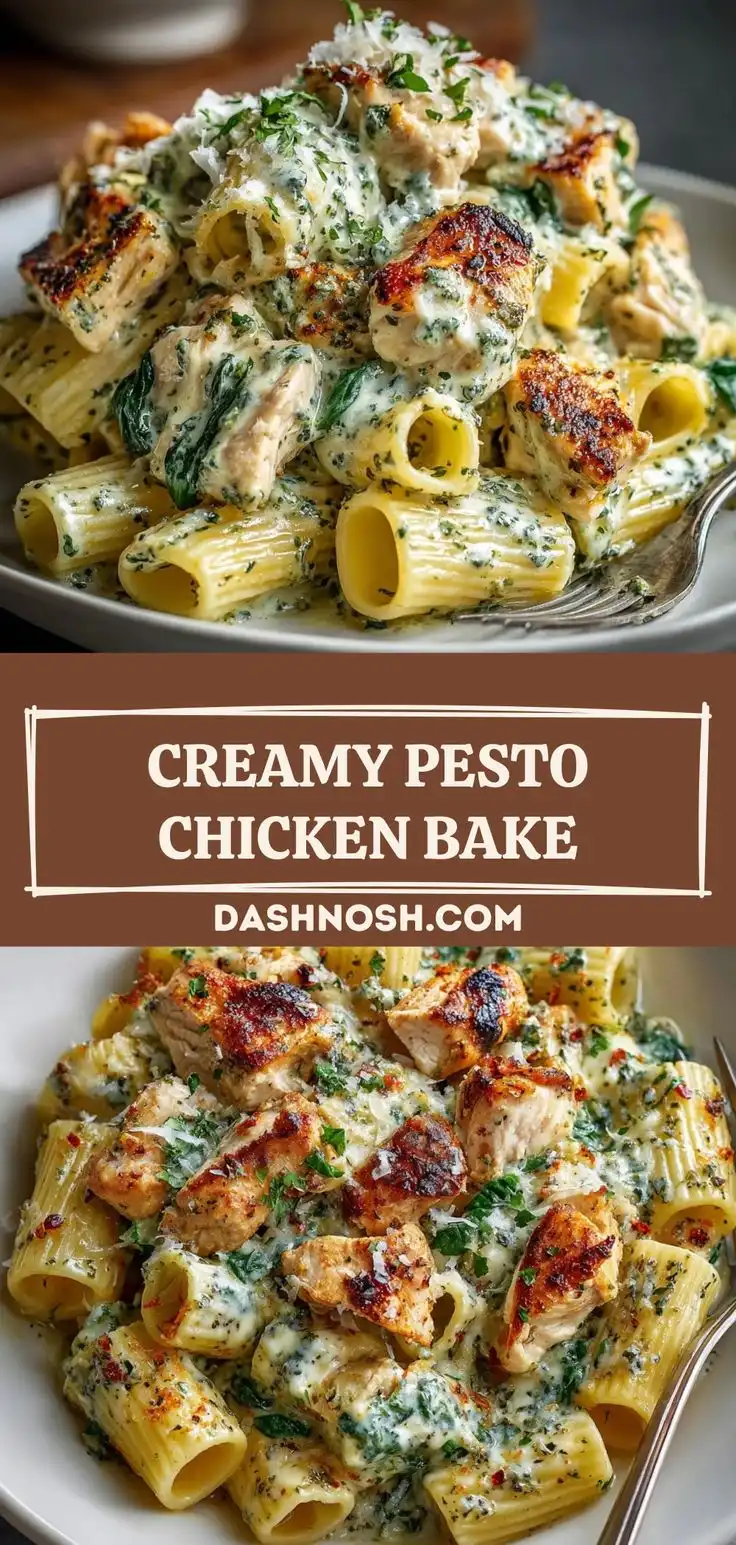
Creamy Pesto Chicken Pasta Bake is a luxurious, comforting, and restaurant-worthy dish that effortlessly bridges the gap between weeknight practicality and special-occasion indulgence. With its velvety herb-infused sauce, tender shredded or diced chicken, al dente pasta, and a golden, bubbling cheese crust, this baked pasta delivers layers of flavor and texture in every forkful. Unlike traditional stovetop pesto pasta—which can sometimes suffer from oil separation or diminished herb brightness—baking locks in moisture, melds the ingredients into harmonious unity, and adds a subtle caramelized depth that elevates the entire experience. Whether you’re feeding a hungry family, hosting friends for a casual dinner party, or meal prepping for nutritious lunches all week long, this dish satisfies cravings while offering surprising versatility and make-ahead convenience.
The History
While pesto itself traces its origins to Genoa, Italy—where pesto alla genovese was traditionally pounded by hand using basil, pine nuts, garlic, olive oil, and grated Parmigiano-Reggiano—the fusion of pesto with chicken and baked pasta is a distinctly modern, globally inspired evolution. In the mid-to-late 20th century, as Italian-American cuisine gained mainstream popularity in the U.S., home cooks began experimenting beyond classic spaghetti with meatballs or marinara. The rise of accessible imported ingredients (like jarred pesto in the 1970s), the proliferation of rotisserie chicken in supermarkets during the 1990s, and the growing cultural appetite for creamy, oven-baked casseroles collectively paved the way for hybrid dishes like Creamy Pesto Chicken Pasta Bake. Food bloggers and recipe developers in the 2010s further popularized it through visually driven platforms—showcasing its vibrant green hue, gooey cheese pull, and effortless one-dish appeal. Today, it stands as a beloved example of “elevated comfort food”: rooted in tradition but unafraid to innovate with technique, texture, and global pantry staples.
Ingredients Breakdown
Every exceptional Creamy Pesto Chicken Pasta Bake begins with thoughtfully selected, high-quality components—each playing a distinct functional and flavorful role:
- Pasta: Short, sturdy shapes like penne, fusilli, rigatoni, or campanelle hold up beautifully to baking and trap the creamy sauce within their nooks and ridges. Whole wheat, chickpea, or lentil-based pastas add fiber and protein without sacrificing texture.
- Chicken: Boneless, skinless chicken breasts or thighs—preferably organic, air-chilled, and hormone-free—are ideal. Thighs offer richer flavor and superior moisture retention; breasts yield a leaner, more delicate profile. Rotisserie chicken is an excellent time-saving shortcut that adds savory depth.
- Pesto: Authentic basil pesto (freshly made or high-quality store-bought) forms the aromatic backbone. Look for versions with real basil—not just “pesto-flavored”—and minimal preservatives. Traditional Genovese pesto contains no cheese or dairy, allowing you to control salt and creaminess separately—but many American-style pestos include Romano or Parmesan for extra umami.
- Creaminess Agents: A blend of full-fat ricotta (for light fluffiness and tang), heavy cream or half-and-half (for silkiness and richness), and freshly grated Parmigiano-Reggiano or Pecorino Romano (for salty, nutty complexity and superior meltability) creates a luxuriously balanced sauce. Greek yogurt or crème fraîche can be substituted for part of the cream to add bright acidity and reduce fat content without compromising body.
- Aromatics & Vegetables: Shallots or yellow onions provide sweet, foundational depth; garlic adds pungent warmth; and optional additions like sun-dried tomatoes, sautéed spinach, roasted red peppers, or caramelized leeks introduce color, sweetness, and nutritional density.
- Herbs & Seasonings: Fresh basil leaves (torn or chiffonaded) stirred in at the end preserve volatile oils and aroma. Red pepper flakes lend gentle heat; black pepper should be freshly cracked for maximum fragrance; lemon zest and juice cut through richness and brighten the entire dish.
- Topping: A dual-layer topping ensures both visual appeal and textural contrast: a base of mozzarella or provolone for stretch and melt, finished with a generous dusting of sharp Parmigiano-Reggiano or aged Asiago for golden, crispy, savory crunch.
Step-by-Step Recipe
- Prep & Preheat: Position oven rack in the center position and preheat oven to 375°F (190°C). Lightly grease a 9×13-inch ceramic or glass baking dish (or a deep 3-quart casserole dish) with olive oil or butter. Bring a large pot of well-salted water to a rolling boil.
- Cook the Pasta: Add pasta to boiling water and cook until *al dente*—about 1–2 minutes less than package instructions (typically 8–10 minutes). Stir occasionally to prevent sticking. Reserve 1 cup of starchy pasta water before draining thoroughly in a colander. Rinse briefly under cool water only if not mixing immediately (to halt cooking); otherwise, skip rinsing to retain starch for better sauce adhesion.
- Prepare the Chicken: While pasta cooks, shred or dice cooked chicken into bite-sized pieces. If starting with raw chicken, season generously with salt, pepper, and a pinch of dried oregano; pan-sear in olive oil over medium-high heat until golden and cooked through (165°F internal temp), about 5–7 minutes per side. Let rest 5 minutes before slicing or shredding.
- Sauté Aromatics: In a large skillet or Dutch oven, heat 2 tbsp olive oil over medium heat. Add finely minced shallot or onion and sauté until translucent (3–4 min). Add minced garlic and red pepper flakes; cook just until fragrant—about 30 seconds—taking care not to burn.
- Build the Sauce: Reduce heat to low. Stir in ricotta, heavy cream, and ¾ cup grated Parmigiano-Reggiano. Whisk vigorously until smooth and homogenous. Gently fold in pesto (start with ¾ cup; reserve remaining for layering or garnish), lemon zest, and a squeeze of fresh lemon juice. Season with salt and freshly ground black pepper—taste carefully, as pesto and cheese are already salty.
- Combine Everything: In a very large mixing bowl, combine drained pasta, shredded chicken, and warm sauce. Toss gently but thoroughly with tongs or a silicone spatula until every strand is evenly coated. If mixture seems thick or dry, add reserved pasta water 2 tbsp at a time until desired creaminess is achieved (usually ¼–½ cup). Fold in optional vegetables (e.g., 1 cup baby spinach, wilted; or ½ cup chopped sun-dried tomatoes).
- Layer & Top: Transfer mixture to prepared baking dish. Smooth top with a spatula. Sprinkle evenly with 1 cup shredded low-moisture mozzarella and an additional ¼ cup grated Parmigiano-Reggiano. For extra decadence, dot surface with 1 tbsp cold butter cut into small pieces.
- Bake: Place dish on a parchment-lined or foil-lined baking sheet (to catch potential bubbles/overflow). Bake uncovered for 25–30 minutes, or until edges are bubbling vigorously and top is deeply golden with crisp, lacy cheese edges. Rotate dish halfway through for even browning.
- Rest & Finish: Remove from oven and let rest for 10–15 minutes—this allows sauce to settle, prevents scalding, and makes portioning cleaner. Just before serving, garnish with fresh basil ribbons, a final drizzle of high-quality extra-virgin olive oil, flaky sea salt, and additional lemon zest for brightness.
Tips
- Don’t Overcook the Pasta: Undercooking by 1–2 minutes is non-negotiable—pasta continues to absorb liquid and soften during baking. Overcooked pasta turns mushy and disintegrates.
- Reserve That Pasta Water: Its starchy, saline-rich properties are magical for adjusting consistency. It helps emulsify the sauce, adds subtle seasoning, and prevents separation.
- Warm, Not Hot, Sauce Mixing: Combine sauce and pasta while both are warm—not piping hot—to avoid scrambling ricotta or causing pesto to oxidize and turn brown.
- Layer Flavor Strategically: Add half the pesto to the sauce base, then swirl the remaining half into the finished mixture just before baking—or even dollop on top pre-bake for marbled visual appeal and intensified herb notes.
- Control Moisture Meticulously: If using watery ingredients (spinach, zucchini, tomatoes), always sauté or roast them first and pat dry with paper towels to avoid a soggy bake.
- Go Low & Slow on Garlic: Burnt garlic tastes bitter and ruins the entire dish. Sauté it last—and only until fragrant—to preserve sweetness and aroma.
- Use Real Cheese—Not Pre-Grated: Shelf-stable grated cheeses contain anti-caking agents (like cellulose) that inhibit melting and create graininess. Grating your own Parmigiano or mozzarella guarantees superior texture and flavor release.
- Rest Before Serving: Skipping the 10-minute rest leads to sloppy, runny servings. Resting allows proteins to rebind and starches to gel slightly, yielding clean, cohesive portions.
- Bake in Ceramic or Glass: These materials distribute heat more evenly than metal, preventing scorching on the bottom and promoting uniform browning.
- Freeze Smart: Assemble unbaked (cool completely before covering tightly with double-layer plastic wrap + foil). Freeze up to 3 months. Thaw overnight in fridge, then bake covered for 25 min, uncover, and bake 15–20 min more until golden and bubbly.
Variations and Customizations
This recipe is a canvas—designed for creativity, dietary adaptation, seasonal inspiration, and pantry improvisation. Here are 15+ tested variations to keep it endlessly exciting:
- Vegetarian Version: Omit chicken entirely and boost protein with 1½ cups cooked white beans (cannellini or Great Northern), 1 cup crumbled feta or goat cheese, and ½ cup toasted walnuts or pine nuts.
- Vegan Adaptation: Use gluten-free pasta, plant-based ricotta (blended tofu + lemon + nutritional yeast), cashew cream instead of dairy cream, vegan Parmesan, and oil-packed sun-dried tomatoes for umami depth.
- Gluten-Free Option: Substitute certified GF pasta (brown rice, quinoa, or chickpea blends work best) and verify pesto and cheese labels for hidden gluten.
- Low-Carb/Keto: Replace pasta with spiralized zucchini (“zoodles”), blanched shirataki noodles, or cauliflower rice—roast or sauté first to remove excess moisture, then fold into sauce.
- Mediterranean Twist: Add kalamata olives, crumbled feta, artichoke hearts, and roasted cherry tomatoes; swap basil pesto for a vibrant parsley-lemon version.
- Spicy Arrabbiata Style: Stir in 1–2 tsp Calabrian chili paste or 1 tbsp harissa before baking; top with pickled jalapeños.
- Smoky Chipotle: Blend 1–2 canned chipotles in adobo into the sauce; garnish with avocado crema and cilantro.
- Herb Garden Edition: Use a custom pesto blend—2 parts basil, 1 part mint, 1 part flat-leaf parsley—with lemon thyme and chives folded in post-bake.
- Seafood Upgrade: Replace chicken with 1 lb lump crabmeat (picked over) or seared scallops; finish with dill and capers.
- Breakfast-for-Dinner: Add 4 whisked eggs and ¼ cup milk to warm sauce before combining with pasta/chicken—bake as directed for a rich, custard-like texture.
- “Everything Bagel” Crust: Mix 2 tbsp everything bagel seasoning into the cheese topping for irresistible crunch and savory depth.
- Truffle Indulgence: Drizzle 1 tsp white truffle oil over finished bake and garnish with shaved black truffle or truffle salt.
- Autumn Harvest: Fold in roasted butternut squash, caramelized onions, and sage-infused pesto; top with crispy fried sage leaves.
- Spring Pea & Asparagus: Blanch 1 cup English peas and 1 cup thin asparagus tips; stir in with lemon zest and mint pesto.
- Meal-Prep Power Bowl: Bake in individual ramekins (reduce time to 20–22 min); portion with roasted broccoli and lemon-tahini drizzle for balanced lunches.
- Buffalo Chicken Fusion: Toss shredded chicken in ⅓ cup buffalo sauce before mixing; add blue cheese crumbles to sauce and topping.
- Umami Bomb: Stir in 1 tbsp soy sauce or tamari + 1 tsp miso paste into sauce; top with toasted sesame seeds and scallions.
Health Considerations and Nutritional Value
A single 1¼-cup serving (approx. 1/6th of a standard 9×13-inch bake) provides approximately:
- Calories: 480–560 kcal (varies based on cheese, cream, and pasta choices)
- Protein: 32–40 g (excellent source—primarily from chicken and dairy)
- Carbohydrates: 42–52 g (mostly complex carbs from pasta; fiber ranges 4–7 g with whole-grain or legume pasta)
- Fat: 22–28 g (predominantly unsaturated fats from olive oil, pesto, and cheese; saturated fat ~10–12 g)
- Fiber: Significantly enhanced with added veggies (spinach +1g, roasted red peppers +2g, sun-dried tomatoes +3g per ½ cup)
- Vitamins & Minerals: Rich in calcium, phosphorus, vitamin B12 (from dairy/chicken), vitamin K (basil, spinach), folate (lentil pasta), and antioxidants (basil’s eugenol, lemon’s hesperidin)
Health-Conscious Swaps & Notes:
- Lower-Calorie: Replace half the cream with unsweetened almond milk + 1 tbsp cornstarch slurry; use part-skim ricotta and reduced-fat mozzarella.
- Heart-Healthy: Emphasize olive oil as primary fat, load up on leafy greens, choose lean chicken breast, and limit added sodium by using low-sodium pesto or making your own.
- Digestive Support: Basil contains eugenol, which may aid digestion; lemon juice stimulates gastric secretions; fiber from whole-grain pasta supports microbiome health.
- Anti-Inflammatory Benefits: Fresh basil, garlic, turmeric (add ¼ tsp to sauce), and omega-3-rich walnuts (in pesto or topping) contribute synergistic anti-inflammatory compounds.
- Considerations: High sodium content can accumulate quickly—monitor added salt, opt for low-sodium broth if using, and rinse canned ingredients. Those with lactose sensitivity may tolerate aged cheeses (Parmigiano) better than fresh ricotta; lactase enzyme supplements can also help.
Ingredients
Makes 6–8 servings
- 12 oz (340 g) short-cut pasta (penne, fusilli, or rigatoni—preferably bronze-die extruded for superior sauce grip)
- 2 tbsp extra-virgin olive oil, plus more for greasing
- 1 large shallot or 1 small yellow onion, finely minced (about ½ cup)
- 4 cloves garlic, minced
- ¼ tsp red pepper flakes (optional, for gentle heat)
- 2 cups (about 1 lb / 450 g) cooked chicken, shredded or diced (rotisserie, grilled, or pan-seared)
- 15 oz (425 g) whole-milk ricotta cheese (not part-skim)
- 1 cup (240 ml) heavy cream or half-and-half
- 1 cup (100 g) freshly grated Parmigiano-Reggiano or Pecorino Romano (divided)
- ¾–1 cup high-quality basil pesto (homemade preferred; see note below)
- Zest and juice of 1 large lemon (about 1 tbsp zest, 2 tbsp juice)
- 1 tsp kosher salt (plus more to taste)
- Freshly ground black pepper (10–12 turns of the mill)
- 1 cup (115 g) low-moisture mozzarella, shredded
- ¼ cup (25 g) additional freshly grated Parmigiano-Reggiano, for topping
- ¼ cup fresh basil leaves, torn (for garnish)
- Flaky sea salt and extra-virgin olive oil (for finishing)
Optional Add-Ins: 1 cup baby spinach (wilted), ½ cup chopped sun-dried tomatoes (oil-packed, drained), ½ cup roasted red peppers (chopped and patted dry), ¼ cup toasted pine nuts or walnuts.
Directions
- Preheat oven to 375°F (190°C). Grease a 9×13-inch (3-quart) ceramic or glass baking dish with olive oil.
- Bring 4–5 quarts water to a vigorous boil in a large pot. Add 2 tbsp kosher salt. Cook pasta according to package directions, reducing time by 1–2 minutes to achieve *al dente*. Reserve 1 cup starchy pasta water, then drain pasta thoroughly in a colander. Set aside.
- In a large skillet or Dutch oven, heat 2 tbsp olive oil over medium heat. Add shallot/onion and sauté until soft and translucent (3–4 min). Stir in garlic and red pepper flakes; cook 30 seconds until fragrant—do not brown.
- Reduce heat to low. Stir in ricotta, heavy cream, and ¾ cup grated Parmigiano-Reggiano. Whisk constantly until smooth and creamy (1–2 min). Fold in ¾ cup pesto, lemon zest, lemon juice, salt, and several generous turns of black pepper. Taste and adjust seasoning—remember pesto and cheese are salty.
- In a very large mixing bowl, combine drained pasta, shredded chicken, and warm sauce. Gently toss with tongs until fully coated. If mixture feels thick, add reserved pasta water 2 tbsp at a time until luxuriously creamy but not soupy (usually ¼–½ cup). Fold in any optional vegetables or nuts.
- Transfer mixture to prepared baking dish. Smooth top. Evenly sprinkle with 1 cup shredded mozzarella and remaining ¼ cup Parmigiano-Reggiano. Dot with 1 tbsp cold butter, if desired.
- Place dish on a parchment- or foil-lined baking sheet. Bake uncovered for 25–30 minutes, rotating halfway, until edges bubble vigorously and top is deeply golden brown with crisp, lacy cheese edges.
- Remove from oven and let rest for 10–15 minutes. Garnish generously with fresh basil ribbons, a final drizzle of high-quality olive oil, flaky sea salt, and extra lemon zest. Serve warm.
FAQ
- Can I make this ahead of time?
- Absolutely. Assemble completely (through step 6), cover tightly with plastic wrap, and refrigerate up to 24 hours. When ready to bake, remove plastic, let sit at room temperature for 20 minutes, then bake as directed—adding 5–8 minutes if chilled. For longer storage, freeze unbaked (up to 3 months); thaw overnight before baking.
- Why does my pesto turn brown after baking?
- Browning occurs due to oxidation of basil’s chlorophyll when exposed to heat and air. To minimize it: use freshly made pesto (not jarred with preservatives), stir in only half the pesto before baking, and reserve the rest to swirl in post-bake or garnish the top. Adding lemon juice (acid) also helps stabilize color.
- Can I use store-bought pesto?
- Yes—but read labels carefully. Avoid versions with artificial colors, excessive preservatives (sodium benzoate, potassium sorbate), or fillers like canola oil or sugar. Look for “basil,” “olive oil,” “garlic,” “pine nuts,” “cheese,” and “salt” as the only ingredients. Brands like DeLallo, Gaea, or Primal Kitchen offer clean-label options.
- My sauce separated—what went wrong?
- Common causes: overheating the ricotta/cream mixture (causing curdling), using low-fat dairy (which lacks stabilizing fat), or adding cold ricotta to hot sauce. Always warm ricotta gradually over low heat, whisk constantly, and never boil. Let sauce cool slightly before mixing with warm (not hot) pasta.
- Can I substitute the chicken with another protein?
- Yes! Try 1½ cups cooked lentils (French or black beluga hold shape best), 1 lb seared shrimp (add in last 5 minutes of baking), 2 cups crumbled Italian sausage (pre-cooked), or marinated and grilled portobello mushrooms for vegetarian depth.
- Is this dish freezer-friendly?
- Yes—both baked and unbaked versions freeze well. For best results, freeze unbaked: cool completely, wrap tightly in double plastic + foil, label, and freeze up to 3 months. Thaw overnight in fridge, then bake covered 25 min, uncover, and bake 15–20 min more until golden and bubbling. Baked versions reheat well in oven (325°F, covered, 20–25 min) or microwave (in 60-sec intervals, stirring gently).
- How do I reheat leftovers without drying them out?
- Add 1–2 tbsp cream, milk, or reserved pasta water to portions before reheating. Cover with damp paper towel in microwave (heat in 60-sec bursts, stirring between), or reheat gently in a covered skillet over low heat, stirring frequently. Oven method (325°F, covered with foil, 15–20 min) yields most consistent results.
- What wine pairs beautifully with this dish?
- A crisp, herbaceous white complements the basil and cream: try Vermentino from Sardinia, Sauvignon Blanc from New Zealand, or a dry Rosé from Provence. For red lovers, opt for a lighter-bodied, low-tannin option like chilled Barbera d’Asti or Pinot Noir.
- Can I make this dairy-free?
- Yes—with thoughtful swaps: use soaked and blended raw cashews (¾ cup) + ¼ cup water for “ricotta,” coconut cream (not milk) for richness, nutritional yeast + lemon for “cheesy” tang, and vegan mozzarella shreds designed for melting. Ensure pesto is dairy-free (many traditional versions are).
- Why use both mozzarella and Parmigiano?
- Mozzarella provides stretch, melt, and mild milky richness; Parmigiano delivers deep umami, saltiness, and structural crispness when baked. Together, they create the ideal balance of texture, flavor, and visual appeal—neither alone achieves the same result.
Summary
Creamy Pesto Chicken Pasta Bake is a masterclass in layered comfort—melding the vibrant freshness of basil pesto, the tender succulence of perfectly seasoned chicken, the hearty satisfaction of al dente pasta, and the luxurious mouthfeel of a slow-baked, golden-cheese crust.
With its adaptable framework, nutrition-forward potential, make-ahead flexibility, and endless creative possibilities—from Mediterranean twists to keto transformations—it’s far more than a recipe: it’s a culinary cornerstone for modern home cooking.