Introduction
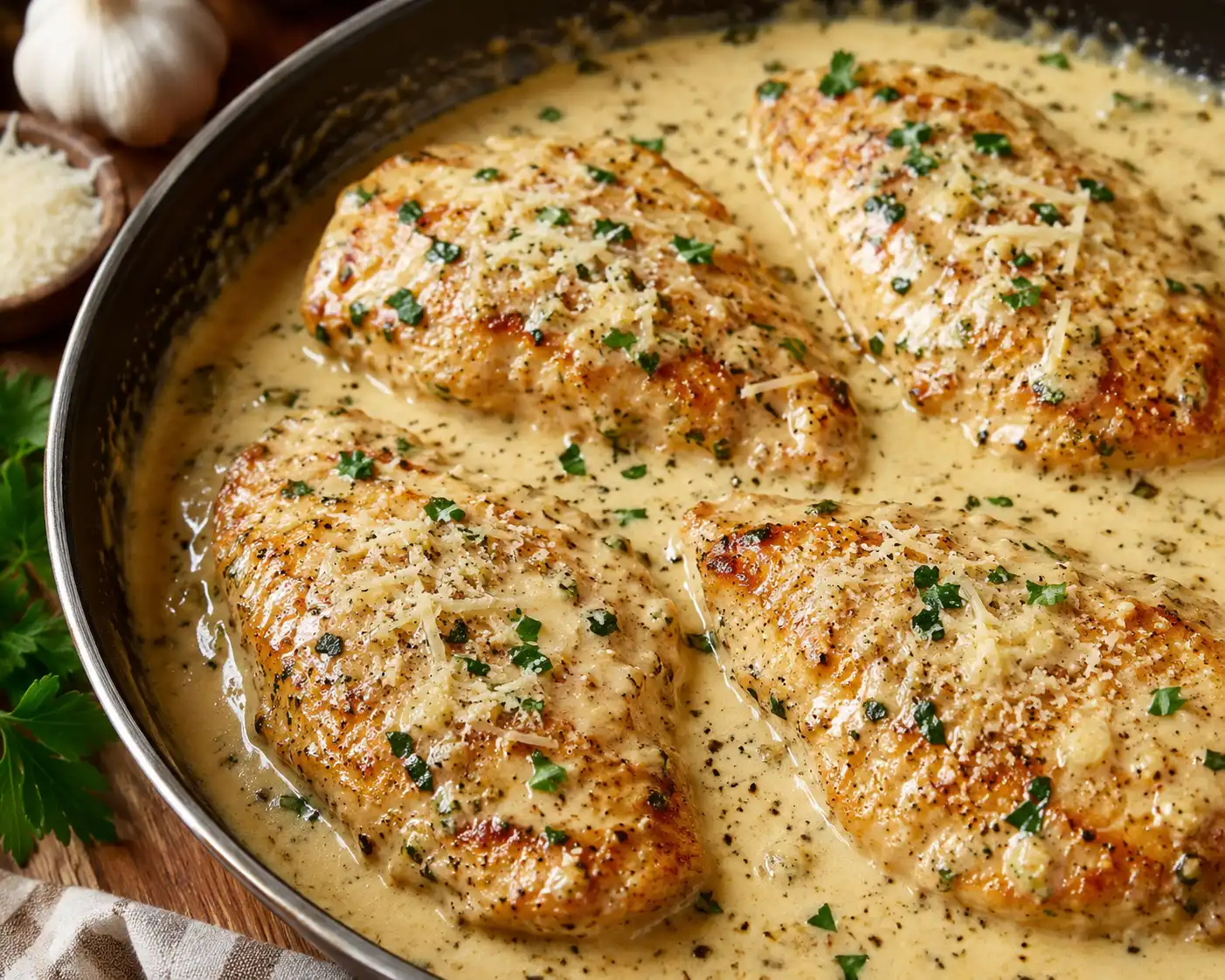
Creamy Garlic Parmesan Chicken is a beloved, restaurant-quality dish that brings together tender pan-seared chicken breasts, a luxuriously rich and velvety garlic-parmesan sauce, and layers of aromatic depth—all in under 30 minutes. Its irresistible balance of savory umami, pungent garlic, nutty aged cheese, and silky cream makes it a weeknight favorite for home cooks seeking elegance without complexity. Whether served over buttered egg noodles, creamy mashed potatoes, or alongside roasted vegetables, this dish consistently delivers comfort, sophistication, and crowd-pleasing satisfaction. It’s the kind of meal that transforms ordinary evenings into memorable culinary experiences—elegant enough for date night, hearty enough for family dinners, and adaptable enough to suit dietary preferences across the spectrum.
The History
The origins of Creamy Garlic Parmesan Chicken are rooted not in a single historical moment but in the broader evolution of Italian-American comfort cuisine during the mid-to-late 20th century. While traditional Italian cooking favors simplicity—relying on high-quality olive oil, fresh herbs, and minimal dairy—Italian-American chefs and home cooks began experimenting with richer, more indulgent interpretations to suit local palates and pantry staples. The rise of accessible heavy cream, pre-grated Parmesan (though purists prefer freshly grated), and widespread use of garlic powder alongside fresh garlic helped shape what we now recognize as the modern creamy parmesan chicken profile. Influences can also be traced to classic French techniques like *sauce au vin* and *crème fraîche*-based reductions, adapted by American home economists and food columnists in the 1950s–70s who emphasized approachable “gourmet” meals using canned soups, dairy, and convenience ingredients. Over time, as culinary literacy increased and whole-food awareness grew, the recipe evolved: eliminating condensed soup bases, embracing fresh garlic and real Parmigiano-Reggiano, and refining pan-sauce methods through deglazing and reduction. Today, it stands as a quintessential example of fusion comfort food—honoring Italian flavor principles while embracing American practicality, versatility, and love of creamy textures.
Ingredients Breakdown
Understanding each ingredient’s role is key to mastering this dish—not just for flavor, but for texture, emulsion stability, and overall harmony:
- Chicken Breasts (boneless, skinless): Opt for even-thickness cuts (6–8 oz each) or pound them to ½-inch thickness for uniform cooking. High-quality, air-chilled, antibiotic-free chicken yields superior moisture retention and cleaner taste. Brining (15–30 min in 1 Tbsp salt + 1 cup water) adds juiciness and seasoning penetration.
- Garlic (fresh minced): The aromatic heart of the dish. Fresh garlic contains allicin—the compound responsible for its pungent, savory depth—which mellows beautifully when sautéed but burns easily. Avoid garlic powder here unless supplementing; it lacks the volatile oils crucial for layered aroma.
- Parmigiano-Reggiano (finely grated, not pre-shredded): Authentic Italian DOP-certified Parmigiano-Reggiano offers complex nuttiness, crystalline texture, and natural umami. Pre-shredded versions contain anti-caking agents (like cellulose) that inhibit melting and cause graininess or separation in sauces.
- Heavy Cream (36–40% milk fat): Provides luxurious body, stabilizes the emulsion, and carries fat-soluble flavors. Lower-fat alternatives (half-and-half, whole milk) risk curdling and yield a thin, watery sauce. For lighter versions, consider full-fat coconut cream (unsweetened) paired with nutritional yeast for vegan adaptations.
- Unsalted Butter: Adds richness, gloss, and a subtle sweetness. Used both for searing (high smoke point clarified butter works best) and finishing (cold cubes whisked in off-heat for silkiness and sheen).
- Dry White Wine (e.g., Sauvignon Blanc or Pinot Grigio): Adds acidity, brightness, and complexity. The alcohol evaporates, leaving behind fruity, herbal notes that cut through richness. Substitute with low-sodium chicken broth + ½ tsp lemon juice if avoiding alcohol—but wine is highly recommended for depth.
- Chicken Broth (low-sodium, preferably homemade or high-quality carton): Forms the liquid base of the sauce. Low-sodium versions allow precise salt control. Homemade broth contributes gelatin, which enhances mouthfeel and helps thicken naturally upon reduction.
- Fresh Herbs (parsley, thyme, or oregano): Added at the end for aromatic lift and visual freshness. Thyme complements garlic and parmesan especially well; parsley adds clean, grassy contrast.
- Seasonings (kosher salt, freshly ground black pepper, optional pinch of nutmeg or cayenne): Salt enhances all flavors and aids protein denaturation; pepper adds warmth; nutmeg subtly bridges dairy and savory notes; cayenne lends quiet heat that balances richness.
Step-by-Step Recipe
- Prep & Season: Pat chicken breasts *very dry* with paper towels—this ensures proper browning, not steaming. Lightly pound thicker ends to ½-inch uniformity using a meat mallet or heavy skillet. Season both sides generously with kosher salt and black pepper. Let sit at room temperature for 10–15 minutes.
- Sear the Chicken: Heat 1½ Tbsp high-smoke-point oil (avocado, grapeseed, or light olive oil) in a large stainless steel or cast-iron skillet over medium-high heat until shimmering. Add chicken and cook undisturbed for 5–6 minutes, until deeply golden and releasing easily from the pan. Flip and cook 4–5 more minutes until internal temperature reaches 155°F (it will carry over to 165°F). Transfer to a plate, tent loosely with foil, and rest for 5 minutes—this retains juices and prevents dryness.
- Build the Flavor Base: Reduce heat to medium. In the same skillet, add 1 Tbsp unsalted butter. Once melted, add 4–5 cloves finely minced garlic and 1 tsp fresh thyme leaves. Sauté gently for 45–60 seconds—just until fragrant and translucent (do *not* brown or burn). Stir constantly to prevent scorching.
- Deglaze & Simmer: Pour in ¼ cup dry white wine, scraping vigorously with a wooden spoon to lift all golden fond (those flavorful browned bits). Simmer 1–2 minutes until alcohol evaporates and liquid reduces by half. Add ¾ cup low-sodium chicken broth and simmer another 2–3 minutes until slightly reduced and aromatic.
- Create the Cream Sauce: Reduce heat to low. Whisk in ¾ cup heavy cream, stirring continuously. Bring to a gentle simmer (small bubbles at edges only—do *not* boil vigorously, or cream may separate). Simmer uncovered for 3–4 minutes, stirring often, until sauce thickens enough to coat the back of a spoon.
- Incorporate Cheese: Remove from heat. Gradually whisk in ½ cup freshly grated Parmigiano-Reggiano, one tablespoon at a time, allowing each addition to fully melt before adding the next. This prevents clumping and ensures smooth emulsification. Stir in 1 Tbsp cold unsalted butter for extra richness and shine.
- Final Assembly: Return rested chicken to the skillet, spooning sauce over each piece. Gently simmer together for 1–2 minutes on low heat to reheat chicken and marry flavors. Do not boil—this can toughen chicken and break the sauce.
- Garnish & Serve: Sprinkle generously with chopped fresh flat-leaf parsley and an extra dusting of Parmigiano-Reggiano. Optional: a drizzle of high-quality extra virgin olive oil or lemon zest for brightness.
Tips
- Dry chicken = golden crust. Moisture is the enemy of browning—pat thoroughly before seasoning.
- Don’t overcrowd the pan. Cook in batches if needed. Crowding drops pan temperature and causes steaming instead of searing.
- Control garlic heat. Garlic burns in under 30 seconds at medium-high. Keep heat at medium and stir constantly once added.
- Low and slow for cream. Boiling cream destabilizes its emulsion. Gentle simmering preserves texture and prevents splitting.
- Grate cheese yourself. Pre-shredded cheese contains starches and cellulose that impede melting and cause grittiness.
- Rest chicken before slicing. Resting allows juices to redistribute—cutting too soon releases moisture onto the plate, not into the meat.
- Taste and adjust at every stage. Balance salt, acid (lemon/wine), and richness before serving. A splash of lemon juice at the end brightens the entire dish.
- Use the fond. Those browned bits clinging to the pan are pure flavor gold—deglazing captures them completely.
- Thicken naturally. Avoid flour or cornstarch unless necessary. Reduction and cheese provide ideal body. If sauce is too thin, simmer 1–2 minutes longer. Too thick? Whisk in 1–2 tsp warm broth or cream.
- Double the sauce intentionally. Leftover sauce freezes beautifully (up to 3 months) and reheats well for pasta, roasted veggies, or as a dip.
Variations and Customizations
This recipe is remarkably versatile—ideal for accommodating dietary needs, seasonal ingredients, pantry constraints, or creative inspiration:
- Gluten-Free: Naturally GF—just verify broth and wine labels for hidden gluten (some broths use hydrolyzed wheat protein). Serve with GF pasta, rice, or cauliflower mash.
- Dairy-Free/Vegan: Use olive oil instead of butter; substitute cashew cream (soaked raw cashews blended with water) or full-fat coconut cream for heavy cream; replace Parmesan with a blend of nutritional yeast, toasted sunflower seeds, garlic powder, and miso paste for umami depth.
- Lighter Version: Swap heavy cream for evaporated skim milk + 1 tsp Dijon mustard (emulsifier); use Greek yogurt (tempered with warm sauce first) for tang and protein; increase herbs and lemon zest to compensate for reduced richness.
- Protein Swaps: Try boneless turkey cutlets, pork medallions, firm tofu (pressed & pan-fried), or seitan scallops. Adjust cook times accordingly.
- Vegetable-Forward: Sauté sliced mushrooms with the garlic for earthy depth; add baby spinach at the end until wilted; stir in roasted cherry tomatoes or artichoke hearts for acidity and texture.
- Herb Variations: Rosemary adds piney intensity (use sparingly); basil lends summery sweetness; tarragon offers subtle anise-like elegance—especially with wine.
- Spice It Up: Add red pepper flakes with garlic; finish with harissa or Calabrian chili paste; incorporate chipotle in adobo for smoky heat.
- Breakfast Twist: Serve over creamy polenta or hash browns; top with a poached egg—the yolk enriches the sauce further.
- Meal-Prep Friendly: Cook chicken and sauce separately; store up to 4 days refrigerated. Reheat gently on stove with splash of broth to refresh consistency.
- Sheet-Pan Version: Arrange seasoned chicken and veggies (broccoli, bell peppers, zucchini) on a parchment-lined sheet pan. Roast at 400°F for 20–25 minutes. Whisk together sauce separately and pour over hot components before serving.
Health Considerations and Nutritional Value
A single 6-oz serving (chicken + ⅓ cup sauce, no sides) provides approximately:
- Calories: ~480–520 kcal
- Protein: ~42g (excellent source—supports muscle repair, satiety, and metabolic health)
- Fat: ~28g (mostly unsaturated from olive oil and cheese; includes beneficial CLA and omega-3s if using grass-fed dairy)
- Saturated Fat: ~15g (within moderate limits for most healthy adults; pair with fiber-rich sides to support cholesterol metabolism)
- Sodium: ~580mg (varies by broth/cheese choice—opt for low-sodium broth and measure salt mindfully)
- Calcium: ~220mg (17% DV—supporting bone and dental health via Parmigiano-Reggiano)
- Vitamin B12, Niacin, Selenium: Highly abundant in chicken—critical for energy production, nervous system function, and antioxidant defense.
Considerations: While rich, this dish fits well within balanced eating patterns like Mediterranean or DASH diets when portion-controlled and paired with non-starchy vegetables. Those managing hypertension should prioritize low-sodium broth and skip added table salt. Individuals with lactose sensitivity often tolerate aged cheeses (Parmigiano-Reggiano contains <0.1g lactose per ounce) and heavy cream (naturally low in lactose) better than milk or soft cheeses. For keto followers, it’s naturally low-carb (<2g net carbs per serving). Always consult a registered dietitian for personalized guidance related to conditions like GERD, IBS, or renal disease—where high-fat or high-protein intake may require individualized adjustment.
Ingredients
- 2 (6–8 oz) boneless, skinless chicken breasts, pounded to ½-inch thickness
- 1½ tsp kosher salt, divided
- 1 tsp freshly ground black pepper, divided
- 1½ Tbsp high-smoke-point oil (avocado, grapeseed, or light olive oil)
- 1 Tbsp unsalted butter
- 4–5 cloves garlic, finely minced (about 1½ Tbsp)
- 1 tsp fresh thyme leaves (or ½ tsp dried)
- ¼ cup dry white wine (Sauvignon Blanc or Pinot Grigio preferred)
- ¾ cup low-sodium chicken broth
- ¾ cup heavy cream (36–40% fat)
- ½ cup freshly grated Parmigiano-Reggiano cheese (not pre-shredded)
- 1 Tbsp cold unsalted butter, cubed
- 2 Tbsp fresh flat-leaf parsley, finely chopped
- Additional grated Parmigiano-Reggiano and lemon zest for garnish (optional)
Directions
- Pat chicken breasts extremely dry with paper towels. Pound gently to even ½-inch thickness. Season both sides with 1 tsp salt and ½ tsp black pepper.
- Heat oil in a large skillet over medium-high heat until shimmering. Add chicken and cook 5–6 minutes per side, until golden and internal temperature reaches 155°F. Transfer to a plate, tent with foil, and rest 5 minutes.
- Reduce heat to medium. Add 1 Tbsp butter to same skillet. Once melted, add garlic and thyme; sauté 45–60 seconds until fragrant—do not brown.
- Pour in wine, scraping up browned bits with a wooden spoon. Simmer 1–2 minutes until reduced by half.
- Add broth; simmer 2–3 minutes until slightly reduced.
- Reduce heat to low. Whisk in heavy cream. Simmer gently 3–4 minutes until thickened to coat the back of a spoon.
- Remove from heat. Whisk in Parmigiano-Reggiano, 1 Tbsp at a time, until fully melted and smooth. Whisk in cold butter.
- Return chicken to skillet, spooning sauce over top. Warm gently 1–2 minutes on low heat.
- Garnish with parsley, extra cheese, and lemon zest if desired. Serve immediately.
FAQ
- Can I make this ahead of time?
- Yes! Cook chicken and sauce separately up to 3 days ahead. Store chilled in airtight containers. Reheat sauce gently on stove with 1–2 tsp warm broth to restore consistency; warm chicken separately or combine at the end.
- Why did my sauce break or become grainy?
- Common causes: boiling cream too vigorously, adding cold cheese to hot sauce (shock causes clumping), using pre-shredded cheese (anti-caking agents), or insufficient whisking. Fix by removing from heat, whisking in 1 tsp cold butter or cream, and gently warming while stirring.
- Can I freeze Creamy Garlic Parmesan Chicken?
- Yes—but best frozen *without* the cream sauce. Freeze cooked, cooled chicken for up to 3 months. Make fresh sauce when ready to serve. Alternatively, freeze sauce alone (without cheese) for up to 2 months; stir in fresh cheese after thawing and reheating.
- What’s the best side dish to serve with it?
- Classic pairings include: buttered wide egg noodles, creamy mashed potatoes, garlic-herb risotto, roasted asparagus or broccoli, lemon-dill quinoa, or a crisp arugula salad with shaved fennel and lemon vinaigrette.
- Can I use chicken thighs instead of breasts?
- Absolutely. Boneless, skinless thighs offer more fat and forgiveness—cook to 165°F. They’ll take ~6–7 minutes per side, depending on thickness. Their richer flavor pairs exceptionally well with the garlicky cream sauce.
- Is there a way to make this in the Instant Pot or slow cooker?
- Instant Pot: Sear chicken using Saute mode, then remove. Sauté garlic, deglaze, add broth, return chicken, pressure cook 8 minutes, quick release. Remove chicken, reduce sauce using Saute mode, stir in cream and cheese. Slow cooker is *not recommended*: dairy tends to separate and chicken becomes mushy. Stick to stovetop for optimal texture and emulsion.
- How do I fix a sauce that’s too thin?
- Simmer uncovered 1–2 minutes longer, stirring frequently. Or make a slurry: mix 1 tsp cornstarch with 1 Tbsp cold broth, whisk into warm sauce, and simmer 1 minute until thickened.
- How do I fix a sauce that’s too thick?
- Whisk in warm chicken broth or cream, 1 tsp at a time, until desired consistency is reached. Avoid cold liquids—they can cause separation.
- Can I use bottled lemon juice instead of wine?
- Lemon juice adds brightness but lacks wine’s complexity and depth. For non-alcoholic version, use 3 Tbsp broth + 1 Tbsp lemon juice + ½ tsp Dijon mustard to mimic acidity and body.
- What if I don’t have fresh garlic?
- Fresh is ideal—but in a pinch, use 1 tsp garlic paste or ½ tsp high-quality garlic powder added with broth (not with initial sauté). Avoid jarred minced garlic—it often has preservatives that dull flavor.
Summary
Creamy Garlic Parmesan Chicken is a masterclass in simple elegance—melding perfectly seared, juicy chicken with a luxuriously smooth, deeply savory sauce built from foundational techniques: fond development, careful deglazing, controlled reduction, and emulsification with aged cheese and premium dairy. It’s endlessly adaptable, nutritionally robust, and reliably impressive—proving that extraordinary flavor doesn’t require complexity, just intention, quality ingredients, and respect for time-honored methods.
Whether you’re cooking for one, feeding a family, or entertaining guests, this dish delivers restaurant-worthy results with humble tools and accessible steps—transforming everyday ingredients into a celebration of comfort, craftsmanship, and culinary joy.