Introduction
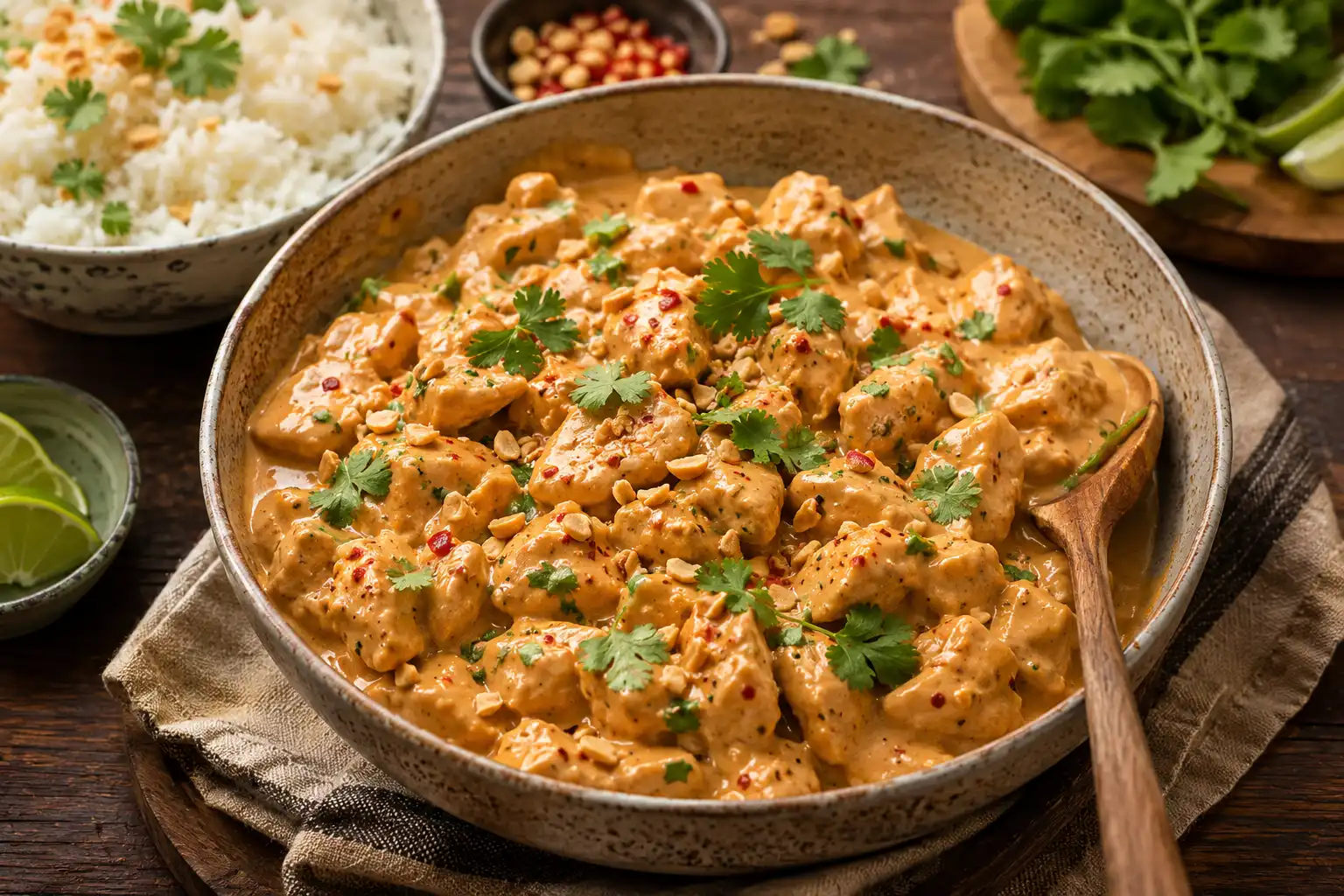
Welcome to the heartwarming embrace of the Cozy Comfort Formula — Creamy Peanut Chicken—a soul-soothing, globally inspired dish that marries the bold umami depth of Southeast Asian street food with the familiar, velvety richness of American comfort cuisine. More than just a meal, this recipe is an intentional ritual: a simmering pot of golden-hued sauce, tender chicken bathed in aromatic spices, and the unmistakable nutty perfume of roasted peanuts—all coming together to ease stress, warm the core, and evoke memories of shared dinners, rainy-day kitchens, and slow, unhurried moments. Designed for both weeknight practicality and weekend indulgence, it delivers restaurant-quality depth without requiring chef-level expertise—just presence, patience, and a willingness to savor the process.
The History
The origins of creamy peanut-based chicken dishes trace back centuries across multiple culinary traditions—but the version we celebrate today is a beautiful, modern fusion born from cultural cross-pollination and diasporic ingenuity. In West Africa, groundnut stews (like maafe) have long featured slow-simmered meats in rich, spiced peanut sauces—a tradition carried across the Atlantic and adapted in Caribbean and Southern U.S. cooking. Meanwhile, in Thailand and Indonesia, satay sauces and gado-gado dressings showcased the versatility of roasted peanuts paired with chilies, lime, coconut, and fermented soy. In the mid-to-late 20th century, as international grocery access expanded and home cooks grew bolder, American home chefs began blending these influences—adding pantry staples like soy sauce, brown sugar, and creamy peanut butter—to create what would become a beloved “pantry hero” dish. The Cozy Comfort Formula honors all these roots while refining technique: using gentle heat control to prevent peanut butter from seizing, balancing sweet-salty-tangy-umami with scientific precision, and elevating texture through layered toasting and controlled reduction. It’s not appropriation—it’s appreciation, evolution, and love rendered edible.
Ingredients Breakdown
Every ingredient in this formula serves a functional and sensory purpose—no filler, no afterthoughts. Here’s why each one matters:
- Chicken thighs (boneless, skinless, ~1.25 lbs): Preferred over breast for their higher fat content, collagen-rich connective tissue, and resistance to drying out during simmering. They yield unparalleled succulence and release gelatin that naturally thickens the sauce.
- Natural creamy peanut butter (unsweetened, no palm oil or hydrogenated fats, ~¾ cup): The soul of the dish. Must be stirred well before measuring—oil separation is normal and essential for authentic texture. Avoid “no-stir” varieties with stabilizers; they inhibit emulsification and mute flavor.
- Full-fat coconut milk (13.5 oz can, not “lite”): Provides lush mouthfeel, subtle sweetness, and thermal stability—preventing curdling when combined with acidic elements later. Its lauric acid also enhances spice solubility.
- Freshly grated ginger (1½ tbsp, microplane-fine): Not powdered. Fresh ginger contains volatile oils (gingerol, shogaol) that brighten and cut richness—essential for balance. Grating maximizes surface area and infusion speed.
- Garlic (4 large cloves, finely minced or pressed): Adds pungent depth. Raw garlic mellows beautifully during gentle sautéing but retains aromatic complexity unlike roasted or powdered versions.
- Low-sodium tamari or gluten-free soy sauce (¼ cup): Offers clean, fermented umami without excessive sodium. Tamari is richer and wheat-free—ideal for dietary inclusivity and deeper savoriness.
- Rice vinegar (2 tbsp): Adds bright, clean acidity that lifts the sauce and balances sweetness. Apple cider vinegar may substitute but imparts fruitier notes; distilled white vinegar is too harsh.
- Maple syrup (3 tbsp, Grade A dark amber): Contributes nuanced caramelized sweetness, minerals, and viscosity. Honey works but lacks maple’s earthy undertones and may thin the sauce slightly.
- Lime juice (2 tbsp, freshly squeezed): Added at the very end for vibrant, zesty lift—heat destroys its volatile citrus compounds, so timing is non-negotiable.
- Roasted unsalted peanuts (⅓ cup, roughly chopped): Toasted separately for crunch contrast and intensified nut aroma. Salted peanuts oversalt the entire dish due to concentrated salinity in dry form.
- Neutral high-smoke-point oil (2 tbsp, e.g., avocado or grapeseed): Ensures even browning without burning—critical for fond development and Maillard-driven complexity.
- Red pepper flakes (½ tsp, or to taste): Not just heat—it adds fruity, smoky nuance. For authenticity, use Korean gochugaru (mild, sweet, vibrant red) instead of generic flakes.
- Ground coriander (1 tsp, freshly toasted & ground): Toasting unlocks citrusy, floral terpenes. Pre-ground loses >70% of its volatile oils within 2 weeks.
- Finishing garnishes: chopped scallions (green parts only), cilantro leaves, lime wedges, and optional chili oil drizzle: These are not decorative—they’re functional: scallions add sharp allium freshness, cilantro offers aldehyde-based brightness (loved or hated, but transformative), lime wedges invite interactive acidity, and chili oil deepens mouthfeel and lingering warmth.
Step-by-Step Recipe
- Prep & Marinate (15 min, includes resting): Slice chicken thighs into 1-inch pieces against the grain. In a bowl, combine 1 tbsp tamari, 1 tsp maple syrup, 1 tsp grated ginger, and 1 minced garlic clove. Add chicken, toss thoroughly, and refrigerate uncovered for 10–15 minutes (not longer—acid begins to “cook” proteins).
- Toast Whole Spices (2 min): In a dry small skillet over medium-low heat, toast coriander seeds until fragrant (30 sec), then grind in a mortar & pestle or spice grinder. Set aside.
- Sear Chicken (6–7 min): Heat 1 tbsp oil in a heavy-bottomed Dutch oven or wide, deep skillet over medium-high heat. Pat chicken *very* dry. Sear in a single layer without crowding—work in batches if needed—until deeply golden on all sides (2–3 min per side). Transfer to a plate; set aside. Do not wash the pan—fond is flavor gold.
- Bloom Aromatics (3 min): Reduce heat to medium. Add remaining 1 tbsp oil, then ginger, remaining garlic, red pepper flakes, and toasted coriander. Stir constantly for 60–90 seconds until fragrant—do not brown garlic.
- Emulsify Peanut Butter Base (4 min): Whisk in peanut butter and 2 tbsp tamari. Cook, stirring constantly, for 2 minutes—this “cooks out” raw bitterness and encourages oil separation. Gradually whisk in coconut milk, ¼ cup at a time, ensuring each addition is fully incorporated before adding more. Scrape bottom and corners relentlessly.
- Simmer & Thicken (12–15 min): Bring mixture to a gentle simmer (bubbles breaking softly at edges, not rolling). Reduce heat to low. Return chicken (with any accumulated juices) to pot. Stir in remaining maple syrup and rice vinegar. Simmer uncovered, stirring every 2–3 minutes, until sauce coats the back of a spoon (12–15 min total). It should thicken to a glossy, nappe consistency—not gluey, not runny.
- Final Brightness & Texture (1 min): Remove from heat. Stir in lime juice and chopped roasted peanuts. Let rest 2 minutes—this allows flavors to harmonize and sauce to settle.
- Rest & Serve (5 min): Cover loosely with foil and let rest off heat for 5 minutes before serving. This prevents temperature shock when plating and lets residual heat gently finish the chicken.
Tips
- Temperature Control Is Everything: Peanut butter seizes if overheated or shocked by cold liquid. Always warm the peanut butter with aromatics first, then add warm (not cold) coconut milk gradually while whisking vigorously.
- Don’t Skip the Chicken Rest: That 10–15 minute marinate isn’t just for flavor—it helps the chicken retain moisture during searing and prevents stewing in its own juices later.
- Resist Over-Stirring During Simmer: Too much agitation breaks down peanut solids and creates a greasy, separated sauce. Stir deliberately—every 2–3 minutes—with a flat-edged wooden spoon, scraping the bottom thoroughly each time.
- Coconut Milk Separation? Embrace It: If your can separates, stir it *vigorously* before measuring. The cream and water must be homogenized for consistent emulsion. Never skim off the thick top layer unless making a different recipe—it’s essential here.
- Thickening Troubleshooting: If sauce remains too thin after 15 minutes, mix 1 tsp cornstarch with 1 tbsp cold water, then whisk in and simmer 1 more minute. If too thick, add warm broth or coconut milk, 1 tsp at a time.
- Make-Ahead Magic: This dish tastes even better the next day—the flavors deepen and mellow. Cool completely, refrigerate in airtight container up to 4 days. Reheat gently on stove over low heat with a splash of coconut milk or water—never microwave at full power (causes separation).
- Peanut Butter Substitutions? Proceed With Caution: Almond butter yields a sweeter, milder result; sunflower seed butter works for allergies but imparts a distinct earthy note; cashew butter is luxurious but less assertive. Avoid chunky unless you enjoy textural surprises—and always stir natural nut butters thoroughly before use.
- Serving Temperature Matters: Serve piping hot—but not scalding. Ideal internal temp is 165°F (74°C) for chicken, with sauce at 155–160°F for optimal mouthfeel. Use an instant-read thermometer for precision.
Variations and Customizations
This formula is a living template—designed to adapt to seasons, pantries, preferences, and dietary needs:
- Vegetarian Version: Replace chicken with extra-firm tofu (pressed, cubed, and pan-seared until golden) + 1 cup roasted chickpeas (for protein and bite). Boost umami with 1 tsp white miso paste whisked in at the end.
- Vegan Adaptation: Use tofu/chickpeas as above, ensure maple syrup is vegan-certified, and verify tamari is wheat-free and vegan (most are). Garnish with toasted coconut flakes instead of peanuts for nut-free option.
- Gluten-Free Assurance: Use certified GF tamari (not regular soy sauce) and double-check peanut butter labels for hidden wheat derivatives (rare, but possible in flavored varieties).
- Low-Carb/Keto-Friendly: Serve over cauliflower rice or spiralized zucchini noodles. Increase healthy fats by stirring in 1 tbsp toasted sesame oil at the end and topping with extra peanuts and crushed macadamia nuts.
- Spice Spectrum: Mild? Omit red pepper flakes and add ½ tsp mild paprika. Medium? Keep as written. Fiery? Add 1 finely minced Thai bird’s eye chili (seeds included) with aromatics—or finish with 1 tsp sambal oelek.
- Herb & Citrus Swaps: Swap cilantro for Thai basil (adds anise-like lift) or mint (cooling contrast). Replace lime with yuzu juice for Japanese-inspired elegance, or calamansi for Filipino brightness.
- Umami Bomb Upgrade: Add 1 tsp fish sauce (for depth, not fishiness) with the tamari—or ½ tsp mushroom powder (dried shiitake, ground fine) with the coriander.
- Grill or Air Fry Option: For smoky dimension, marinate chicken as directed, then grill over medium coals or air-fry at 375°F for 12–14 minutes, shaking basket halfway. Stir grilled chicken into finished sauce at the end.
- Meal Prep Powerhouse: Double the batch and portion into 4-ounce mason jars. Top with garnishes separately. Refrigerate up to 4 days or freeze (without lime juice or fresh herbs) for up to 3 months. Thaw overnight, reheat, then add lime and herbs.
Health Considerations and Nutritional Value
Per serving (recipe yields 4 generous servings), this Cozy Comfort Formula delivers balanced macro- and micronutrient synergy—mindfully crafted for satiety, sustained energy, and gut-friendly nourishment:
- Calories & Macros: ~580 kcal per serving | 32g protein (complete, bioavailable from chicken + peanuts) | 38g healthy fats (mostly monounsaturated from peanuts and coconut, plus omega-6 in balance with anti-inflammatory spices) | 24g complex carbs (low-glycemic from maple syrup, coconut milk, and natural fruit sugars—no refined white sugar).
- Vitamin & Mineral Highlights: Rich in niacin (B3) and vitamin E (peanuts), selenium and zinc (chicken thighs), potassium and magnesium (coconut milk), vitamin C (lime, ginger), and iron (enhanced by vitamin C’s absorption boost).
- Gut Health Support: Ginger stimulates digestive enzymes and gastric motility; fermented tamari provides trace probiotics; fiber from peanuts and optional veggie additions (e.g., bok choy or snap peas) feeds beneficial microbiota.
- Inflammation Modulation: Gingerol (in ginger), curcumin (if turmeric is added as variation), and polyphenols in lime and peanuts all exhibit clinically studied anti-inflammatory activity—especially when consumed with healthy fats that enhance bioavailability.
- Dietary Inclusivity Notes: Naturally dairy-free, egg-free, and nut-allergy adaptable (see variations). Low-FODMAP compliant if using garlic-infused oil instead of raw garlic and omitting onion (not in base recipe). Heart-healthy when sodium is controlled via low-sodium tamari and no added salt.
- Mindful Indulgence Philosophy: This isn’t “health food”—it’s *nourishing food*. The fats promote satiety and hormone regulation; the protein supports muscle maintenance; the mindful preparation encourages slower eating and greater satisfaction—reducing the urge for post-meal snacking. It’s abundance with intention.
Ingredients
- 1.25 lbs boneless, skinless chicken thighs, cut into 1-inch pieces
- ¾ cup natural creamy peanut butter (unsweetened, stirred well)
- 1 (13.5 oz) can full-fat coconut milk, well stirred
- 1½ tbsp fresh ginger, microplaned
- 4 large garlic cloves, finely minced or pressed
- ¼ cup low-sodium tamari or gluten-free soy sauce (divided)
- 2 tbsp rice vinegar
- 3 tbsp pure maple syrup (Grade A dark amber)
- 2 tbsp fresh lime juice (from ~1 large lime)
- ⅓ cup roasted unsalted peanuts, roughly chopped
- 2 tbsp neutral high-smoke-point oil (avocado or grapeseed)
- ½ tsp red pepper flakes (or Korean gochugaru)
- 1 tsp coriander seeds, toasted and freshly ground
- Kosher salt, to taste (use sparingly—tamari provides ample sodium)
Garnishes (optional but recommended): thinly sliced scallions (green parts), fresh cilantro leaves, lime wedges, chili oil or sriracha.
Directions
- Prepare chicken: Pat dry, then place in a bowl. Combine 1 tbsp tamari, 1 tsp ginger, 1 minced garlic clove, and 1 tsp maple syrup. Add chicken, toss to coat, and refrigerate uncovered for 10–15 minutes.
- In a small dry skillet over medium-low heat, toast coriander seeds until fragrant (30–45 seconds). Transfer to a mortar or spice grinder and crush finely. Set aside.
- Heat 1 tbsp oil in a heavy-bottomed Dutch oven or wide deep skillet over medium-high heat. Pat chicken *extremely* dry. Sear in batches without crowding until deeply golden on all sides (2–3 min per side). Transfer to a plate; set aside. Do not wash pan.
- Reduce heat to medium. Add remaining 1 tbsp oil, then remaining ginger, remaining garlic, red pepper flakes, and toasted coriander. Stir constantly for 60–90 seconds until fragrant—do not let garlic brown.
- Whisk in peanut butter and 2 tbsp tamari. Cook, stirring constantly, for 2 minutes to toast the peanut butter and remove raw taste.
- Gradually whisk in coconut milk, ¼ cup at a time, ensuring each addition is fully smooth before adding the next. Scrape bottom and corners thoroughly.
- Bring to a gentle simmer (small bubbles at edges). Reduce heat to low. Return chicken (and any juices) to pot. Stir in remaining maple syrup and rice vinegar.
- Simmer uncovered, stirring every 2–3 minutes, for 12–15 minutes, until sauce is thick, glossy, and coats the back of a spoon.
- Remove from heat. Stir in lime juice and chopped roasted peanuts. Let rest 2 minutes.
- Cover loosely with foil and rest off heat for 5 minutes before serving.
- Serve hot over steamed jasmine rice, brown rice, or cauliflower rice. Garnish generously with scallions, cilantro, lime wedges, and a drizzle of chili oil if desired.
FAQ
- Can I use chicken breast instead of thighs?
- Yes—but with caveats. Breast dries out faster and lacks collagen. To compensate: slice *very* thin (¼-inch), reduce simmer time to 8–10 minutes, and consider brining (15-min soak in 2 cups water + 2 tbsp salt) before marinating. Thighs remain strongly recommended for tenderness and sauce body.
- Why does my sauce look oily or separated?
- Most commonly caused by overheating the peanut butter base, adding cold coconut milk, or insufficient whisking during emulsification. Fix: Remove from heat, whisk vigorously for 30 seconds, then return to lowest possible heat and whisk continuously for 2 minutes. If still broken, whisk in 1 tsp warm water or coconut milk, ½ tsp at a time, until re-emulsified.
- Is there a way to make this in the Instant Pot or slow cooker?
- Absolutely. For Instant Pot: Sauté aromatics and sear chicken using Sauté mode. Add remaining sauce ingredients (except lime juice and peanuts). Pressure cook on High for 8 minutes, natural release 5 minutes. Stir in lime and peanuts. For slow cooker: Sear chicken and aromatics first, then add all ingredients *except lime juice and peanuts*. Cook on LOW 4 hours. Stir in lime and peanuts before serving.
- How do I store leftovers—and how long do they last?
- Cool completely, then refrigerate in airtight container for up to 4 days. Freeze for up to 3 months (omit lime juice and fresh garnishes before freezing). Thaw overnight in fridge. Reheat gently on stove over low heat, stirring often and adding 1–2 tbsp coconut milk or broth to refresh consistency. Do not microwave in sealed container.
- Can I make this nut-free for school lunches or allergies?
- Yes. Substitute sunflower seed butter (unsweetened, no added oil) 1:1 for peanut butter. Toast ⅓ cup sunflower seeds until golden, then chop for garnish. Flavor will be earthier and milder—but equally comforting and safe.
- What wine or beverage pairs best with this dish?
- For wine: An off-dry Riesling (Kabinett or Spätlese) balances spice and sweetness with bright acidity. Non-alcoholic: Sparkling ginger-lime agua fresca or chilled lemongrass-mint tea.
- Can I add vegetables—and which ones work best?
- Yes! Stir in 2 cups quick-cooking veggies during the last 5 minutes of simmering: baby bok choy, snow peas, red bell peppers, or shredded carrots. For heartier options (broccoli, green beans), blanch separately first, then fold in at the end to preserve color and crunch.
- Is this dish spicy? Can kids eat it?
- As written, it’s mildly aromatic—not aggressively spicy. Red pepper flakes provide warmth, not burn. For sensitive palates or children: omit flakes entirely, use mild paprika, and serve with extra lime wedges to brighten without heat. Most kids adore the creamy, slightly sweet profile.
Summary
The Cozy Comfort Formula — Creamy Peanut Chicken is a masterclass in balanced, intentional comfort food—honoring global traditions while delivering foolproof technique, nutritional wisdom, and soul-deep satisfaction in every spoonful. It transforms humble pantry staples into a restaurant-worthy, make-ahead, allergy-conscious, and endlessly customizable centerpiece that nourishes the body, calms the nervous system, and turns ordinary evenings into cherished rituals.
Whether you’re soothing a tired spirit, feeding a growing family, meal-prepping with purpose, or simply reclaiming joy in the kitchen—this dish invites you to slow down, savor deeply, and remember that true comfort isn’t just what you eat… it’s how you show up for yourself, one warm, golden bite at a time.