Introduction
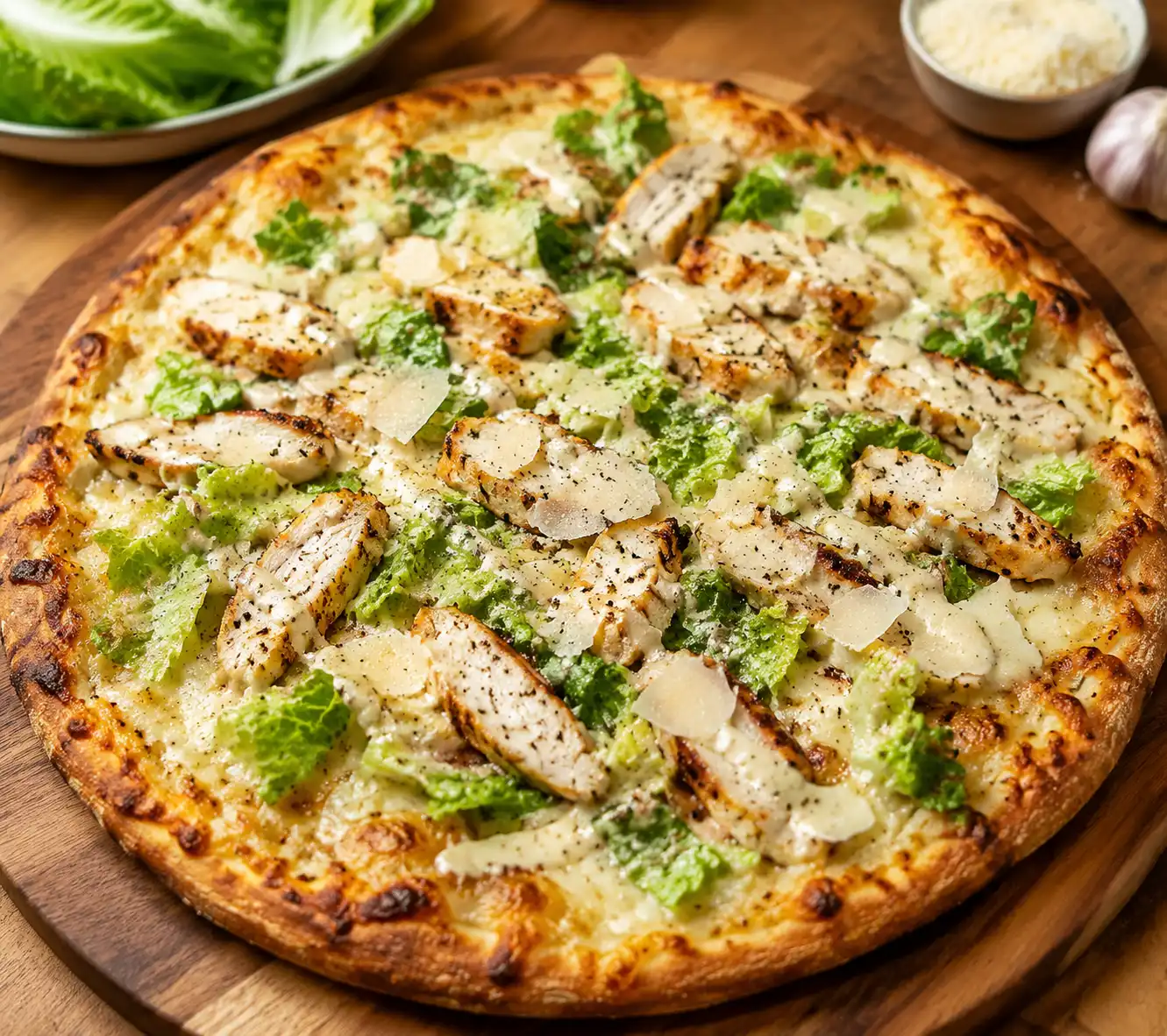
Chicken Caesar Salad Pizza is a brilliant culinary fusion that marries the bold, savory flavors of a classic Caesar salad with the comforting warmth and structure of a hand-tossed pizza. This innovative dish transforms traditional salad components—romaine lettuce, Parmesan cheese, garlicky Caesar dressing, and grilled chicken—into vibrant, texturally dynamic toppings on a crisp, golden crust. Far from being just a trendy gimmick, Chicken Caesar Salad Pizza represents a thoughtful evolution in modern comfort food: it satisfies cravings for both freshness and heartiness, offers impressive visual appeal with its bright green lettuce and snowy cheese shavings, and delivers layers of umami, tang, creaminess, and crunch in every bite. Whether served as an elevated weeknight dinner, a showstopping appetizer at a gathering, or a gourmet lunch option, this pizza redefines expectations—proving that salad doesn’t have to stay cold and bowl-bound to shine.
The History
The origins of Chicken Caesar Salad Pizza are not rooted in ancient culinary tradition but rather in the late 20th- and early 21st-century American restaurant innovation wave—where chefs began deconstructing and reconstructing familiar dishes to surprise and delight diners. The Caesar salad itself traces back to 1924, when Italian-Mexican restaurateur Caesar Cardini invented it in Tijuana, Mexico, using romaine, croutons, Parmesan, lemon, olive oil, raw egg, and Worcestershire sauce. Its popularity soared in the U.S. through mid-century supper clubs and 1970s steakhouse menus. Meanwhile, pizza’s Italian heritage evolved dramatically upon arriving in America—giving rise to Chicago deep-dish, New York foldable slices, and California-style artisan pies.
The marriage of these two icons likely emerged organically in the early 2000s, as gastropubs and upscale pizzerias experimented with “salad-on-pizza” concepts to appeal to health-conscious yet flavor-driven customers. Early iterations appeared in regional chains like California Pizza Kitchen and independent pizzerias in Portland, Austin, and Brooklyn—often labeled as “Caesar Pie,” “Romaine & Roast Chicken Pizza,” or “Deconstructed Caesar.” Food media accelerated its rise: Bon Appétit featured it in a 2013 “Salad Reinvented” roundup; The New York Times included it in a 2016 trend report on “green-forward pies”; and viral TikTok videos in 2022–2023 (featuring sizzling chicken laid over fresh romaine atop a parmesan-crusted crust) catapulted it into mainstream home-cooking consciousness. Today, it stands as a beloved example of American culinary remix culture—honoring tradition while boldly reimagining texture, temperature, and balance.
Ingredients Breakdown
Every element of Chicken Caesar Salad Pizza serves a distinct sensory and functional role. Understanding the purpose of each ingredient elevates both execution and enjoyment:
- Crust: A thin-to-medium, crisp-yet-chewy base—preferably made with high-protein bread flour or 00 flour for optimal oven spring and structural integrity. Par-baking ensures it won’t become soggy under wet toppings.
- Garlic-Herb Olive Oil Base: Replaces traditional tomato sauce. A blend of extra-virgin olive oil, minced garlic, lemon zest, Dijon mustard, and fresh oregano or thyme adds aromatic depth without acidity or sweetness—creating a neutral canvas for bold toppings.
- Grilled or Pan-Seared Chicken: Boneless, skinless chicken breasts or thighs, marinated in lemon juice, garlic, black pepper, and a touch of smoked paprika for complexity. Must be fully cooked and sliced *against the grain* for tenderness and maximum surface area to absorb dressing.
- Caesar Dressing: Authentic or high-quality store-bought (look for anchovy paste, raw egg yolk, and real Parmesan—not powdered). Key functions: binds toppings, adds umami richness, and provides creamy contrast. For food safety and optimal texture, it’s applied *after baking* to preserve freshness and prevent wilting.
- Romaine Lettuce: Crisp, inner hearts only—chilled and thoroughly dried. Romaine’s sturdy ribs and mild bitterness hold up better than butter or iceberg lettuce when lightly warmed by residual heat from the hot pizza.
- Freshly Grated Parmigiano-Reggiano: Not pre-grated! Real Parmigiano offers nutty, crystalline crunch and superior melt-resistance—essential for garnish and finishing saltiness.
- Homemade Croutons: Cubed day-old baguette or ciabatta tossed in garlic-infused olive oil, rosemary, and sea salt, baked until golden and audibly crunchy. Store-bought croutons often contain preservatives and excess oil that can turn greasy on warm pizza.
- Optional Enhancements: Lemon wedges (for brightening), freshly cracked black pepper (aromatic heat), shaved fennel or radish (for vegetal sharpness), or a whisper of red pepper flakes (for subtle warmth).
Step-by-Step Recipe
This meticulously tested method ensures professional results—even in a home kitchen with a standard oven:
- Prepare the Dough (1–2 days ahead recommended): Combine 3½ cups (440g) bread flour, 1¼ tsp active dry yeast, 1½ tsp fine sea salt, and 1¼ cups (300ml) lukewarm filtered water. Mix until shaggy, then knead 8–10 minutes by hand (or 5 minutes in stand mixer with dough hook) until smooth and elastic. Place in oiled bowl, cover, and ferment at room temperature 2 hours, then refrigerate 24–48 hours for flavor development and improved handling.
- Marinate & Cook Chicken: In a nonreactive bowl, combine 2 boneless, skinless chicken breasts (about 1 lb / 450g), 3 tbsp fresh lemon juice, 2 minced garlic cloves, 1 tsp Dijon mustard, ½ tsp smoked paprika, 1 tsp kosher salt, and ½ tsp black pepper. Marinate 30–60 minutes. Grill or sear in cast iron over medium-high heat until internal temp reaches 165°F (74°C), ~6–7 minutes per side. Rest 10 minutes, then slice thinly against the grain.
- Make Croutons: Preheat oven to 375°F (190°C). Cube 2 cups day-old bread. Toss with 3 tbsp garlic-infused olive oil, 1 tsp fresh rosemary, ½ tsp flaky sea salt. Spread on parchment-lined sheet pan. Bake 12–15 minutes, flipping once, until golden and crisp. Cool completely.
- Par-Bake Crust: Remove dough from fridge 1 hour before baking. Divide and shape into two 12-inch rounds on floured surface. Transfer to parchment-lined pizza peels or inverted baking sheets. Dock center lightly with fork. Par-bake at 500°F (260°C) on lowest oven rack for 5 minutes. Remove, brush lightly with garlic-herb oil, and return for 2 more minutes. Cool slightly—this creates a moisture barrier.
- Assemble & Finish: Spread ¼ cup Caesar dressing evenly over warm par-baked crust (avoid edges). Top with sliced chicken, then a generous handful of chilled, dried romaine. Sprinkle liberally with grated Parmigiano-Reggiano and croutons. Finish with a final drizzle of dressing, lemon zest, cracked black pepper, and optional fennel rib slivers.
- Serve Immediately: Cut into wedges with a large chef’s knife (not a pizza cutter—lettuce compresses). Serve within 3 minutes for optimal contrast between warm crust and cool, crisp greens.
Tips
- Dry Your Lettuce Relentlessly: Even one drop of moisture can steam the crust. Use a salad spinner twice, then lay greens on triple-layered paper towels and refrigerate uncovered for 15 minutes before use.
- Warm, Not Hot: The pizza base should be warm—not scalding—to gently wilt the very outer edges of romaine just enough to soften without turning limp. If your crust cools too much before topping, slide it back into a 350°F (175°C) oven for 60 seconds.
- Dressing Temperature Matters: Use room-temperature Caesar dressing. Cold dressing congeals and separates; warm dressing melts the cheese prematurely. Let it sit out 10 minutes before assembling.
- Grate Cheese Fresh—Every Time: Pre-grated cheeses contain anti-caking agents (like cellulose) that inhibit melting and create grittiness. Use a microplane for feathery, fast-melting shavings—or a box grater for chunkier texture.
- Control Salt Strategically: Caesar dressing, Parmesan, and croutons are all salty. Omit added salt from the dough or chicken marinade unless tasting first—and always finish with flaky sea salt, not table salt, for controlled bursts of salinity.
- Use a Pizza Stone or Steel: Preheat for at least 45 minutes at max oven temp. This ensures rapid, even bottom heat—critical for blistered, airy crusts that support wet toppings without softening.
- No Overcrowding: Less is more. Too much chicken or lettuce insulates the crust and encourages sogginess. Aim for visible crust between toppings—especially near the rim.
- Acidity Is Your Ally: A final squeeze of lemon juice right before serving cuts through richness and revives the romaine’s brightness. Don’t skip it.
Variations and Customizations
This recipe is inherently adaptable—celebrating regional preferences, dietary needs, and seasonal creativity:
- Vegetarian Version: Replace chicken with roasted chickpeas (tossed in nutritional yeast, garlic powder, and smoked paprika), marinated white beans, or grilled portobello caps. Add sun-dried tomatoes for umami depth.
- Vegan Adaptation: Use dairy-free Caesar dressing (with capers, miso, or nori for anchovy-like funk), vegan Parmesan (cashew-based or almond-based), and crispy baked tofu or tempeh “bacon.” Swap honey in croutons for maple syrup.
- Gluten-Free Option: Substitute certified GF pizza dough (we recommend Caputo Fioreglut or King Arthur GF Flour blend). Ensure croutons are GF-certified—many brands now offer artisanal GF sourdough croutons.
- Low-Carb/Keto-Friendly: Build on a fathead dough crust (almond flour, mozzarella, cream cheese, egg) or portobello “crusts.” Increase healthy fats with avocado slices, pine nuts, or hemp seeds.
- Mediterranean Twist: Add Kalamata olives, roasted red peppers, artichoke hearts, and crumbled feta alongside romaine. Swap Caesar for a lemon-oregano tahini drizzle.
- Spicy Southwest Style: Marinate chicken in chipotle adobo and lime; top with pickled red onions, jalapeño ribbons, cotija cheese, and cilantro. Drizzle with chipotle Caesar or avocado crema.
- Breakfast Caesar Pizza: Use scrambled eggs or a thin frittata layer instead of chicken; top with romaine, bacon crumbles, cheddar-Parm blend, and a dill-forward Greek yogurt Caesar.
- Seasonal Variations: In spring: add blanched asparagus tips and pea shoots. In summer: heirloom cherry tomatoes and basil ribbons. In fall: roasted delicata squash and toasted pepitas. In winter: shaved Brussels sprouts and pomegranate arils.
Health Considerations and Nutritional Value
Chicken Caesar Salad Pizza can be a nutritionally balanced, protein-forward meal—when prepared mindfully. A standard 12-inch single-serving slice (1/4 of full pizza) contains approximately:
- Calories: 420–480 kcal (varies with crust thickness, cheese quantity, and dressing volume)
- Protein: 28–34g (primarily from chicken and Parmesan—supporting muscle maintenance and satiety)
- Fiber: 4–6g (from romaine, whole-grain crust option, and croutons—aiding digestion and blood sugar regulation)
- Healthy Fats: 18–22g (mostly monounsaturated from olive oil and Parmesan—beneficial for heart and brain health)
- Vitamins & Minerals: Rich in Vitamin A (romaine), Vitamin K (romaine + parsley), Calcium (Parmesan), B6 and B12 (chicken), and antioxidants (garlic, lemon, olive polyphenols)
Key Health Notes:
- Anchovies & Omega-3s: Traditional Caesar includes anchovies—tiny but mighty sources of EPA/DHA omega-3 fatty acids. If using authentic dressing, you’re getting ~150mg per slice—supporting cardiovascular and cognitive health.
- Sodium Awareness: Total sodium ranges 750–950mg per slice. Reduce by using low-sodium Parmesan, skipping added salt in dough/chicken, and choosing a reduced-sodium Caesar or making your own with less Worcestershire.
- Food Safety First: Because raw egg is often present in homemade Caesar, ensure your dressing is either pasteurized (store-bought) or made with pasteurized egg yolks if serving to immunocompromised individuals, pregnant people, or young children.
- Balancing Act: While higher in calories than plain salad, this pizza replaces refined carbs (white bread croutons, pasta) with nutrient-dense whole foods—and avoids the hidden sugars common in bottled dressings or frozen pizzas.
- Portion Intelligence: Serve with a side of lemon-dressed cucumber ribbons or steamed broccoli to increase volume and micronutrient density without adding significant calories.
Ingredients
Makes two 12-inch pizzas (serves 4)
- For the Dough: 3½ cups (440g) bread flour or Tipo 00 flour, 1¼ tsp (4g) active dry yeast, 1½ tsp (9g) fine sea salt, 1¼ cups (300ml) lukewarm filtered water (105–110°F)
- For the Garlic-Herb Oil: ¼ cup (60ml) extra-virgin olive oil, 2 garlic cloves (minced), 1 tsp lemon zest, 1 tsp Dijon mustard, 1 tsp fresh oregano or thyme (finely chopped), ¼ tsp black pepper
- For the Chicken: 2 boneless, skinless chicken breasts (1 lb / 450g), 3 tbsp fresh lemon juice, 2 garlic cloves (minced), 1 tsp Dijon mustard, ½ tsp smoked paprika, 1 tsp kosher salt, ½ tsp black pepper
- For the Croutons: 2 cups (100g) day-old baguette or ciabatta (½-inch cubes), 3 tbsp garlic-infused olive oil, 1 tsp fresh rosemary (chopped), ½ tsp flaky sea salt
- For Assembly: 1 large head romaine lettuce (inner hearts only, ~6 cups chopped), 1 cup (100g) freshly grated Parmigiano-Reggiano, ½ cup (120ml) high-quality Caesar dressing (anchovy-based, refrigerated), lemon wedges, freshly cracked black pepper, optional: shaved fennel or radish
Directions
- Prepare Dough: In a large mixing bowl, whisk flour, yeast, and salt. Gradually add water while stirring with a wooden spoon until a shaggy dough forms. Turn onto floured surface and knead 8–10 minutes until smooth, supple, and passes the windowpane test. Place in oiled bowl, cover with damp cloth, and let rise at room temperature 2 hours. Punch down, divide in two, shape into tight balls, place in oiled containers, cover, and refrigerate 24–48 hours.
- Marinate Chicken: In a shallow dish, combine lemon juice, minced garlic, Dijon, smoked paprika, salt, and pepper. Add chicken breasts, turning to coat. Refrigerate 30–60 minutes.
- Make Croutons: Preheat oven to 375°F (190°C). Toss bread cubes with garlic oil, rosemary, and salt. Spread evenly on parchment-lined baking sheet. Bake 12–15 minutes, tossing halfway, until golden and crisp. Cool completely on wire rack.
- Cook Chicken: Heat grill or cast-iron skillet over medium-high. Remove chicken from marinade (reserve marinade); pat dry. Grill/sear 6–7 minutes per side until internal temp reaches 165°F (74°C). Transfer to cutting board, tent with foil, rest 10 minutes. Slice thinly against the grain.
- Preheat & Par-Bake: Place pizza stone or steel on lowest oven rack. Preheat oven to 500°F (260°C) for 45+ minutes. On floured surface, stretch one dough ball into 12-inch round. Transfer to parchment-lined peel. Dock center lightly. Slide onto hot stone and bake 5 minutes. Remove, brush with garlic-herb oil, return 2 minutes. Repeat with second crust. Cool slightly on wire racks.
- Assemble: Place warm par-baked crust on clean surface. Spread ¼ cup Caesar dressing evenly over surface, leaving ½-inch border. Arrange half the sliced chicken in single layer. Top generously with 3 cups chilled, dried romaine. Sprinkle with ½ cup grated Parmigiano and ¼ cup croutons.
- Finish & Serve: Drizzle with remaining 1 tbsp dressing, lemon zest, and cracked black pepper. Optional: add thin fennel rib slices. Cut into 4 wedges with sharp chef’s knife. Serve immediately with lemon wedges on the side.
FAQ
- Can I make this pizza ahead of time?
- Yes—with smart staging. Prepare dough, marinate chicken, and bake croutons up to 3 days ahead. Par-bake crusts and store airtight at room temp up to 24 hours, or freeze up to 1 month (thaw at room temp 1 hour before use). Assemble *only* just before serving—never refrigerate fully topped pizza.
- Why no cheese baked into the crust?
- Baking cheese directly on the crust would cause excessive browning, oil separation, and a gummy texture under the lettuce. Freshly grated Parmigiano applied post-bake retains its nutty aroma, crystalline crunch, and salty pop—without compromising structural integrity.
- Can I use store-bought rotisserie chicken?
- Absolutely—and it’s a fantastic time-saver. Shred or slice it, then toss with 1 tsp lemon juice and ½ tsp black pepper to refresh flavor. Avoid pre-seasoned varieties with heavy herbs or BBQ rubs, which clash with Caesar’s profile.
- What if I don’t have a pizza stone?
- Use an inverted heavy-duty baking sheet preheated in the oven for 30 minutes. Or bake directly on middle rack using parchment-lined sheet pan—but expect less crispness. Avoid nonstick pans—they inhibit browning.
- Is romaine the only lettuce option?
- Traditionally yes—but for variation: try Little Gem (sweet, tender), escarole (bitter balance), or baby kale (earthy, nutrient-dense). Avoid iceberg (too watery) or spinach (wilts too quickly).
- How do I prevent soggy crust?
- Three non-negotiables: (1) Par-bake the crust, (2) Dry lettuce obsessively, (3) Apply dressing *only* to warm (not hot) crust—and never to cold crust. Also, avoid overdressing: ¼ cup per 12-inch pizza is ideal.
- Can kids enjoy this pizza?
- Yes—with simple tweaks: omit anchovies from dressing (use capers + miso), reduce garlic, add mild mozzarella shreds beneath the chicken, and serve croutons on the side for dipping. Many children love the familiar “pizza + salad” combo.
- What wine or beverage pairs best?
- A crisp, high-acid white shines: unoaked Chardonnay, Vermentino, or dry Spanish Albariño cut through richness. For beer lovers, a citrusy American wheat or hazy IPA complements the garlic and lemon. Non-alcoholic: sparkling lemon-lime water with fresh mint.
Summary
Chicken Caesar Salad Pizza is a masterclass in harmonizing temperature, texture, and tradition—uniting the smoky savor of grilled chicken, the cool crunch of chilled romaine, the umami depth of Parmigiano and anchovy, and the crisp-yet-chewy foundation of artisanal pizza crust.
It’s not just dinner—it’s a conversation starter, a customizable canvas, and a testament to how respecting ingredients and technique can transform two beloved classics into something entirely new, deeply satisfying, and unmistakably delicious.