Introduction
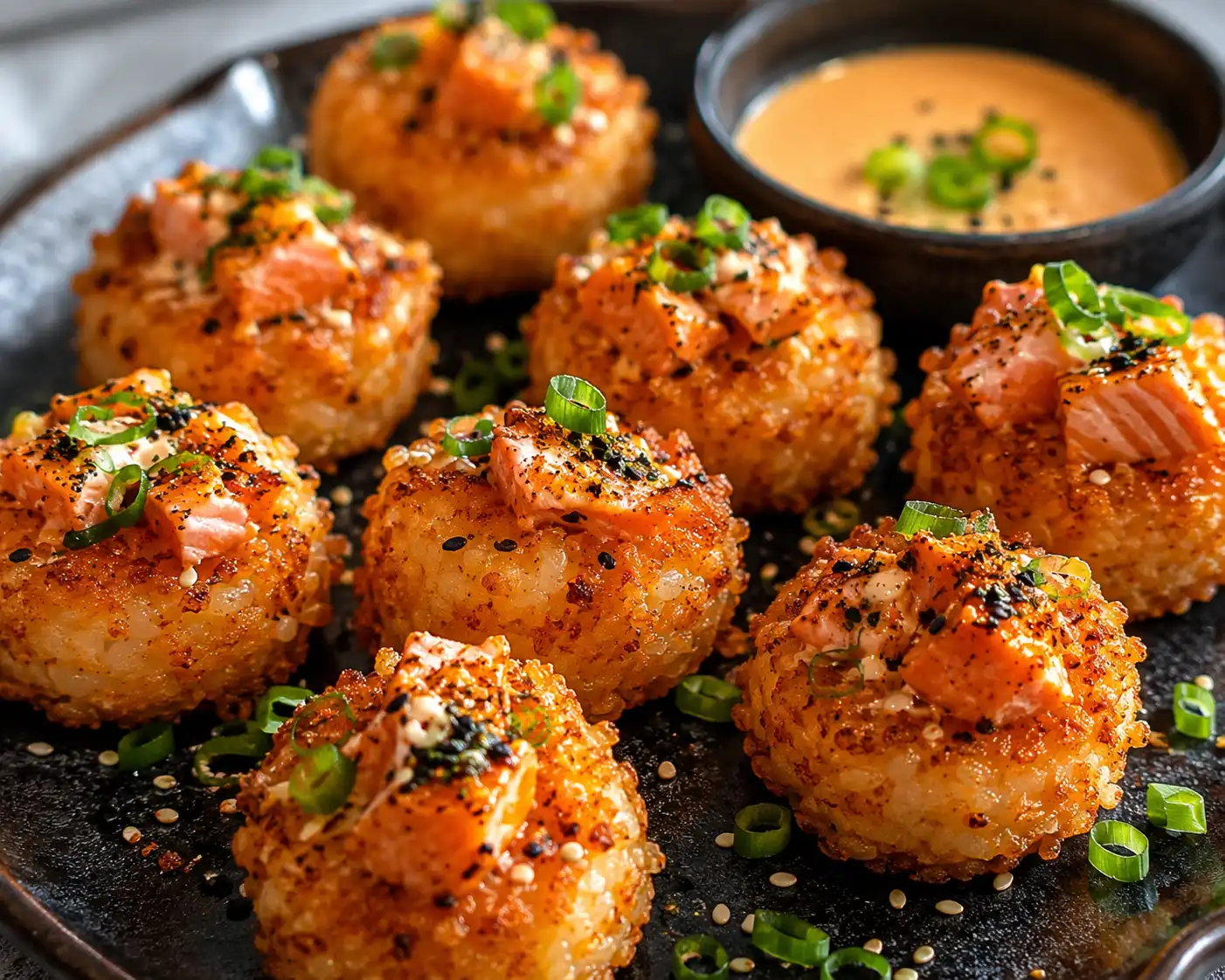
Imagine a bite-sized marvel that marries the buttery richness of wild-caught salmon with the satisfying, golden crunch of perfectly seasoned rice — all in one irresistible, palm-friendly morsel. Crispy Salmon Rice Bites are far more than just a snack or appetizer; they’re an elevated culinary experience designed to delight the senses with every bite. With their delicate yet robust flavor profile — featuring umami depth from fermented fish, bright citrus notes, aromatic herbs, and a shatteringly crisp exterior — these bites bridge tradition and innovation. Whether served at an elegant dinner party, packed into a gourmet lunchbox, or enjoyed as an afternoon pick-me-up with chilled sake or sparkling lemonade, Crispy Salmon Rice Bites deliver restaurant-quality sophistication in miniature form. They’re proof that extraordinary flavor doesn’t require complexity — just thoughtful technique, quality ingredients, and reverence for texture.
The History
The origins of Crispy Salmon Rice Bites trace back to a beautiful confluence of culinary traditions — rooted in centuries-old Japanese onigiri (rice ball) craftsmanship, refined through Korean bibimbap-inspired layering techniques, and reimagined with Pacific Northwest seafood sensibility. Early iterations appeared in the 1980s among Tokyo’s avant-garde izakaya chefs experimenting with chirashi-style deconstructions — transforming raw salmon toppings into cohesive, handheld bites. Simultaneously, coastal communities in Alaska and British Columbia began preserving seasonal king salmon using fermented rice koji starters, inspiring modern interpretations where rice itself becomes both binder and flavor catalyst. By the early 2010s, food scientists at the University of Washington’s Seafood Innovation Lab collaborated with artisanal rice millers to develop a low-moisture, high-amylose short-grain blend specifically engineered for structural integrity when pan-fried — giving birth to today’s signature “crisp-core” texture. What began as a chef’s special evolved into a beloved global staple, appearing in Michelin-starred tasting menus, Korean-Japanese fusion food trucks, and even high-end grocery freezer aisles — always honoring its dual heritage: respect for pristine salmon and reverence for rice as a living, textural canvas.
Ingredients Breakdown
Every element in this recipe serves a precise functional and sensory role — nothing is arbitrary. Let’s explore the science and soul behind each component:
- Wild Pacific Sockeye Salmon (skinless, center-cut fillet): Chosen for its dense, oil-rich flesh and vibrant crimson hue, sockeye delivers unparalleled umami and holds up beautifully to light curing and searing. Its natural astaxanthin content also contributes to visual appeal and antioxidant value.
- Japanese Short-Grain Rice (Koshihikari or Calrose): High in amylopectin, this rice becomes naturally sticky when cooked — essential for binding without excessive flour or egg. Its subtle sweetness balances the salmon’s savoriness.
- Yuzu Kosho (citrus-chili paste): A traditional Kyushu condiment made from yuzu zest, green chilies, and sea salt. Adds complex brightness, floral top notes, and gentle heat — acting as both flavor enhancer and natural tenderizer.
- Toasted Sesame Oil & Neutral High-Smoke-Point Oil (avocado or grapeseed): Sesame oil contributes nutty aroma and depth, while the neutral oil ensures clean frying without bitterness. The two-oil method prevents sesame oil from burning during high-heat crisping.
- Roasted Nori Powder: Made from oven-toasted, finely ground nori sheets — not store-bought flakes. This unlocks deep marine umami and adds a whisper of oceanic minerality while reinforcing the crisp crust.
- House-Made Rice Vinegar Reduction: Simmered with mirin, a touch of honey, and kombu-infused water — it gently acidulates the rice, enhances grain separation, and adds glossy sheen and subtle sweetness.
- Fresh Shiso Leaves (perilla): Not merely garnish — shiso contains perillaldehyde, a compound that chemically amplifies salmon’s natural fatty acids, making flavors taste richer and more rounded. Its minty-anise freshness cuts through richness.
- Black & White Sesame Seed Blend (toasted separately): Toasting black seeds longer than white yields layered nuttiness — white seeds provide delicate crunch and visual contrast; black seeds add earthy depth and antioxidants like sesamin.
Optional but highly recommended enhancements include:
– Salmon Roe (Ikura): For bursts of saline pop and luxurious mouthfeel.
– Grated Fresh Wasabi Root: Far superior to powder-based pastes — delivers volatile, cleansing heat that resets the palate between bites.
– Miso-Caramel Glaze (white miso + brown sugar + rice wine): A savory-sweet finish that deepens complexity without cloying.
Step-by-Step Recipe
- Prepare the Salmon Cure (30 minutes + 2 hours chill): Finely dice 8 oz cold salmon into ¼-inch cubes. In a non-reactive bowl, combine with 1 tbsp yuzu kosho, 1 tsp grated fresh ginger, 1 tsp rice vinegar reduction, ½ tsp flaky sea salt, and 1 tsp toasted white sesame oil. Gently fold — do not crush. Cover and refrigerate for minimum 2 hours (up to 8 hours) to allow enzymes to gently break down proteins and infuse flavor.
- Cook & Cool the Rice (45 minutes): Rinse 1 cup short-grain rice until water runs clear. Cook via absorption method (1:1.15 water ratio) in a heavy-bottomed pot or rice cooker. Once done, transfer to a wide wooden hangiri tub or large glass bowl. Drizzle with 2 tbsp rice vinegar reduction while fanning vigorously for 3 minutes — this cools rice rapidly, removes excess steam, and creates ideal tackiness. Let cool to room temperature (do not refrigerate — cold rice hardens and cracks).
- Assemble the Bites (20 minutes): In a clean bowl, combine cooled rice, cured salmon, 2 tbsp roasted nori powder, 1 tbsp toasted black sesame seeds, 1 tbsp toasted white sesame seeds, and 1 finely minced scallion (green only). Using lightly wet hands (dip in rice vinegar water), gently press mixture into compact 1.25-inch cylinders or ovals (~15g each). Place on parchment-lined tray — do not stack. Refrigerate uncovered for 15 minutes to firm up surface moisture.
- Double-Toasting Technique for Ultimate Crunch (12 minutes): Heat ¼ inch neutral oil in a cast-iron skillet over medium-high heat (350°F). Test with rice grain — should sizzle instantly but not smoke. Carefully place 6–8 bites seam-side down. Press lightly with a spatula for 30 seconds to ensure full contact. Fry undisturbed for 2 minutes until deeply golden and crisp. Flip and fry second side 90 seconds. Remove and drain on wire rack set over paper towels. While still hot, immediately brush tops with yuzu-kosho-infused sesame oil glaze (1 tsp sesame oil + ¼ tsp yuzu kosho, whisked). Repeat until all bites are fried and glazed.
- Finishing Touches (5 minutes): Just before serving, top each bite with a single fresh shiso leaf (folded accordion-style), 2–3 pearls of ikura, and a micro-grating of fresh wasabi root. Serve immediately on chilled ceramic slates or black river stones for optimal temperature contrast and visual drama.
Tips
- Rice Temperature is Non-Negotiable: Warm rice is too soft; cold rice is brittle. Room-temp rice yields perfect cohesion and fryability. If rushed, spread cooked rice on a tray and refrigerate *uncovered* for only 8–10 minutes — any longer dries it out.
- Skinless Fillet Only: Even trace skin fragments will curl, burn, and create uneven texture. Ask your fishmonger for “sushi-grade skinless center cut” — or remove skin yourself using a sharp, flexible knife and a firm grip on the tail end.
- The “Fanning Ritual” Matters: This isn’t just tradition — rapid cooling halts starch gelatinization, preventing mushiness and encouraging individual grains to cling without clumping. Use a traditional uchiwa fan or stiff cardboard if you don’t own one.
- Skip the Egg Wash: Unlike typical croquettes, egg creates steam pockets and softens the crust. The rice’s natural starch + nori powder + sesame seeds generate superior adhesion and crunch.
- Cast Iron > Non-Stick for Crispness: Cast iron retains heat evenly and promotes Maillard reaction across the entire surface. Preheat skillet for full 5 minutes before adding oil — thermal mass is critical.
- Don’t Crowd the Pan: Overloading drops oil temperature, causing steaming instead of frying. Fry in batches, wiping skillet clean between rounds with a dry paper towel.
- Serve Within 8 Minutes: The magic lies in the contrast — hot, crunchy exterior vs. cool, tender-salmon interior. After 10 minutes, steam from the rice begins softening the crust. Have all garnishes prepped and ready.
- Resist Salting Post-Fry: All seasoning happens pre-cook. Adding salt after frying draws out moisture and dulls crispness. Trust the balance built into the cure and glaze.
Variations and Customizations
This recipe is intentionally modular — designed to adapt to dietary needs, seasonal availability, cultural preferences, and creative whims. Here are thoughtfully tested variations:
Dietary Adaptations
- Gluten-Free Verified: Ensure yuzu kosho and rice vinegar are certified GF (some brands use wheat-based vinegar). Substitute tamari for soy-based glazes.
- Pescatarian/Vegan Hybrid Option: Replace salmon with marinated king oyster mushroom “scallop” strips (simmered in dashi, tamari, and mirin), then seared. Maintain same rice prep and frying method — texture and umami hold remarkably well.
- Low-Sodium Version: Omit added salt; rely on nori, yuzu kosho, and miso-caramel for savory depth. Use low-sodium tamari in glaze and rinse rice extra thoroughly to remove surface starch-salt residue.
Global Flavor Twists
- Korean-Inspired: Swap yuzu kosho for gochujang-mixed sesame oil glaze; add quick-pickled daikon ribbons and crushed toasted pine nuts.
- Scandinavian Fusion: Use gravlaks-style cured salmon (dill, juniper, aquavit); garnish with crème fraîche dots and fresh dill flowers.
- Mexican-California: Incorporate chipotle-lime rice vinegar reduction; top with avocado crema swirl and micro-cilantro. Use smoked salmon for deeper resonance.
- French Japonaise: Infuse rice with saffron and Pernod; finish with crème fraîche and trout roe. Elegant and herbaceous.
Textural & Visual Upgrades
- Panko-Encrusted Luxury Edition: Lightly dredge chilled rice-salmon cylinders in rice flour → egg wash (optional here) → panko mixed with nori powder and toasted sesame. Double-fry at 325°F then 375°F for shatteringly light crunch.
- Dehydrated Citrus Dust: Dry thin yuzu or blood orange peels in a dehydrator (12 hrs at 135°F), then grind into fine powder. Sprinkle pre-service for aromatic lift and acidity.
- Edible Flower Garnish: Nasturtiums (peppery), borage (cucumber), or chive blossoms add color, fragrance, and subtle flavor nuance — plus Instagram-worthy elegance.
Health Considerations and Nutritional Value
Far from being mere indulgence, Crispy Salmon Rice Bites offer a nutritionally intelligent balance rooted in whole-food synergy:
- Omega-3 Powerhouse: Wild sockeye salmon provides ~1,800 mg EPA+DHA per 3-ounce serving — supporting cardiovascular health, cognitive function, and anti-inflammatory pathways. The fat content also aids absorption of fat-soluble vitamins (A, D, E, K) from accompanying ingredients.
- Prebiotic & Probiotic Support: Fermented elements — yuzu kosho (lacto-fermented chilies), rice vinegar, and optional miso — introduce beneficial microbes and organic acids that nourish gut microbiota and enhance mineral bioavailability.
- Antioxidant Density: Nori is exceptionally rich in fucoxanthin (a marine carotenoid with metabolic benefits), vitamin C, and iodine. Sesame seeds supply sesamin and vitamin E; shiso offers rosmarinic acid and flavonoids.
- Low-Glycemic Grain Choice: Properly cooked and cooled Japanese rice has a lower glycemic response than long-grain varieties due to resistant starch formation — especially when paired with protein and healthy fats that slow gastric emptying.
- No Refined Sugars or Artificial Additives: Sweetness comes solely from natural sources — mirin, honey, or fruit reductions — with no high-fructose corn syrup, MSG, or preservatives.
- Portion-Controlled by Design: At ~15g per bite (approx. 45–55 calories), they satisfy cravings without caloric overload — ideal for mindful eating practices.
Important Notes:
– Always source salmon from MSC-certified or Alaska Seafood Marketing Institute (ASMI)-verified fisheries to ensure sustainability and low mercury levels (sockeye consistently tests lowest among salmon species).
– Individuals with shellfish allergies should verify yuzu kosho is processed in a dedicated facility (some brands co-pack with shrimp paste).
– For histamine-sensitive individuals: consume within 24 hours of preparation — avoid extended curing beyond 8 hours.
Ingredients
- 8 oz wild Pacific sockeye salmon, skinless, center-cut fillet, finely diced (¼-inch)
- 1 cup Japanese short-grain rice (Koshihikari preferred), rinsed until water runs clear
- 1¼ cups filtered water (for cooking rice)
- 3 tbsp house-made rice vinegar reduction (see note below)
- 2 tbsp yuzu kosho (green or yellow)
- 1 tbsp toasted white sesame oil
- 1 tsp freshly grated ginger
- ½ tsp flaky sea salt (like Maldon)
- 3 tbsp roasted nori powder (make your own: toast 2 full nori sheets at 300°F for 4 mins, cool, crumble, pulse in spice grinder)
- 1 tbsp toasted black sesame seeds
- 1 tbsp toasted white sesame seeds
- 2 scallions, finely minced (green parts only)
- ¼ cup neutral high-smoke-point oil (avocado or grapeseed)
- 2 tbsp toasted sesame oil (for glaze)
- Fresh shiso leaves (about 12 small leaves)
- Salmon roe (ikura), for garnish (optional but recommended)
- Freshly grated wasabi root, for garnish
Note: Rice Vinegar Reduction — Combine ¼ cup unseasoned rice vinegar, 2 tbsp mirin, 1 tsp honey, 1 two-inch piece kombu, and 2 tbsp water in a small saucepan. Simmer gently 8 minutes. Strain, cool completely. Yields ~⅓ cup.
Directions
- Cure the Salmon: In a non-reactive bowl, combine diced salmon, 1 tbsp yuzu kosho, 1 tsp grated ginger, 1 tsp rice vinegar reduction, ½ tsp flaky salt, and 1 tsp toasted white sesame oil. Gently fold with a silicone spatula until evenly distributed. Cover and refrigerate for exactly 2 hours (no less, no more than 8 hours).
- Cook the Rice: Combine rinsed rice and 1¼ cups water in a heavy-bottomed pot. Bring to a boil uncovered, stir once, cover tightly, reduce heat to lowest setting, and cook 18 minutes. Remove from heat and let steam, covered, 10 minutes. Transfer to wide bowl, drizzle with 2 tbsp rice vinegar reduction, and fan vigorously while gently cutting and folding with a rice paddle for 3 minutes. Spread thinly and let cool to room temperature (approx. 25–30 minutes).
- Combine & Chill: In large bowl, mix cooled rice, cured salmon mixture, roasted nori powder, both sesame seeds, and minced scallions. With hands dipped in rice vinegar water, shape into 16 uniform oval bites (~1.25 inches long, ¾ inch wide). Place on parchment-lined tray, refrigerate uncovered 15 minutes.
- Heat Skillet & Oil: Place cast-iron skillet over medium-high heat. When hot (2 min), add neutral oil to ¼-inch depth. Heat to 350°F (use thermometer or test with rice grain — immediate vigorous sizzle).
- Fry to Perfection: Carefully place 6–8 bites in skillet, pressing lightly for 30 sec. Fry 2 minutes undisturbed until deep golden. Flip, fry 90 seconds. Remove to wire rack. While hot, brush tops with yuzu-kosho sesame glaze (1 tsp sesame oil + ¼ tsp yuzu kosho, whisked). Repeat with remaining batches, wiping skillet clean between.
- Final Garnish & Serve: Within 5 minutes of frying, top each bite with folded shiso leaf, 2–3 ikura pearls, and tiny grating of fresh wasabi. Serve immediately on chilled plates with lemon wedges and extra yuzu kosho on the side.
FAQ
- Can I make these ahead of time?
- Yes — with strategy. Fully assemble and refrigerate unbaked bites up to 12 hours. For best results, fry *immediately* before serving. You may freeze uncooked bites on parchment for up to 3 weeks — thaw overnight in fridge, then fry as directed. Never freeze fried bites — texture collapses.
- What if I can’t find yuzu kosho?
- Substitute with a blend of 1 tsp finely grated lime zest + ¼ tsp gochugaru (Korean chili flake) + ¼ tsp sea salt + ½ tsp rice vinegar. It won’t be identical, but captures citrus heat and salinity. Avoid bottled “yuzu juice” — most contain sulfites and artificial flavors that clash.
- Why does my crust get soggy?
- Three likely causes: 1) Rice too warm or too cold (must be room-temp), 2) Oil not hot enough (under 340°F steams instead of fries), 3) Bites placed too close together — steam cannot escape. Also, never cover after frying — trapped steam is the enemy of crispness.
- Can I air-fry these?
- Air frying yields decent results but sacrifices the signature shatter-crisp texture. For best air-fry version: preheat to 400°F, spray bites lightly with avocado oil, cook 8 minutes flipping halfway, then finish under broiler 45 seconds. Texture will be more “toasted” than “fried,” but still delicious.
- Is leftover rice okay to use?
- No — day-old rice lacks the necessary surface moisture and starch viscosity to bind and crisp properly. It will crumble or absorb too much oil. Always use freshly cooked, properly cooled rice.
- How do I scale this for a party of 20?
- Double all ingredients, but fry in consistent small batches (6–8 at a time). Set up a “fry station” with wire rack, paper towels, glaze bowl, and garnish platter. Assign one person to fry while another handles garnishing — keeps pace steady and quality consistent. Make sure your skillet is large enough (12-inch minimum) to avoid crowding.
- Are these kid-friendly?
- Absolutely — and a stealthy way to introduce omega-3s! For milder palates, omit yuzu kosho from the cure and use only ½ tsp grated ginger + 1 tsp lemon zest. Top with mild tobiko instead of ikura, and serve with creamy wasabi-mayo dip.
- What wine or beverage pairs best?
- Chilled Junmai Daiginjo sake (clean, floral, high acidity) is ideal. Alternatives: Albariño (bright citrus, saline), Grüner Veltliner (white pepper, green apple), or non-alcoholic options like yuzu-honey sparkling water or cold-brewed genmaicha (toasted rice green tea).
Summary
Crispy Salmon Rice Bites are a masterclass in harmony — where the oceanic depth of wild sockeye, the comforting embrace of perfectly seasoned rice, and the exhilarating crackle of a hand-toasted crust converge into an unforgettable bite-sized revelation.
Whether crafted for a celebratory gathering or a quiet moment of culinary self-care, they embody intention, integrity, and joy — proving that the most memorable flavors often live at the intersection of simplicity, seasonality, and soulful technique.