Introduction
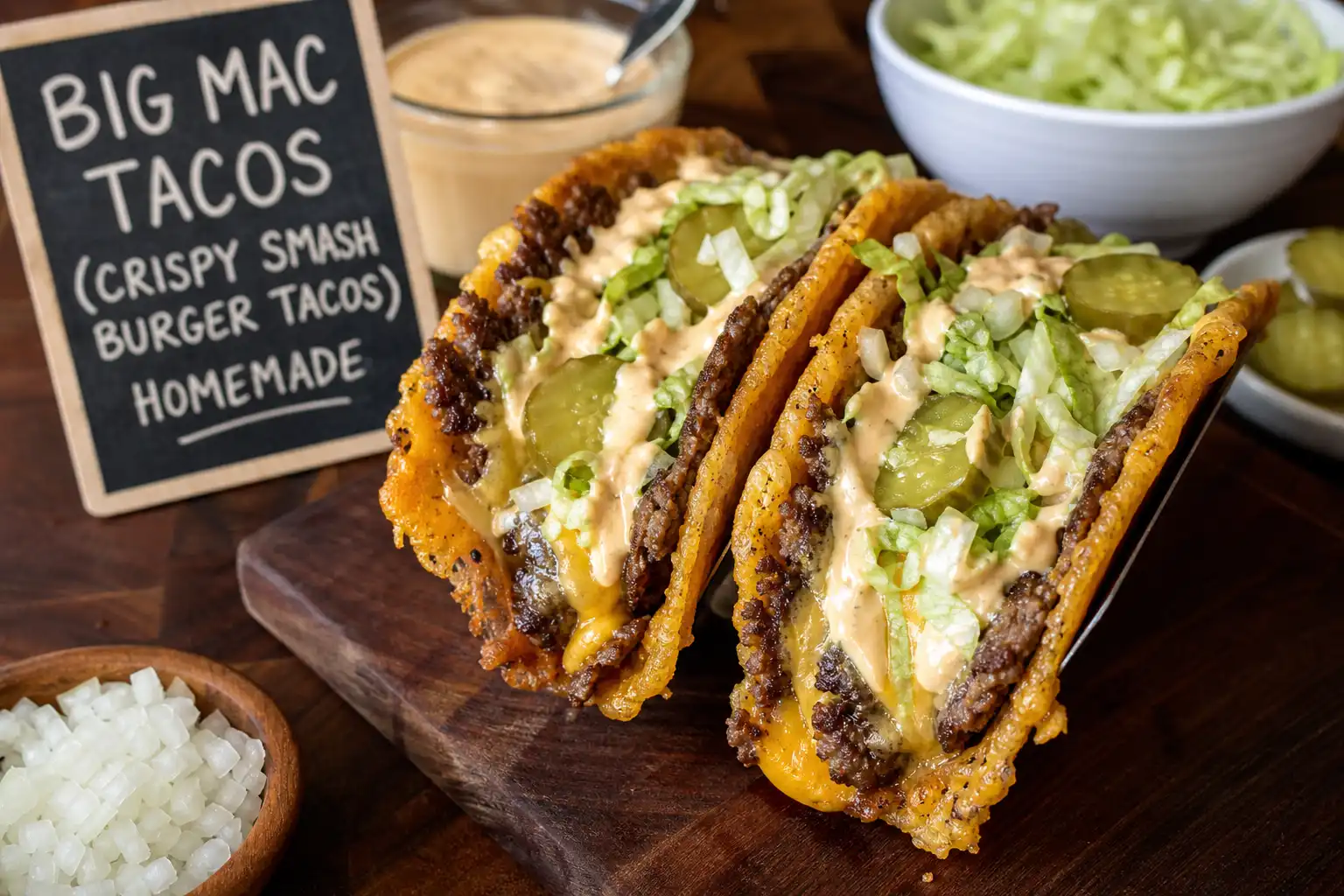
Welcome to the ultimate culinary fusion experience, where the iconic flavors of America’s most famous burger meet the crispy, handheld convenience of a traditional taco. Big Mac Tacos, often referred to as Crispy Smash Burger Tacos, represent the pinnacle of modern comfort food innovation. This dish is not merely a combination of two fast-food staples; it is a reimagining of texture and taste that delivers the nostalgic savory punch of a Big Mac wrapped in the satisfying crunch of a hard-shell taco. Imagine the rich, umami-packed flavor of smashed ground beef, melted American cheese, crisp shredded lettuce, and diced pickles, all bound together by the legendary special sauce, but contained within a golden corn shell that shatters with every bite.
For home cooks and food enthusiasts alike, mastering this recipe means unlocking a new level of weeknight dinner excitement. It bridges the gap between the drive-thru window and the home kitchen, allowing you to control the quality of ingredients while maintaining that irresistible fast-food allure. Whether you are hosting a game day party, looking for a unique twist on taco Tuesday, or simply craving something indulgent and savory, these Big Mac Tacos deliver on every front. The following guide will walk you through every aspect of creating this masterpiece, from the historical context of the fusion to the microscopic details of ingredient selection, ensuring your final product is nothing short of perfection.
The History
To truly appreciate the Big Mac Taco, one must understand the lineage of its parent dishes. The Big Mac was introduced by McDonald’s in 1968, created by Jim Delligatti in Pennsylvania. It quickly became a global phenomenon, recognized not just for its taste but for its distinct structure: two all-beef patties, special sauce, lettuce, cheese, pickles, onions, on a sesame seed bun. The “Special Sauce” became a closely guarded secret, sparking decades of culinary speculation and homemade replication attempts. Its flavor profile—a creamy, tangy, slightly sweet emulsion—became the gold standard for burger condiments.
Conversely, the taco has roots stretching back to the 18th century in Mexican silver mines, evolving into a staple of Mexican-American cuisine in the United States throughout the 20th century. The hard-shell taco, popularized by chains like Taco Bell in the 1960s, offered a crispy vessel that contrasted beautifully with soft fillings. As food culture evolved in the 2010s and 2020s, the “smash burger” technique gained immense popularity among gourmet burger joints. This method involves pressing ground beef thinly onto a hot griddle to maximize the Maillard reaction, creating a crispy, caramelized crust that is rich in flavor.
The convergence of these histories led to the birth of the Big Mac Taco. Food trucks and social media chefs began experimenting with putting smash burger patties inside taco shells, realizing that the structural integrity of a hard shell could hold the juicy beef better than a soft bun, while adding an extra layer of crunch. This hybrid dish represents the modern era of “mashup” cuisine, where boundaries between national dishes are blurred to create something entirely new yet comfortingly familiar. It is a testament to the adaptability of classic flavors and the endless creativity of home cooks and professional chefs alike.
Ingredients Breakdown
Understanding the role of each component is crucial for replicating the authentic flavor profile of this dish. Here is a deep dive into why each ingredient matters:
- Ground Beef (80/20 Blend): The fat content is critical. Lean beef will result in dry, tough tacos. You need the 20% fat to render out during the smashing process, frying the meat in its own tallow to create that signature crispy edge. This fat also carries the flavor of the beef and helps melt the cheese.
- American Cheese: While cheddar offers a sharper taste, American cheese is engineered to melt smoothly without breaking or becoming oily. It provides the creamy texture that coats the beef and binds the toppings together, mimicking the exact mouthfeel of the original burger.
- Hard Taco Shells: The vessel of the dish. Corn shells provide a distinct earthy flavor and a rigid crunch that contrasts with the soft beef. For the best experience, choose U-shaped shells that can stand upright during assembly. Some enthusiasts prefer making their own shells from corn tortillas fried over a curved mold for maximum freshness.
- Shredded Iceberg Lettuce: Iceberg is chosen over romaine or green leaf for its high water content and neutral flavor. It provides a necessary cold crunch that cuts through the richness of the beef and cheese. It must be shredded finely to distribute evenly within the taco curve.
- Dill Pickles: The acidity is vital. The brine and crunch of the pickles cut through the fat of the beef and the creaminess of the sauce. Chopping them into small bits ensures every bite contains a hint of tanginess.
- White Onions: Raw white onions offer a sharp, pungent bite that softens slightly against the hot meat. They add a sulfuric depth that complements the beef. Some variations suggest rehydrating dried onion flakes for a texture closer to the fast-food original.
- The Special Sauce: This is the heart of the flavor. It typically consists of mayonnaise, sweet pickle relish, yellow mustard, vinegar, garlic powder, onion powder, and paprika. The balance of sweet, tangy, and savory must be precise to achieve the iconic taste.
Step-by-Step Recipe
Creating the perfect Big Mac Taco requires attention to timing and temperature. Follow this detailed workflow to ensure every element comes together simultaneously.
Phase 1: Sauce Preparation
Begin by making the special sauce at least 30 minutes before cooking. This allows the spices to bloom and the flavors to meld. In a small mixing bowl, combine mayonnaise, ketchup, sweet pickle relish, white vinegar, garlic powder, onion powder, and paprika. Whisk until completely smooth and uniform in color. Cover and refrigerate. Making this early ensures the sauce is cold and thick when applied, preventing it from sliding off the hot meat.
Phase 2: Vegetable Prep
While the sauce chills, prepare your toppings. Shred the iceberg lettuce using a sharp knife or a mandoline for uniform thinness. Place the shredded lettuce in a bowl of ice water to keep it incredibly crisp, then drain and pat dry thoroughly before serving. Dice the white onions into fine cubes to ensure they distribute well without overwhelming a single bite. Chop the dill pickles into small, bite-sized fragments. Having all toppings ready (mise en place) is essential because the beef cooks very quickly.
Phase 3: Beef Formation
Take your ground beef and loosely form it into small balls, roughly the size of a golf ball. Do not pack them tightly; loose packing allows for better smashing. You will need two balls per taco if you want a double-layer effect, or one larger ball for a single layer. Keep the beef cold until it hits the pan; cold fat smashes better and creates more steam and crust.
Phase 4: The Smash and Cook
Heat a cast-iron skillet or griddle over high heat until it is smoking slightly. Place the beef balls onto the hot surface. Immediately use a heavy spatula or a burger smasher to press the balls flat. Apply significant pressure for about 10 seconds to ensure maximum contact with the heat source. Season generously with salt and pepper immediately after smashing. Cook for about 2-3 minutes until a deep brown crust forms. Flip the patties, place a slice of American cheese on each, and cook for another minute until the cheese is molten.
Phase 5: Assembly
Warm your taco shells in the oven for a few minutes to make them pliable and enhance their crunch. Place the shells on a stable surface. Drizzle a layer of special sauce on the bottom interior of the shell. Place the cheesy beef patty inside, ensuring it fits the curve. Top immediately with the diced onions, pickles, and shredded lettuce. Finish with another drizzle of sauce on top of the lettuce. Serve immediately while the shell is crisp and the cheese is gooey.
Tips
To elevate your Big Mac Tacos from good to extraordinary, consider these professional insights and troubleshooting techniques:
- Heat Management: The most common mistake is not having the pan hot enough. You want a violent sizzle when the meat hits the pan. This ensures the Maillard reaction occurs rapidly, creating the crust before the interior overcooks.
- Prevent Soggy Shells: Moisture is the enemy of the crispy shell. Ensure your lettuce is completely dry after washing. Also, avoid over-saucing the bottom of the shell; apply sauce to the meat or the lettuce instead to create a barrier.
- Cheese Melting Trick: If the cheese isn’t melting fast enough after flipping the patty, add a few drops of water to the pan and cover it with a metal bowl or lid for 30 seconds. The steam will melt the cheese instantly without overcooking the beef.
- Seasoning Balance: Don’t be shy with the salt on the beef. Since the toppings are mostly neutral or acidic, the beef needs to be well-seasoned to stand out. Kosher salt is preferred for its texture and clean flavor.
- Shell Stability: If you find the tacos tipping over during assembly, use a muffin tin to hold them upright. This allows you to use both hands to fill them without making a mess.
- Double Smash: For extra crispiness, you can smash the beef, cook it, flip it, and then smash it again lightly after flipping to increase surface area contact.
Variations and Customizations
While the classic recipe is divine, there are numerous ways to customize this dish to suit different palates and dietary needs:
- Spicy Big Mac Taco: Add cayenne pepper or chipotle powder to the special sauce. You can also mix diced jalapeños into the beef while smashing or top the taco with spicy nacho cheese sauce.
- Chicken Big Mac Taco: Substitute ground beef with ground chicken or finely minced chicken thighs. Ensure you add a bit of oil to the pan as chicken lacks the natural fat content of beef. Adjust cooking time to ensure poultry is fully cooked through.
- Vegetarian Lentil Option: Use cooked lentils mixed with walnuts and mushroom powder to mimic the texture of ground beef. Bind with flax eggs and season heavily with smoked paprika and soy sauce for umami.
- Low-Carb Lettuce Wrap: Eliminate the corn shell entirely. Use large leaves of romaine or butter lettuce as the vessel. This reduces carbohydrates significantly while keeping the flavor profile intact.
- Bacon Addition: Crispy crumbled bacon adds a smoky dimension that complements the beef beautifully. Layer it between the cheese and the lettuce for added texture.
- Triple Layer: For the ultimate indulgence, stack three thin smash patties inside a large burrito-sized hard shell, creating a “Grand Mac” taco experience.
- Gluten-Free: Ensure your taco shells are certified gluten-free corn shells. Most hard shells are naturally gluten-free, but cross-contamination can occur in manufacturing.
Health Considerations and Nutritional Value
It is important to approach this dish with an understanding of its nutritional profile, as it is inherently indulgent. A standard serving of two Big Mac Tacos can be high in calories, saturated fat, and sodium due to the processed cheese, beef, and sauce. However, mindful modifications can make this meal part of a balanced diet.
Caloric Density: The majority of calories come from the beef fat and the mayonnaise-based sauce. To reduce this, consider using leaner beef (90/10), though you may sacrifice some crispiness. Alternatively, reduce the amount of sauce per taco by using a spray bottle to mist it rather than pouring.
Sodium Content: Fast-food inspired recipes are often high in salt. To manage this, use low-sodium cheese and reduce the added salt in the beef seasoning. Rely on the pickles and onions for flavor enhancement instead of pure salt.
Protein Power: On the positive side, this dish is rich in protein, which promotes satiety. The beef provides essential iron and zinc. Pairing the tacos with a side salad rather than fries can balance the meal with fiber and vitamins.
Portion Control: Because the flavors are intense, satisfaction can be reached with fewer tacos than expected. Serving one or two tacos alongside a large green salad can provide a fulfilling meal without excessive caloric intake.
Ingredients
For the Special Sauce:
- 1/2 cup mayonnaise
- 2 tablespoons sweet pickle relish
- 1 tablespoon yellow mustard
- 1 teaspoon white vinegar
- 1/2 teaspoon garlic powder
- 1/2 teaspoon onion powder
- 1/2 teaspoon paprika
- 1 teaspoon sugar (optional)
For the Tacos:
- 1 pound ground beef (80/20 blend)
- 8 hard taco shells
- 8 slices American cheese
- 2 cups shredded iceberg lettuce
- 1/2 cup diced white onion
- 1/2 cup chopped dill pickles
- Salt and black pepper to taste
- Cooking oil (if needed for pan)
Directions
- In a small bowl, whisk together all ingredients for the special sauce until smooth. Cover and refrigerate for at least 30 minutes to allow flavors to meld.
- Prepare all toppings: shred the lettuce, dice the onions, and chop the pickles. Keep the lettuce chilled until ready to serve.
- Divide the ground beef into 16 equal portions and roll them into loose balls. Keep them refrigerated until ready to cook.
- Preheat your oven to 350°F (175°C) and warm the taco shells for 5 minutes to crisp them up. Keep them warm.
- Heat a large cast-iron skillet or griddle over high heat. Once smoking hot, place the beef balls onto the skillet, leaving space between them.
- Immediately smash each ball flat with a heavy spatula. Press down hard for 10 seconds to create a thin patty.
- Season the tops of the patties generously with salt and pepper. Cook for 2-3 minutes until a dark brown crust forms.
- Flip the patties. Place one slice of American cheese on each patty. Cook for another 1-2 minutes until the cheese is melted and the beef is cooked through.
- To assemble, place a cheesy beef patty into each warm taco shell. You can stack two patties per shell if desired.
- Top with diced onions, pickles, and shredded lettuce.
- Drizzle generously with the chilled special sauce.
- Serve immediately while the shells are crispy and the beef is hot.
FAQ
Can I make the special sauce ahead of time?
Yes, in fact, it is recommended. The sauce tastes better after sitting in the refrigerator for a few hours or overnight, as this allows the dried spices to rehydrate and the flavors to integrate fully.
What if I don’t have a burger smasher?
You can use the bottom of a heavy glass or a sturdy metal spatula. To prevent sticking, place a small piece of parchment paper between the beef and the tool you are using to smash.
How do I keep the taco shells from breaking?
Hard shells are fragile. Warm them gently in the oven rather than the microwave, which can make them chewy or brittle. Handle them carefully during assembly and support the bottom when biting into them.
Can I freeze the leftovers?
It is not recommended to freeze assembled tacos as the lettuce and shell will become soggy upon reheating. However, you can freeze the cooked beef patties separately. Reheat them in a skillet to restore crispiness before assembling fresh tacos.
Is there a way to make this dairy-free?
Yes, substitute the American cheese with a high-quality vegan melting cheese. Ensure the mayonnaise in the sauce is also egg-free and dairy-free to meet strict dietary requirements.
Why is my beef sticking to the pan?
This usually happens if the pan isn’t hot enough or if you try to flip the meat too early. Let the crust form completely; the meat will naturally release from the pan when it is ready.
Summary (in two lines)
Big Mac Tacos combine the iconic flavors of a smash burger with the crispy crunch of a hard shell for the ultimate fusion meal.
Follow this guide to master the special sauce, perfect the beef smash, and assemble a delicious, customizable dinner experience.