Introduction
Welcome to the vibrant, nourishing world of the Sweet Potato Taco Bowl—a modern culinary fusion that marries the earthy sweetness of roasted sweet potatoes with the bold, zesty spirit of Mexican-inspired flavors. More than just a meal, this bowl is a celebration of balance: hearty yet light, satisfying yet nutrient-dense, and endlessly adaptable to dietary preferences and pantry availability. Whether you’re meal prepping for the week, seeking a plant-forward dinner option, or simply craving something colorful, flavorful, and deeply comforting, the Sweet Potato Taco Bowl delivers on every front. Its layered textures—from creamy avocado and crisp red cabbage to tender black beans and smoky-spiced sweet potatoes—create a symphony of taste and mouthfeel in every bite. Designed with intention and flexibility at its core, this bowl invites creativity without compromising on integrity, making it as suitable for busy weeknights as it is for weekend entertaining.
The History
While the Sweet Potato Taco Bowl has no singular origin story etched in ancient cookbooks, its roots run deep across multiple food traditions. Sweet potatoes themselves were domesticated over 5,000 years ago in Central and South America—long before European contact—and were a staple for Indigenous peoples across the Americas. In contrast, the taco—a handheld corn tortilla vessel filled with meats, salsas, and garnishes—evolved in Mexico through centuries of indigenous, Spanish, and later global influences. The “bowl” format, however, is a distinctly 21st-century American innovation born from the fast-casual dining boom, health-conscious eating trends, and the rise of grain- and veggie-based bowls as nutritious, deconstructed alternatives to traditional wraps or plates. Chains like Chipotle and Cava helped popularize the customizable bowl concept, while wellness influencers and plant-based chefs began reimagining it with antioxidant-rich sweet potatoes as a foundational base instead of rice or lettuce. Over time, the Sweet Potato Taco Bowl emerged organically—not as a trend, but as a thoughtful evolution: honoring ancestral ingredients (sweet potatoes, black beans, lime, cilantro) while embracing contemporary values of flexibility, nutrition transparency, and mindful eating. It reflects a broader cultural shift toward foods that are both rooted and revolutionary.
Ingredients Breakdown
Every ingredient in the Sweet Potato Taco Bowl serves a purpose—flavor, texture, nutrition, or function—and understanding their roles helps elevate your execution and customization:
- Sweet Potatoes: The hearty, caramelized base. High in beta-carotene (vitamin A), fiber, and complex carbs, they lend natural sweetness that balances spicy and acidic elements. Their dense texture holds up well to roasting and doesn’t turn mushy in meal prep.
- Black Beans: A protein- and fiber-rich legume that adds creaminess, earthiness, and satiety. Canned beans offer convenience; dried and slow-simmered beans provide superior flavor and texture control.
- Red Onion & Red Cabbage: Provide sharp, refreshing crunch and vivid color. Red cabbage is especially rich in anthocyanins—potent antioxidants linked to reduced inflammation and improved cardiovascular health.
- Avocado or Guacamole: Contributes healthy monounsaturated fats, potassium, and lush creaminess that cools the heat of spices and binds flavors together.
- Corn Kernels: Adds natural sweetness, pops of golden color, and subtle crunch. Fresh off the cob is ideal in summer; frozen or grilled corn works year-round.
- Cilantro & Lime Juice: Bright, citrusy, herbaceous notes that cut through richness and elevate freshness. Lime also enhances iron absorption from plant-based ingredients like beans and spinach.
- Taco-Spice Blend: Typically includes smoked paprika (for depth and subtle smoke), cumin (earthy warmth), chili powder (mild heat), garlic powder, onion powder, and a pinch of chipotle or cayenne for dimension. This blend transforms humble sweet potatoes into something deeply savory and complex.
- Optional Enhancements: Pickled red onions (for tang and visual pop), crumbled cotija or feta (salty, briny contrast), toasted pepitas (nutty crunch and magnesium), roasted poblano strips (smoky mild heat), or microgreens (delicate freshness and added phytonutrients).
Collectively, these ingredients form a complete nutritional profile—offering all three macronutrients (complex carbs, plant protein, heart-healthy fats) alongside a broad spectrum of vitamins (A, C, K, B6, folate), minerals (potassium, magnesium, iron, zinc), fiber, and polyphenols.
Step-by-Step Recipe
Follow this detailed, chef-informed sequence for optimal flavor development, texture contrast, and timing efficiency:
- Prep & Season Sweet Potatoes: Peel (optional—skin is edible and nutrient-dense) and dice 2 medium sweet potatoes (about 1 lb / 450g) into ¾-inch cubes for even roasting. Toss in a large bowl with 2 tbsp high-heat oil (avocado or grapeseed), 1½ tsp smoked paprika, 1 tsp ground cumin, 1 tsp chili powder, ½ tsp garlic powder, ½ tsp onion powder, ¼ tsp chipotle powder (adjust to heat preference), 1 tsp maple syrup or agave (enhances caramelization), 1 tsp apple cider vinegar (brightens spice notes), and 1 tsp kosher salt. Massage thoroughly so each cube is evenly coated.
- Roast to Perfection: Spread in a single layer on a parchment-lined rimmed baking sheet. Roast at 425°F (220°C) for 25–30 minutes, flipping halfway, until deeply golden-edged, fork-tender but not collapsing. Let cool slightly—this allows starches to set and prevents sogginess when assembling.
- Prepare Black Beans: Drain and rinse 1 (15-oz) can black beans. Warm gently in a small saucepan with 1 tbsp water, ½ tsp cumin, ½ tsp lime zest, and a squeeze of fresh lime juice. Simmer 3–4 minutes until fragrant and slightly thickened. Alternatively, mash lightly with a fork for a “refried” texture.
- Build the Fresh Components: Thinly slice ½ small red onion and quick-pickle in lime juice, 1 tsp honey, and a pinch of salt for 10 minutes. Shred 1 cup red cabbage using a mandoline or box grater. Halve and pit 1 ripe avocado; slice or dice just before serving to prevent browning.
- Toast the Corn: Heat 1 tsp oil in a skillet over medium-high. Add 1 cup fresh or thawed frozen corn kernels and cook 4–5 minutes, stirring occasionally, until charred in spots and sweetly aromatic.
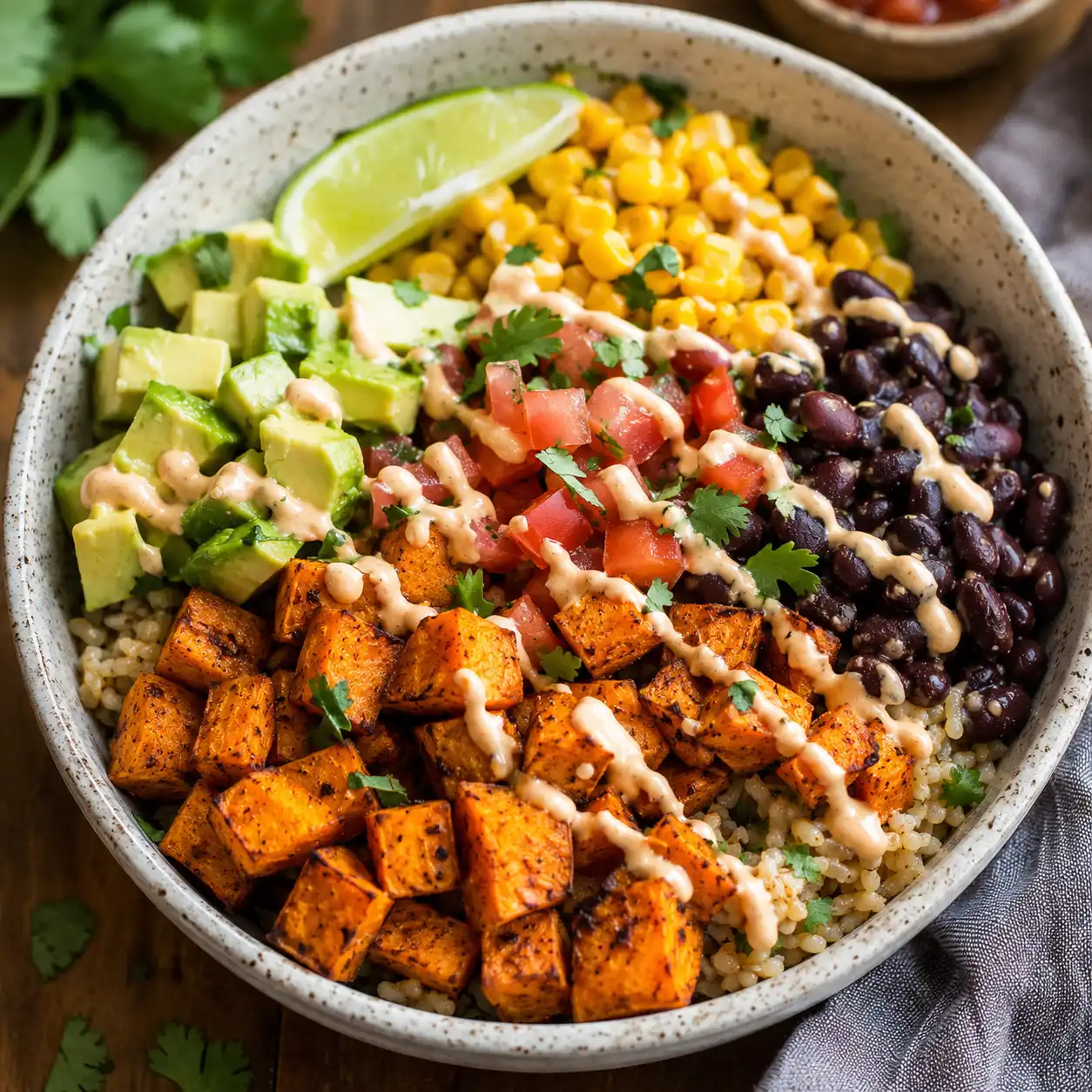
- Assemble with Intention: Start with a warm base of roasted sweet potatoes. Layer black beans, then corn, pickled red onion, shredded cabbage, and avocado. Finish with generous lime wedges, chopped fresh cilantro, a drizzle of lime crema (blend ¼ cup Greek yogurt or cashew cream + 1 tbsp lime juice + pinch of salt), and optional toppings like crumbled queso fresco, toasted pepitas, or hot sauce.
Tips
- Roasting Secret: Don’t crowd the pan—overlapping causes steaming instead of caramelizing. Use two sheets if needed. For extra crisp edges, broil for 1–2 minutes at the end (watch closely!).
- Meal Prep Mastery: Roast sweet potatoes and cook beans up to 4 days ahead; store separately in airtight containers. Keep fresh toppings (avocado, cabbage, herbs, lime) separate until serving to preserve texture and color.
- Lime Juice Timing: Always add lime juice *after* roasting—not before—as acidity can inhibit caramelization and toughen the exterior.
- Texture Contrast Is Key: Ensure at least one crunchy element (cabbage, pepitas, radish slices) and one creamy element (avocado, guac, lime crema) in every bowl.
- Spice Control: Toast whole cumin and coriander seeds in a dry skillet for 1 minute before grinding—they’ll bloom with deeper, nuttier aroma and reduce raw spice bitterness.
- Vegan Sour Cream Hack: Blend ½ cup raw cashews (soaked 4+ hours), ¼ cup water, 1 tbsp lime juice, ½ tsp apple cider vinegar, and ¼ tsp salt until silky smooth. Chill 30 minutes before use.
- Make It Kid-Friendly: Skip spicy elements, double the corn and sweet potato, add mild shredded cheddar, and serve lime wedges on the side for dipping fun.
- Leftover Magic: Repurpose leftovers into breakfast hash (add eggs), taco-stuffed bell peppers, or blended into a smoky-sweet soup with vegetable broth and coconut milk.
Variations and Customizations
This bowl thrives on personalization—here’s how to tailor it to your palate, pantry, or dietary framework:
- Protein-Powered: Top with grilled chicken marinated in adobo, shredded carnitas, chipotle-lime shrimp, baked tofu cubes, or tempeh crumbles sautéed in taco seasoning.
- Grain-Inclusive: Add ½ cup cooked quinoa, brown rice, farro, or cauliflower rice for extra substance and chew. Toast grains in a dry pan first for nutty depth.
- Low-Carb/Keto Adaptation: Double the cabbage and avocado, omit corn and beans, swap sweet potatoes for roasted cauliflower florets or jicama ribbons, and use a tahini-lime drizzle instead of maple-spiced roasting oil.
- Gluten-Free & Allergen-Safe: Naturally GF—just verify spice blends and hot sauces are certified. For nut-free, skip cashew crema and use sunflower seed yogurt or coconut yogurt.
- Breakfast Bowl Version: Replace black beans with scrambled eggs or tofu scramble, add sliced cherry tomatoes, crumbled bacon or tempeh “bacon,” and top with a fried egg and hot sauce.
- Southwest Twist: Add roasted poblano strips, crumbled blue cheese or cotija, fire-roasted tomato salsa, and a sprinkle of crushed tortilla chips.
- Asian-Mex Fusion: Swap taco spices for gochujang-ginger marinade on sweet potatoes, use edamame instead of black beans, top with pickled daikon, nori strips, and sesame-ginger drizzle.
- Herb-Forward Garden Bowl: Add baby spinach or arugula, blanched green beans, roasted beets, and dill or mint alongside cilantro for a verdant, floral lift.
- Dessert-Inspired Bowl: Lightly roast sweet potatoes with cinnamon, cardamom, and coconut oil; top with coconut yogurt, pomegranate arils, toasted coconut flakes, and a drizzle of date syrup.
Health Considerations and Nutritional Value
A single serving (approx. 1 bowl, ~550–650 kcal) delivers exceptional nutritional density without excess sodium, refined sugar, or unhealthy fats—making it ideal for sustained energy, digestive health, and long-term wellness goals:
- Vitamin A Powerhouse: One cup of roasted sweet potatoes provides over 400% of the Daily Value (DV) of vitamin A (as beta-carotene)—critical for immune function, vision, skin health, and cellular repair.
- Fiber-Rich Synergy: With ~15g total fiber (7g from sweet potatoes, 7g from beans, 1g from cabbage/avocado), this bowl supports gut microbiome diversity, stabilizes blood sugar, and promotes satiety—helping curb cravings and support healthy weight management.
- Plant Protein Complete Potential: While sweet potatoes and black beans individually lack some essential amino acids, eaten together they form a complementary protein profile—especially when paired with seeds (pepitas) or whole grains, offering ~20–25g high-quality plant protein per bowl.
- Anti-Inflammatory Profile: Rich in anthocyanins (red cabbage), lycopene (tomato-based salsas), quercetin (onions), and oleic acid (avocado), plus spices like cumin and paprika known for antioxidant and anti-inflammatory properties.
- Blood Sugar Friendly: Low glycemic load due to fiber, healthy fats, and vinegar/lime—slows glucose absorption and prevents spikes/crashes. Ideal for prediabetes, insulin resistance, or metabolic health focus.
- Potassium Champion: Sweet potatoes (~542mg), black beans (~305mg), avocado (~485mg), and spinach (if added) combine for >1,500mg potassium—supporting healthy blood pressure, nerve signaling, and fluid balance.
- Considerations: Those monitoring sodium should opt for low-sodium or no-salt-added beans and limit salty cheeses or store-bought salsas. Individuals with IBS may benefit from soaking and rinsing beans thoroughly and choosing low-FODMAP toppings (e.g., cucumber instead of red onion). For kidney health, consult a dietitian on portion sizes of potassium-rich ingredients.
Ingredients
Makes 2 generous servings or 4 meal-prep portions
- 2 medium orange-fleshed sweet potatoes (about 1 lb / 450g), peeled and diced into ¾-inch cubes
- 2 tbsp avocado oil or high-heat grapeseed oil
- 1½ tsp smoked paprika
- 1 tsp ground cumin
- 1 tsp ancho or mild chili powder
- ½ tsp garlic powder
- ½ tsp onion powder
- ¼–½ tsp chipotle powder (to taste)
- 1 tsp pure maple syrup or agave nectar
- 1 tsp apple cider vinegar
- 1 tsp kosher salt (plus more to taste)
- Freshly ground black pepper
- 1 (15-oz) can low-sodium black beans, drained and rinsed
- 1 tbsp fresh lime juice
- ½ tsp lime zest
- 1 cup fresh or frozen corn kernels
- ½ small red onion, very thinly sliced
- 1 tbsp fresh lime juice (for pickling)
- 1 tsp raw honey or agave (for pickling)
- Pinch of flaky sea salt (for pickling)
- 1 cup finely shredded red cabbage
- 1 ripe Hass avocado, halved, pitted, and sliced
- ¼ cup fresh cilantro leaves, roughly chopped
- 2 limes, cut into wedges
- For Lime Crema (optional but recommended): ¼ cup plain non-dairy or Greek yogurt, 1 tbsp fresh lime juice, pinch of salt
- For Garnish (choose 2–3): Crumbled queso fresco or cotija, toasted pepitas, pickled jalapeños, hot sauce (Cholula or Valentina), microgreens, radish slices, crushed baked tortilla strips
Directions
- Preheat oven to 425°F (220°C). Line a large rimmed baking sheet with parchment paper.
- Season sweet potatoes: In a large mixing bowl, combine diced sweet potatoes, oil, smoked paprika, cumin, chili powder, garlic powder, onion powder, chipotle powder, maple syrup, apple cider vinegar, kosher salt, and several grinds of black pepper. Use your hands or a spatula to toss thoroughly until every piece is evenly coated.
- Roast: Spread seasoned sweet potatoes in a single, uncrowded layer on the prepared baking sheet. Roast for 25–30 minutes, flipping gently with a spatula halfway through, until deeply golden brown at the edges and tender when pierced with a fork. Remove from oven and let cool slightly—about 5 minutes—before assembling.
- Prepare black beans: In a small saucepan over medium-low heat, combine drained black beans, 1 tbsp lime juice, ½ tsp lime zest, and a pinch of salt. Gently simmer for 3–4 minutes, stirring occasionally, until warmed through and slightly thickened. Remove from heat.
- Pickle red onions: In a small bowl, combine sliced red onion, 1 tbsp lime juice, 1 tsp honey, and a pinch of salt. Stir well and let sit at room temperature for at least 10 minutes (or refrigerate up to 3 days).
- Char the corn: Heat 1 tsp oil in a medium skillet over medium-high heat. Add corn kernels and cook, stirring occasionally, for 4–5 minutes until lightly blistered and fragrant. Remove from heat and set aside.
- Assemble bowls: Divide warm roasted sweet potatoes between two wide, shallow bowls. Top each with ½ of the warm black beans, ½ of the charred corn, ½ of the pickled red onions (with liquid), ½ cup shredded red cabbage, and ½ avocado, sliced. Sprinkle generously with cilantro.
- Finish & serve: Squeeze fresh lime juice over each bowl. Drizzle with lime crema (if using). Add desired garnishes. Serve immediately with extra lime wedges on the side.
FAQ
- Can I make this entirely oil-free?
- Yes! Roast sweet potatoes using 2–3 tbsp vegetable broth or aquafaba instead of oil—just ensure the pan is well-seasoned or lined with parchment. You may need to stir more frequently and extend roasting time by 5 minutes for optimal caramelization.
- How do I prevent my sweet potatoes from getting soggy?
- Pat diced sweet potatoes *very dry* before tossing with seasonings. Avoid overcrowding the pan. Use high heat (425°F+), and resist stirring too early—let them develop crust first. Also, avoid adding lime juice or vinegar before roasting.
- Can I use yams instead of sweet potatoes?
- True yams (starchy, white-fleshed, common in African/Caribbean markets) have a drier, less sweet profile and won’t caramelize the same way. Stick with orange-fleshed sweet potatoes (often mislabeled as “yams” in U.S. stores) for best results.
- Is this bowl freezer-friendly?
- Roasted sweet potatoes and cooked beans freeze well for up to 3 months (cool completely, freeze separately in portioned bags). However, fresh toppings (avocado, cabbage, lime, herbs) should always be added fresh after thawing and reheating.
- What’s the best way to reheat leftovers?
- Reheat sweet potatoes and beans together in a covered skillet over medium-low heat with 1 tsp water or broth, stirring gently until warmed through (~4–5 minutes). Never microwave the full assembled bowl—the avocado will oxidize and cabbage will wilt.
- Can I make this nut-free and soy-free?
- Absolutely. This recipe is naturally soy-free and nut-free as written. Just double-check labels on spice blends, hot sauces, and any packaged toppings for hidden soy or nut derivatives.
- Why do you recommend apple cider vinegar in the roasting mix?
- It adds a subtle brightness that lifts the earthy spices and enhances Maillard browning without tasting “vinegary.” It also helps break down surface starches for better crispness.
- How can I boost the protein without adding meat?
- Add ¼ cup cooked quinoa or farro per bowl, 2 tbsp hemp hearts or shelled edamame, or 1 oz crumbled baked tofu. You can also stir 1 tbsp nutritional yeast into the black beans for cheesy umami and B12.
- Is this suitable for pregnancy or postpartum nutrition?
- Yes—it’s exceptionally supportive: rich in folate (beans, sweet potatoes), iron (pair with vitamin C from lime for absorption), fiber (for constipation relief), potassium (for leg cramps), and healthy fats (for fetal brain development). Just ensure all produce is thoroughly washed and avoid unpasteurized cheeses unless labeled safe.
- Can kids enjoy this?
- Definitely—with simple tweaks: omit chipotle, reduce cumin, double the sweet potato and corn, add mild cheddar, and serve lime wedges on the side for interactive squeezing. Let them build their own mini bowls!
Summary
The Sweet Potato Taco Bowl is a vibrant, nutrient-dense, and endlessly customizable plant-forward meal that honors ancestral ingredients while embracing modern wellness principles—delivering bold flavor, textural harmony, and balanced macro- and micronutrition in every colorful, satisfying bite.
Whether enjoyed as a weeknight dinner, a make-ahead lunch, or a centerpiece for gatherings, it’s a joyful, flexible, and deeply nourishing expression of how food can be both grounding and inspiring—simple enough for beginners, sophisticated enough for seasoned cooks, and meaningful enough to become a cherished part of your kitchen repertoire.