Introduction
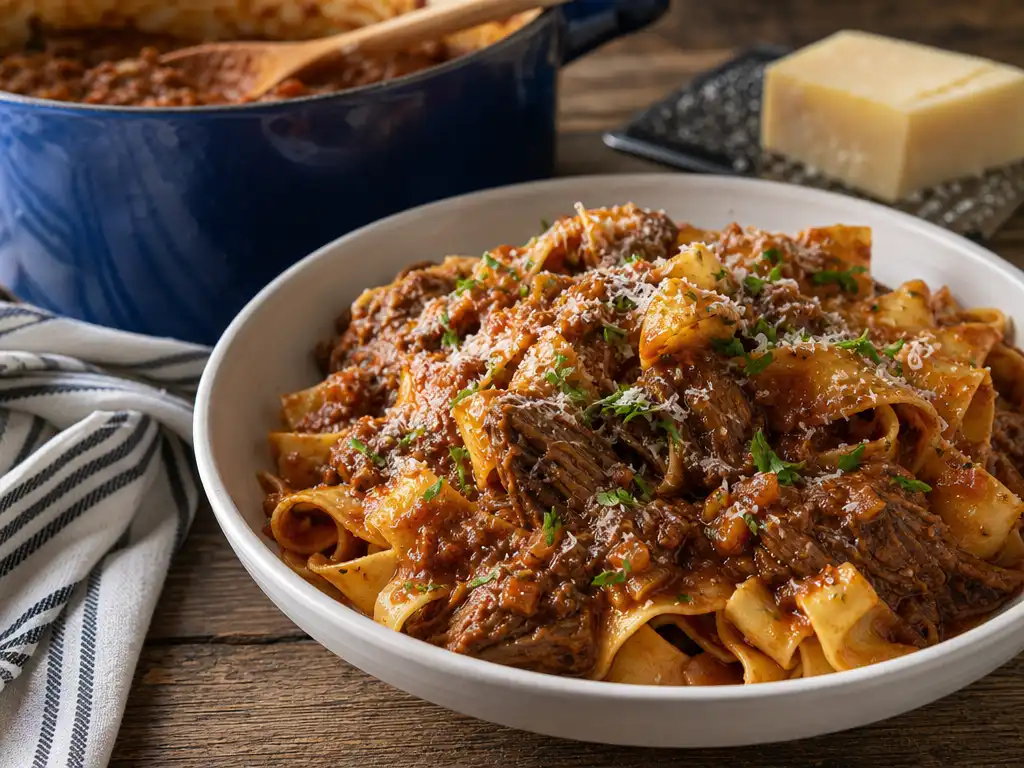
There are few culinary experiences that rival the deep, soul-warming comfort of a slow-braised meat sauce served over fresh pasta. The Dutch Oven Short Rib Ragu with Pappardelle is not merely a dinner; it is an event, a celebration of time, patience, and the transformative power of low-heat cooking. When you commit to making this dish, you are inviting aromas of red wine, seared beef, and sweet tomatoes to fill your home for hours, creating an atmosphere of anticipation that is almost as satisfying as the first bite. The short ribs, marbled with rich fat and connective tissue, break down over hours of braising into succulent, fork-tender morsels that practically melt on the tongue. When combined with the broad, ribbon-like strands of pappardelle, which are sturdy enough to hold the heavy, luxurious sauce, the result is a harmony of texture and flavor that defines peak comfort food. This recipe is designed for the home cook who appreciates the art of braising and understands that the best things in life, much like the best sauces, cannot be rushed.
The History
To understand the depth of this dish, one must look back at the origins of ragu and the evolution of braising techniques. The term “ragu” originates from the Italian word “ragout,” which itself derives from the French “ragoûter,” meaning to revive the taste. Historically, ragu was a way for Italian families, particularly in the Emilia-Romagna and Lombardy regions, to utilize tougher cuts of meat that required long cooking times to become palatable. While the famous Ragu alla Bolognese is well-documented, regional variations across Italy have always celebrated local livestock and available wines. The use of beef short ribs is a more modern adaptation, borrowing from American barbecue traditions where this cut is prized for its high collagen content, merging Old World technique with New World ingredient appreciation.
The vessel used, the Dutch oven, has a history spanning centuries. Originally developed in the Netherlands in the 17th century using sand molds for smoother casting, these pots were perfected by Abraham Darby in England and later became a staple in American colonial cooking. The Dutch oven’s ability to retain heat evenly and its tight-fitting lid make it the ideal environment for braising, trapping moisture and circulating heat around the meat. This combination of Italian sauce tradition, American cut preference, and historic cookware technology creates a dish that is rooted in centuries of culinary evolution, representing a convergence of cultures united by the universal love of slow-cooked meat.
Ingredients Breakdown
Understanding the role of each component in this recipe is crucial for mastering the flavor profile. The beef short ribs are the star; you want bone-in ribs if possible, as the marrow within the bone adds gelatin and depth to the sauce during the long braise. The fat cap should be left on during cooking to baste the meat from within, though excess can be trimmed before serving. Pancetta or guanciale provides a salty, pork-based foundation that adds umami depth distinct from the beef. Rendering this fat first ensures the aromatics cook in flavorful oil rather than neutral vegetable oil.
The aromatics—onions, carrots, and celery, known collectively as soffritto or mirepoix—provide the sweet and earthy base notes. They must be diced finely so they essentially dissolve into the sauce, thickening it naturally. Tomato paste is not just for color; it is cooked until it bricks slightly to caramelize the sugars and remove the acidic tinny taste, adding a concentrated umami punch. The wine should be a dry, full-bodied red like Cabernet Sauvignon or Barolo; the alcohol evaporates, leaving behind tannins and fruit notes that cut through the richness of the beef. Beef stock should be low-sodium to control the salt levels, and ideally, it should be gelatin-rich to aid in the sauce’s viscosity. Finally, fresh herbs like rosemary and thyme add earthy top notes, while a splash of vinegar or wine at the end brightens the heavy flavors.
Step-by-Step Recipe
The process begins with preparation, which is key to a smooth cooking experience. Start by patting your short ribs completely dry with paper towels; moisture is the enemy of a good sear. Season them generously with kosher salt and freshly cracked black pepper at least thirty minutes before cooking to allow the seasoning to penetrate the meat. While the meat comes to room temperature, dice your vegetables uniformly. Preheat your Dutch oven over medium-high heat. You want the pot to be properly hot before the meat hits the surface to ensure an immediate sear.
Once the pot is hot, add a touch of oil and lay the short ribs in the pot, ensuring they are not crowded. Crowding steams the meat rather than searing it, so work in batches if necessary. You are looking for a deep mahogany crust on all sides, which builds the flavor foundation through the Maillard reaction. Remove the meat and set it aside. In the same pot, add your pancetta and render the fat until crisp. Add the vegetables to this fat, scraping up the fond (the browned bits) stuck to the bottom of the pot. This fond is pure flavor. Cook the vegetables until they are soft and translucent, which may take ten minutes.
Stir in the tomato paste and cook it for another few minutes until it darkens. Pour in the wine to deglaze, using a wooden spoon to lift any remaining stuck bits. Let the wine reduce by half to cook off the alcohol. Return the short ribs to the pot, nesting them into the vegetables. Add the stock and herbs until the meat is mostly submerged. Bring to a simmer, then cover tightly and transfer to a low oven (around 300°F or 150°C). Let this braise for three to four hours until the meat is falling off the bone. Once done, remove the meat, shred it, and reduce the sauce on the stovetop to your desired thickness before combining them.
Tips
- Don’t Skip the Sear: It is tempting to rush this step, but the brown crust formed on the short ribs provides the majority of the complex flavor in the final sauce. Take your time to get a deep brown color.
- Skim the Fat: Short ribs are rich. After braising, you may find a layer of fat on top of the sauce. Use a spoon to skim this off before reducing the sauce to prevent the dish from becoming overly greasy.
- Pasta Water is Gold: When cooking your pappardelle, reserve at least a cup of the starchy pasta water. Adding this to the ragu helps emulsify the sauce, allowing it to cling to the pasta rather than sliding off.
- Make it Ahead: Like most braises, this dish tastes better the next day. The flavors have time to meld and mature. Consider making it a day in advance and reheating gently on the stove.
- Acidity Balance: If the sauce tastes too heavy or flat after reducing, add a small splash of red wine vinegar or a pinch of sugar to balance the acidity of the tomatoes and the richness of the beef.
Variations and Customizations
While the classic recipe is divine, there are numerous ways to adapt this dish to your personal taste or dietary needs. For a white wine variation, substitute the red wine with a dry Pinot Grigio and omit the tomato paste, creating a “Bianco” style ragu that is lighter and emphasizes the beef’s natural sweetness. For a spicy kick, add crushed red pepper flakes or a chopped Calabrian chili when sautéing the aromatics to introduce a gentle heat that complements the rich fat. If you prefer pork, you can substitute half the beef with pork shoulder, which offers a slightly sweeter meat profile.
For those looking for alternative cooking methods, this recipe works beautifully in a slow cooker. Sear the meat and sauté the vegetables on the stove first, then transfer everything to the slow cooker on low for 8 hours. For a gluten-free option, simply swap the pappardelle for a high-quality brown rice or corn-based ribbon pasta, or serve the ragu over creamy polenta for a traditional Northern Italian twist. You can also add umami boosters such as a few dried porcini mushrooms rehydrated in warm water, adding both the mushrooms and the soaking liquid to the braise for an earthy depth.
Health Considerations and Nutritional Value
Short rib ragu is a nutrient-dense meal, primarily serving as a significant source of protein and iron. Beef is rich in heme iron, which is easily absorbed by the body, making this dish beneficial for those looking to maintain healthy energy levels. The slow cooking process breaks down collagen in the connective tissues into gelatin, which is excellent for joint health and gut lining support. However, due to the cut of meat used, this dish is also high in saturated fats and calories. Portion control is advisable, especially for those monitoring heart health or cholesterol levels.
To make the dish healthier, you can aggressively skim the fat after braising or chill the sauce overnight to allow the fat to solidify on top for easy removal. Using a whole wheat or legume-based pasta can increase the fiber content, helping to regulate blood sugar spikes associated with refined carbohydrates. The vegetable base provides vitamins A and C from the carrots and tomatoes, along with antioxidants like lycopene, which becomes more bioavailable when cooked. Enjoy this dish as a occasional indulgence or a hearty winter meal, balancing it with a large side of green vegetables to round out the nutritional profile.
Ingredients
- 4 to 5 pounds beef short ribs, bone-in
- 2 teaspoons kosher salt, plus more for seasoning
- 1 teaspoon freshly cracked black pepper
- 3 tablespoons olive oil
- 4 ounces pancetta, diced small
- 1 large yellow onion, finely diced
- 2 large carrots, finely diced
- 2 celery stalks, finely diced
- 4 cloves garlic, minced
- 3 tablespoons tomato paste
- 2 cups dry red wine (such as Cabernet Sauvignon)
- 4 cups low-sodium beef stock
- 3 sprigs fresh thyme
- 2 sprigs fresh rosemary
- 2 bay leaves
- 1 pound fresh pappardelle pasta
- Fresh parsley, chopped, for garnish
- Parmigiano-Reggiano cheese, for serving
Directions
- Preheat your oven to 300°F (150°C). Pat the short ribs dry and season generously on all sides with salt and pepper.
- Heat olive oil in a large Dutch oven over medium-high heat. Sear the short ribs in batches until deeply browned on all sides. Remove and set aside.
- Reduce heat to medium. Add pancetta to the pot and cook until crisp. Add onion, carrots, and celery. Cook until softened, about 8-10 minutes.
- Stir in garlic and tomato paste. Cook for 2 minutes until the paste darkens slightly.
- Pour in the red wine to deglaze, scraping up browned bits from the bottom. Simmer until reduced by half.
- Return short ribs to the pot. Add beef stock, thyme, rosemary, and bay leaves. Liquid should mostly cover the meat.
- Cover the Dutch oven with a tight-fitting lid and transfer to the oven. Braise for 3 to 4 hours until meat is fork-tender.
- Remove from oven. Transfer ribs to a cutting board. Discard herb stems and bay leaves.
- Shred the meat from the bones and discard bones and excess fat. Skim excess fat from the sauce.
- Simmer the sauce on the stovetop to reduce to desired thickness. Stir shredded meat back into the sauce.
- Boil pappardelle in salted water until al dente. Reserve 1 cup of pasta water.
- Toss pasta with the ragu, adding pasta water as needed to loosen the sauce. Serve topped with parsley and cheese.
FAQ
Can I use boneless short ribs?
Yes, boneless short ribs work well and save time on shredding, but bone-in ribs provide more flavor and gelatin from the marrow, resulting in a richer sauce.
What if my sauce is too thin?
Remove the meat and boil the liquid rapidly to reduce it further. You can also mix a teaspoon of cornstarch with cold water and stir it in, though reduction is preferred for flavor.
Can I freeze this ragu?
Absolutely. This dish freezes exceptionally well. Store in airtight containers for up to 3 months. Thaw overnight in the refrigerator before reheating.
What is the best wine pairing for serving?
Serve with the same wine you used to cook. A Sangiovese, Chianti Classico, or a bold Zinfandel pairs beautifully with the rich beef and tomato notes.
Why did my meat turn out tough?
This usually means it wasn’t cooked long enough. Collagen needs time and low heat to break down into gelatin. Ensure your oven temperature is accurate and give it more time if needed.
Summary
This Dutch Oven Short Rib Ragu combines slow-braised, tender beef with a rich red wine tomato sauce served over wide pappardelle noodles. It is a luxurious, make-ahead comfort dish perfect for special dinners or hearty winter meals.