Introduction
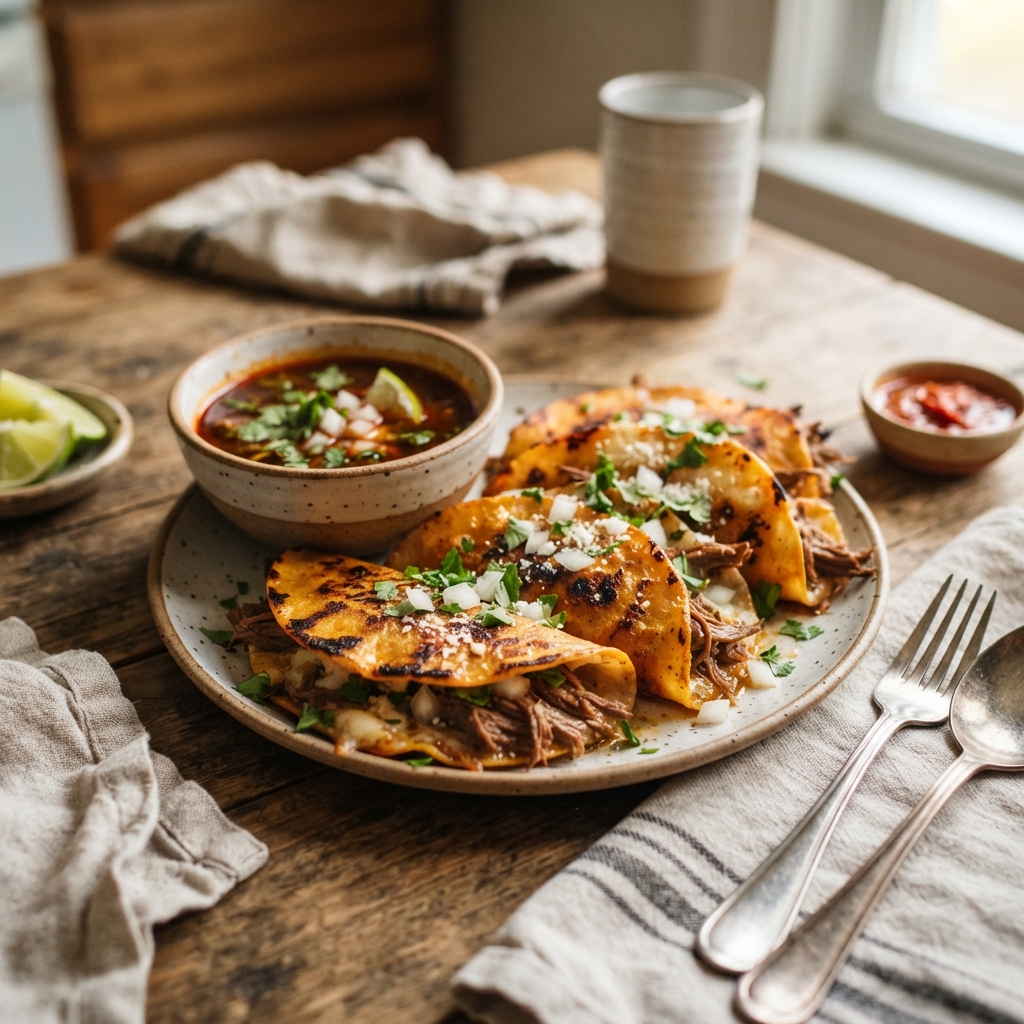
Birria tacos have transcended their humble origins in the streets of Jalisco, Mexico, to become a global culinary phenomenon. Often described as the “ultimate comfort food,” these tacos are a symphony of textures and flavors: a corn tortilla, lightly charred and crispy on the outside, filled with succulent, slow-braised meat that has been marinated in a complex adobo of dried chiles and spices, and melted with gooey Oaxaca cheese. But the defining characteristic of a true Birria taco is the consomé—the rich, savory broth resulting from the braising process. Diners dip the taco into this golden, fragrant liquid before taking a bite, creating an explosion of flavor that is at once spicy, savory, tangy, and deeply satisfying. This guide will take you on a journey through the history, the science, and the art of making authentic, restaurant-quality Birria tacos in your own kitchen.
The History
The story of Birria begins in the state of Jalisco, Mexico. Historically, Birria was not a taco filling but a celebratory stew made primarily from goat meat (chivo). Its roots trace back to the colonial era, where indigenous populations adapted cooking techniques introduced by the Spanish. While the Spanish brought livestock like goats and sheep, the indigenous people applied their mastery of native chiles and spices to create a dish that could tenderize tougher cuts of meat through long, slow cooking.
For centuries, Birria remained a special occasion dish, often served at weddings, baptisms, and holidays. It was traditionally cooked in underground pits (barbacoa style) or heavy clay pots. The evolution into “Tacos de Birria” is a more recent innovation, gaining massive popularity in Tijuana in the late 20th century. Vendors realized that the leftover meat from the stew made an incredible taco filling, especially when paired with cheese and dipped in the broth. In the 2010s, social media propelled this regional specialty into an international viral sensation, leading to the beef-based versions (using chuck roast or short ribs) that are now common in the United States, though traditional goat birria remains the gold standard in Mexico.
Ingredients Breakdown
To master Birria, one must understand the trinity of its flavor profile: the meat, the chile adobo, and the aromatics.
- The Meat: Traditionally, goat is used for its distinct, gamy flavor which stands up well to strong spices. However, beef has become the standard for many home cooks due to availability. Beef Chuck Roast is ideal because of its high fat content and connective tissue, which breaks down into gelatin during slow cooking, creating a rich mouthfeel. Short Ribs add an extra layer of beefy depth.
- The Chiles: The color and heat come from a blend of dried peppers. Guajillo chiles provide a bright, tangy redness and mild heat. Ancho chiles (dried poblanos) add a deep, raisin-like sweetness and earthiness. Arbol or Pequin chiles are added sparingly for a sharp, lingering heat.
- The Aromatics & Spices: This is where the magic happens. Cumin and Cloves provide warmth. Thyme and Bay Leaves add herbal notes. Apple Cider Vinegar is crucial; it tenderizes the meat and cuts through the richness of the fat. Achiote paste (optional but recommended) gives the broth its signature vibrant orange-red hue.
- The Cheese: Authentic Birria tacos use Queso Oaxaca or Queso Asadero. These are semi-soft melting cheeses similar to mozzarella but with a sharper, buttery flavor. Mozzarella is an acceptable substitute if Mexican cheeses are unavailable.
Ingredients
For the Meat and Marinade:
- 3 to 4 lbs Beef Chuck Roast (cut into 3-inch chunks) or Goat Meat
- 6 dried Guajillo chiles (stems and seeds removed)
- 4 dried Ancho chiles (stems and seeds removed)
- 2 dried Arbol chiles (adjust for heat preference)
- 1/2 white onion, roughly chopped
- 4 cloves garlic, peeled
- 2 Roma tomatoes, halved
- 1 tablespoon Apple Cider Vinegar
- 1 teaspoon Ground Cumin
- 1/2 teaspoon Ground Cloves
- 1 teaspoon Dried Thyme
- 1 teaspoon Dried Oregano (Mexican oregano preferred)
- 2 Bay Leaves
- 1 tablespoon Achiote Paste (optional, for color)
- Salt and Black Pepper to taste
- 4 cups Beef Broth or Water
For Assembly:
- 12 to 15 Corn Tortillas
- 2 cups Shredded Queso Oaxaca or Mozzarella
- 1/2 cup White Onion, finely diced
- 1/2 cup Fresh Cilantro, chopped
- 2 Limes, cut into wedges
- Salsa Verde or Roja for serving
Directions
Step 1: Prepare the Chiles
Heat a large comal or skillet over medium heat. Toast the dried Guajillo, Ancho, and Arbol chiles for about 30 seconds per side. You want them to become fragrant and slightly pliable, but be careful not to burn them, as this will make the sauce bitter. Place the toasted chiles in a bowl and cover them with hot water. Let them soak for at least 20 minutes until they are soft and rehydrated.
Step 2: Make the Adobo Paste
Drain the chiles, reserving about 1 cup of the soaking liquid. In a high-speed blender, combine the softened chiles, the chopped onion, garlic, tomatoes, apple cider vinegar, cumin, cloves, thyme, oregano, achiote paste, salt, and pepper. Add the reserved chile water and blend on high until completely smooth. You want a velvety, dark red paste with no chunks of chile skin remaining. If it is too thick, add a splash more water.
Step 3: Sear the Meat
Season your beef chunks generously with salt and pepper. In a large Dutch oven or heavy-bottomed pot, heat a tablespoon of oil over medium-high heat. Sear the meat in batches until browned on all sides. This Maillard reaction is essential for developing a deep, savory base flavor. Remove the meat and set aside.
Step 4: The Slow Braise
Return the seared meat to the pot. Pour the blended adobo sauce over the meat. Add the bay leaves and pour in the beef broth (or water) until the meat is just barely covered. Bring the liquid to a boil, then immediately reduce the heat to low. Cover the pot with a tight-fitting lid.
Simmer gently for 3 to 4 hours. If using a Slow Cooker, cook on Low for 8 hours. If using an Instant Pot, cook on High Pressure for 45 minutes with a natural release. The meat is done when it shreds effortlessly with a fork.
Step 5: Shred and Skim
Remove the meat from the pot and place it on a cutting board. Shred it using two forks. Skim the excess fat from the top of the cooking liquid (the consomé), but reserve some of that fat in a small bowl—this liquid gold is crucial for frying the tacos. Return the shredded meat to the pot to soak up more flavor, or keep it separate if you prefer distinct textures.
Step 6: Assemble the Tacos
Heat a skillet or griddle over medium heat. Dip a corn tortilla into the reserved fat/consomé from the pot, ensuring both sides are coated. Place the tortilla on the hot skillet. Sprinkle a generous amount of shredded cheese on one half of the tortilla, followed by a portion of the shredded beef. Fold the tortilla over.
Cook for 2-3 minutes per side until the tortilla is crispy and browned, and the cheese is fully melted. Repeat with remaining tortillas.
Step 7: Serve
Serve the tacos immediately with a side bowl of the hot consomé for dipping. Garnish with diced onion, cilantro, and a squeeze of lime.
Step-by-Step Recipe Tips
- The Dip Technique: Do not skip dipping the tortilla in the fat before frying. This is the secret to the signature crispy, red-edged taco that defines the style.
- Blending is Key: If you do not have a high-powered blender (like a Vitamix), strain the adobo sauce through a mesh sieve after blending. This removes tough chile skins that can ruin the texture of the stew.
- Don’t Rush the Toasting: Toasting the chiles wakes up their essential oils. If you skip this step, your sauce will taste flat and vegetal.
- Acid Balance: If your birria tastes too heavy or fatty, add a squeeze of lime juice to the pot right before serving. The acid brightens the heavy beef flavors.
Variations and Customizations
- Traditional Goat (Chivo): For the most authentic experience, substitute beef with goat meat. Note that goat requires a longer cooking time (often 4-5 hours) to become tender.
- Lamb Birria: Lamb shoulder is an excellent middle-ground, offering a richer flavor than beef but less gaminess than goat.
- Vegetarian/Vegan: Use King Oyster Mushrooms or Jackfruit. Marinate them in the same adobo sauce and braise until tender. Use vegan cheese alternatives for the melt.
- Spicy Level: To increase the heat, add more Arbol chiles or include a tablespoon of chipotle peppers in adobo sauce during the blending stage for a smoky heat.
- The “Quesabirria”: This is simply the name often given to the cheese-heavy version. Feel free to double the cheese ratio for a more indulgent experience.
Health Considerations and Nutritional Value
Birria tacos are a nutrient-dense food, but they are also calorie-dense. A standard serving of 3 tacos can range from 900 to 1200 calories, largely due to the cheese and the fat used for frying.
- Protein Powerhouse: Beef and goat are excellent sources of high-quality protein, essential for muscle repair and satiety.
- Collagen Benefits: Because the meat is slow-cooked with connective tissue, the resulting broth is rich in collagen and gelatin, which can support joint health and gut lining.
- Sodium Watch: The adobo paste and broth can be high in sodium. To make this healthier, use low-sodium beef broth and control the amount of salt added during the blending process.
- Vegetable Intake: While the taco itself is meat-heavy, the traditional garnish of raw onion and cilantro adds fresh enzymes and vitamins. Serving with a side of radishes or cucumber salad adds crunch and hydration.
FAQ
Can I make Birria in an Instant Pot?
Yes. Sear the meat using the Sauté function, then add the sauce and broth. Cook on High Pressure for 45 minutes, followed by a natural pressure release for 15 minutes.
What is the difference between Birria and Barbacoa?
While similar, Barbacoa is traditionally meat steamed in leaves (like maguey) in an underground pit, resulting in a smokier flavor. Birria is braised in a liquid adobo sauce. However, in many parts of Northern Mexico and the US, the terms are often used interchangeably.
Can I freeze the leftovers?
Absolutely. The shredded meat and the consomé freeze beautifully. Store them in separate airtight containers for up to 3 months. Reheat on the stove before making fresh tacos.
Why is my meat tough?
Birria requires time. If the meat is tough, it simply needs to cook longer. The connective tissue needs to break down fully. Give it another 30-45 minutes of simmering.
Summary
Birria tacos are a rich, slow-braised meat dish marinated in a complex chile adobo, served on crispy corn tortillas with melted cheese and a side of savory consomé for dipping. This dish blends indigenous Mexican cooking techniques with Spanish influences to create a globally beloved comfort food.