Introduction
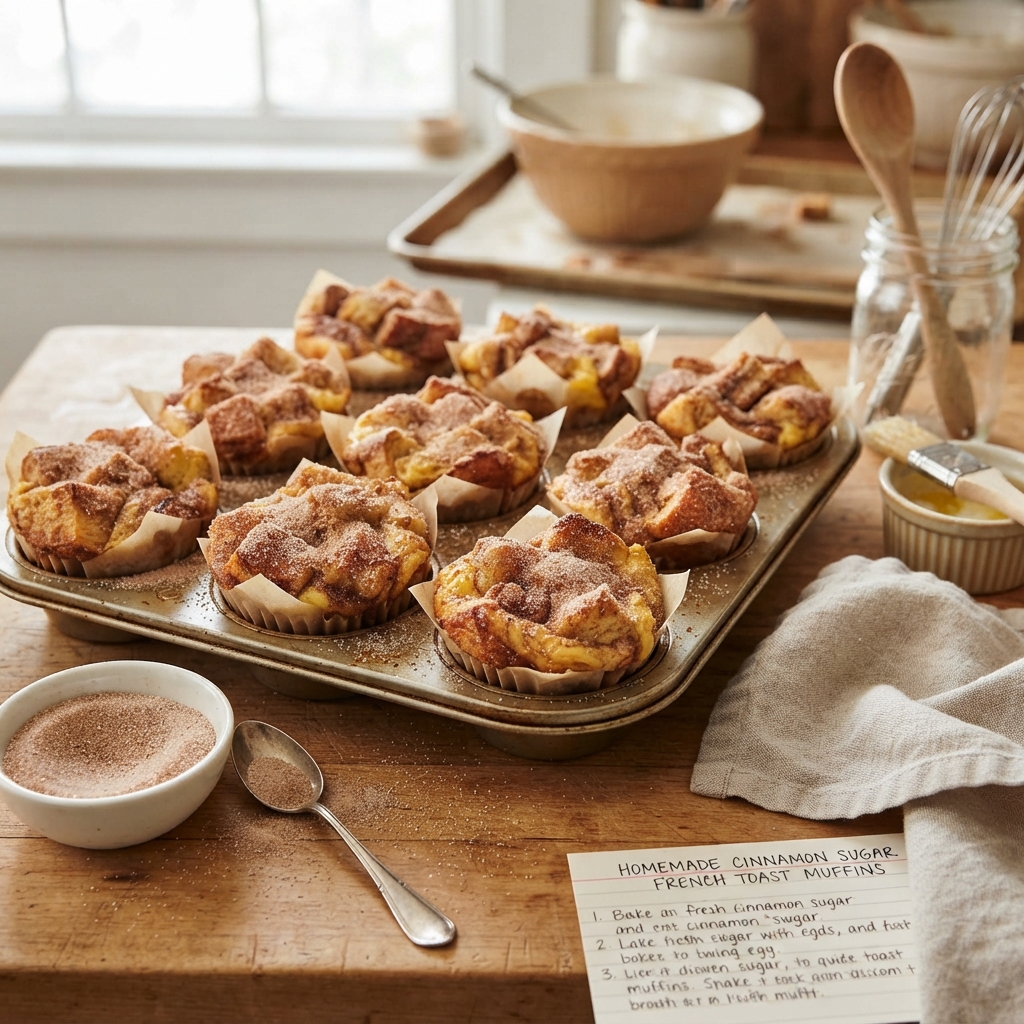
Imagine the comforting, nostalgic aroma of a classic Sunday morning breakfast, but with a delightful twist that makes it perfect for on-the-go eating or elegant brunch gatherings. Cinnamon Sugar French Toast Muffins are exactly that—a harmonious marriage between the custardy richness of traditional French toast and the portable, golden-brown perfection of a muffin. These bite-sized treats capture the essence of “pain perdu” (lost bread) but transform it into a handheld delight that is crispy on the outside, soft and custardy on the inside, and coated in a decadent cinnamon-sugar glaze that shatters with every bite.
Whether you are a busy parent looking for a breakfast solution that kids will actually eat, a meal-prepper seeking a freezer-friendly option, or a brunch enthusiast wanting to impress guests without standing over a griddle, this recipe is a game-changer. They offer all the flavor profile of a gourmet restaurant dish with the convenience of a grab-and-go snack. By baking the bread cubes in a rich egg batter within a muffin tin, you ensure even cooking and that signature caramelized crust that is often hard to achieve in a pan.
The History
To understand the Cinnamon Sugar French Toast Muffin, one must first look at the lineage of French toast itself. Known variously as “Pain Perdu” in France, “Arme Ritter” in Germany, and “Eggy Bread” in the UK, the concept dates back to the Roman Empire. The earliest recorded recipe appears in De Re Coquinaria, a collection of Roman recipes from the late 4th or early 5th century. The original intent was purely practical: it was a way to salvage stale, hard bread that would otherwise be thrown away (“lost bread”) by soaking it in milk and eggs to soften it before frying.
The evolution into the muffin tin format is a distinctly modern culinary innovation, born out of the 21st-century desire for convenience and portion control. As the “muffin tin meal” trend gained traction in the 2010s, home cooks and food bloggers began experimenting with turning classic casseroles and breakfast staples into individual portions. The French Toast Muffin emerged as a standout star in this movement. It solved the common problem of unevenly cooked French toast—where the outside burns before the inside is custardy—by utilizing the convection heat of the oven to cook the bread cubes uniformly. The addition of the cinnamon-sugar coating pays homage to the churro and the donut hole, bridging the gap between breakfast and dessert.
Ingredients Breakdown
The magic of this recipe lies not just in the combination of ingredients, but in the specific quality and state of each component. Here is a deep dive into what makes these muffins tick:
- The Bread (The Foundation): The most critical element is using stale or day-old bread. Fresh bread contains too much moisture and will turn into a mushy sludge when soaked in the egg mixture. Stale bread has dried out slightly, allowing it to act like a sponge, absorbing the custard without losing its structural integrity. Brioche, Challah, or Texas Toast are the gold standards due to their high egg and butter content, which yields a richer, more tender crumb.
- The Custard (The Binder): This is a mixture of eggs and dairy. While milk works, using a combination of whole milk and heavy cream (or half-and-half) adds fat content that results in a luxurious, creamy interior rather than a rubbery texture. The eggs provide the protein structure that sets the custard as it bakes.
- The Flavor Profile: Vanilla extract is non-negotiable for that classic bakery scent. Ground cinnamon provides the warm, spicy backbone, while a pinch of nutmeg adds depth and complexity. A dash of salt is essential to balance the sweetness and enhance the overall flavor profile.
- The Coating (The Crunch): The signature element is the cinnamon-sugar butter bath. Melted butter acts as the adhesive, while a mixture of granulated sugar and cinnamon creates that crackly, sweet crust that defines this recipe.
Step-by-Step Recipe
Creating these muffins is a process of layering flavors and textures. Follow this detailed guide to ensure perfection.
Phase 1: Preparation
Preheat your oven to 350°F (175°C). Generously grease a 12-cup muffin tin with butter or non-stick cooking spray. It is vital to grease the tin well, as the sugar coating can caramelize and stick aggressively to the metal.
Phase 2: Bread Prep
Cut your bread into 1-inch cubes. If your bread is fresh, you can toast the cubes lightly in the oven for 5-10 minutes to dry them out before proceeding. Place the bread cubes into a large mixing bowl.
Phase 3: The Custard Soak
In a separate medium bowl, whisk together the eggs, milk, heavy cream, vanilla extract, cinnamon, nutmeg, and salt until fully combined and frothy. Pour this liquid mixture over the bread cubes. Using a spatula or your hands, gently toss the bread to ensure every cube is thoroughly coated. Let this mixture sit for 10 to 15 minutes. This resting period is crucial; it allows the bread to absorb the liquid fully, ensuring the center of the muffin is soft and custardy rather than dry.
Phase 4: Assembly
Distribute the soaked bread cubes evenly among the 12 muffin cups. Press them down gently with the back of a spoon to compact them slightly; this helps them hold their shape when removed from the tin. Pour any remaining liquid from the bowl evenly over the muffin cups, ensuring no custard goes to waste.
Phase 5: The Topping
In a small bowl, mix the granulated sugar and cinnamon for the topping. Drizzle the melted butter over the top of each muffin cup, then sprinkle the cinnamon-sugar mixture generously over the buttered bread. The butter helps the sugar adhere and promotes browning.
Phase 6: Baking
Bake for 20 to 25 minutes. You are looking for a deep golden-brown color on top. The centers should be set but still slightly jiggly (they will firm up as they cool). If the tops are browning too quickly, cover loosely with foil.
Tips for Perfection
- The “Soggy Bottom” Fix: If you find your muffins are sticking or soggy on the bottom, try placing a small square of parchment paper in the bottom of each muffin cup before adding the bread. This creates a non-stick barrier.
- Cooling is Key: Allow the muffins to cool in the pan for at least 5 to 10 minutes before attempting to remove them. The custard continues to set as it cools. Removing them too hot may cause them to break apart.
- Bread Selection: If using very soft sandwich bread, use slightly less milk in your custard mixture, as sandwich bread absorbs liquid faster than dense artisan loaves.
- Reheating: To restore the crunch, reheat leftovers in a toaster oven or air fryer rather than a microwave. The microwave will steam the bread, making it chewy.
Variations and Customizations
This recipe is a blank canvas for culinary creativity. Here are several ways to customize your French Toast Muffins:
- Berry Blast: Fold fresh blueberries, raspberries, or diced strawberries into the bread mixture before baking. The fruit juices will caramelize and create pockets of tart sweetness.
- Cream Cheese Stuffed: Cut small cubes of cream cheese and press one into the center of each muffin cup before adding the bread. This creates a molten, cheesecake-like center.
- Apple Pie French Toast: Sauté diced apples with brown sugar and cinnamon until soft, then mix them into the bread cubes. Top with a crumble topping (oats, flour, brown sugar, butter) instead of just cinnamon sugar.
- Tropical Twist: Use coconut milk instead of dairy milk and fold in diced mango or pineapple. Top with toasted coconut flakes.
- Savory Option: Omit the sugar and cinnamon. Add shredded cheddar cheese, cooked bacon bits, and chives to the egg mixture for a savory breakfast muffin.
- Chocolate Lovers: Add chocolate chips to the bread mixture and drizzle with chocolate sauce after baking.
Health Considerations and Nutritional Value
While these muffins are a treat, understanding their nutritional profile helps in managing intake. A standard muffin made with white brioche, whole milk, and a sugar coating is calorie-dense, primarily due to carbohydrates and fats.
Caloric Estimate: Approximately 200-250 calories per muffin.
Macronutrients: High in carbohydrates (from bread and sugar) and moderate in protein (from eggs and milk). The fat content varies based on the dairy used.
Healthier Swaps:
- Whole Grain: Use whole wheat or multigrain bread to increase fiber content, which aids in digestion and keeps you fuller longer.
- Sweetener: Replace granulated sugar with coconut sugar or a monk fruit blend to lower the glycemic index.
- Dairy: Use unsweetened almond milk or oat milk to reduce saturated fat and calories.
- Gluten-Free: This recipe is easily made gluten-free by using a sturdy gluten-free loaf (like Udi’s or Canyon Bakehouse). Ensure the bread is very stale, as GF bread can be crumbly.
Ingredients
- 1 loaf (14-16 oz) thick-sliced bread (Brioche, Challah, or French Bread), cut into 1-inch cubes
- 4 large eggs
- 1/2 cup whole milk
- 1/2 cup heavy cream (or half-and-half)
- 1 teaspoon vanilla extract
- 1 teaspoon ground cinnamon (for the custard)
- 1/4 teaspoon ground nutmeg
- 1/4 teaspoon salt
- For the Topping:
- 4 tablespoons unsalted butter, melted
- 1/3 cup granulated sugar
- 1 teaspoon ground cinnamon
Directions
- Preheat oven to 350°F (175°C). Grease a 12-cup muffin tin thoroughly with butter or cooking spray.
- Place bread cubes in a large bowl.
- In a separate bowl, whisk together eggs, milk, heavy cream, vanilla, 1 tsp cinnamon, nutmeg, and salt until smooth.
- Pour the egg mixture over the bread cubes. Toss gently to coat. Let stand for 10-15 minutes to allow bread to absorb liquid.
- Divide the soaked bread mixture evenly among the 12 muffin cups, pressing down gently to compact.
- Pour any remaining liquid from the bowl evenly over the muffin cups.
- In a small bowl, mix the 1/3 cup sugar and 1 tsp cinnamon for the topping.
- Drizzle the melted butter over the top of each muffin, then sprinkle generously with the cinnamon-sugar mixture.
- Bake for 20-25 minutes until the tops are golden brown and the centers are set.
- Let cool in the pan for 10 minutes before removing to a wire rack. Serve warm.
FAQ
Can I make these ahead of time?
Yes! You can assemble the muffins in the tin, cover tightly with plastic wrap, and refrigerate overnight. In the morning, add the butter and sugar topping and bake as directed. You may need to add 2-3 minutes to the baking time since the pan will be cold.
How do I store leftovers?
Store cooled muffins in an airtight container in the refrigerator for up to 4 days. They can also be frozen for up to 3 months. To freeze, wrap individually in plastic wrap and place in a freezer bag.
Why did my muffins sink in the middle?
This usually happens if they are underbaked. Ensure the center is set before removing them from the oven. Opening the oven door too early can also cause them to collapse.
Can I use gluten-free bread?
Absolutely. Just ensure the gluten-free bread is stale or toasted first, as it tends to be more fragile than wheat bread.
Summary
Cinnamon Sugar French Toast Muffins transform classic breakfast flavors into portable, custardy bites with a crunchy, caramelized coating. Perfect for meal prep or brunch, they offer the rich taste of brioche French toast with the convenience of a muffin.