Introduction
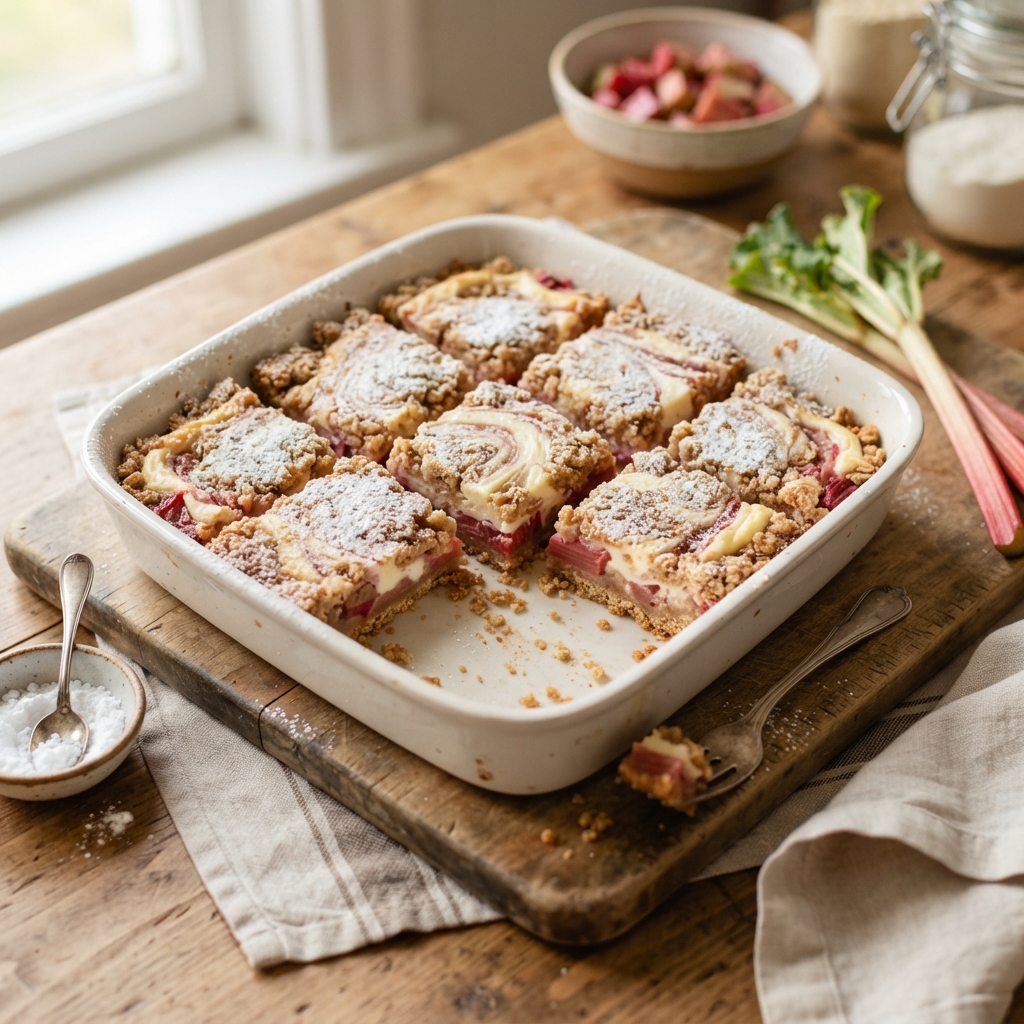
There is a distinct magic that happens in the kitchen when spring arrives, marked not by flowers blooming outside, but by the vibrant, ruby-red stalks of rhubarb appearing in the grocery aisles and garden patches. Among the myriad ways to celebrate this unique vegetable—botanically a vegetable, but culinarily a fruit—Rhubarb Bars with Cream Cheese stand out as a masterpiece of textural contrast and flavor balance. These bars are not merely a dessert; they are a harmonious blend of tart, sweet, creamy, and crunchy elements that dance on the palate.
The concept is deceptively simple yet profoundly satisfying: a buttery, oat-based crust provides a sturdy foundation, supporting a layer of tender, jam-like rhubarb filling that offers a bright, acidic punch. Capping this ensemble is a rich, velvety cream cheese layer that mellows the tartness of the rhubarb, creating a sophisticated flavor profile that feels both rustic and elegant. Whether served warm from the oven with a scoop of vanilla bean ice cream or enjoyed cold as a mid-morning treat with coffee, these bars capture the essence of the season in every bite.
The History
To understand the Rhubarb Bar, one must first look at the fascinating journey of rhubarb itself. Native to the cold regions of Siberia and the Himalayas, rhubarb was originally cultivated in China thousands of years ago primarily for its medicinal properties, specifically as a potent laxative. It wasn’t until the 17th and 18th centuries, as sugar became more accessible and affordable in Europe and North America, that cooks realized the stalks could be transformed from a medicine into a delicacy. The high acid content of the plant demanded sweetness, leading to the creation of pies, jams, and compotes.
The “bar cookie” format, however, has a different lineage, deeply rooted in American practicality. During the Great Depression and the rationing eras of World War II, baking sheets became more popular than round cake pans because they allowed for efficient use of ingredients and easier portioning for large families. The “gooey butter cake” and various crumble bars gained popularity in the mid-20th century. The marriage of the classic “pie plant” with the cream cheese swirl—a technique popularized in the 1950s and 60s with the rise of packaged cream cheese—gave birth to the modern Rhubarb Cream Cheese Bar. It represents a fusion of old-world foraging traditions with mid-century American convenience baking.
Ingredients Breakdown
Creating the perfect bar requires an understanding of how each component interacts. Here is a deep dive into the key players:
- The Crust (Oats and Flour): We use a combination of all-purpose flour and old-fashioned rolled oats. The flour provides structure and gluten development for stability, while the oats add a chewy texture and a nutty flavor that complements the earthiness of the rhubarb. Using cold, cubed butter is crucial; as it melts in the oven, it creates steam pockets that result in a tender, slightly crumbly shortbread-like base rather than a hard cookie.
- The Rhubarb Filling: Fresh rhubarb is non-negotiable for the best texture. Frozen rhubarb releases too much water, risking a soggy bottom. The stalks are chopped into uniform pieces to ensure even cooking. Sugar is essential here, not just for sweetness, but to draw moisture out of the stalks via osmosis, creating a natural syrup that binds the filling. A touch of cornstarch acts as the thickening agent, turning that syrup into a glossy, jam-like consistency.
- The Cream Cheese Layer: This is the bridge between the tart fruit and the sweet crust. Full-fat brick-style cream cheese is preferred over tub varieties because it has a lower water content and higher fat content, ensuring the layer sets properly and doesn’t run. An egg yolk adds richness and helps emulsify the mixture, while a splash of vanilla extract enhances the dairy notes.
Step-by-Step Recipe
Phase 1: Preparation
Preheat your oven to 350°F (175°C). Line a 9×9 inch square baking pan with parchment paper, leaving an overhang on two sides. This “sling” method is the secret to easy removal and clean cuts later. Lightly grease the parchment paper with butter or non-stick spray.
Phase 2: The Crust
In a large mixing bowl, combine the flour, oats, brown sugar, and a pinch of salt. Add the cold, cubed butter. Using a pastry cutter, two forks, or your fingertips, work the butter into the dry ingredients until the mixture resembles coarse sand with some pea-sized clumps of butter remaining. Press about two-thirds of this mixture firmly into the bottom of the prepared pan. Use the bottom of a measuring cup to ensure an even, compact layer. Bake this base for 10-12 minutes until it is just starting to turn golden at the edges. This par-baking prevents a raw dough bottom.
Phase 3: The Filling and Topping
While the crust bakes, toss your chopped rhubarb with granulated sugar and cornstarch in a bowl. Let it sit for 10 minutes to macerate. In a separate bowl, beat the softened cream cheese with sugar, an egg yolk, and vanilla until completely smooth and lump-free. Once the crust is out of the oven, immediately spread the cream cheese mixture over the hot crust. Top the cream cheese layer with the sugared rhubarb pieces. Finally, crumble the remaining reserved crust mixture over the top of the rhubarb.
Phase 4: Baking and Cooling
Return the pan to the oven and bake for 35-45 minutes. You are looking for the rhubarb to be bubbling vigorously and the top crust to be golden brown. The cream cheese layer should be set around the edges but might still have a slight jiggle in the center—this is normal as it will firm up while cooling. Allow the bars to cool completely in the pan on a wire rack. For the cleanest cuts, refrigerate the pan for at least 2 hours before slicing.
Tips for Success
- Uniform Chopping: Rhubarb stalks vary in thickness. Ensure you chop them into pieces of roughly the same size (about 1/2 inch). If pieces are too large, they won’t cook through; if too small, they will turn into mush before the bars are done.
- Don’t Overmix the Cream Cheese: Once you add the egg yolk to the cream cheese, mix only until combined. Over-beating incorporates too much air, which can cause the topping to puff up and then collapse, creating cracks.
- The “Soggy Bottom” Prevention: The most common issue with fruit bars is a wet bottom. Par-baking the crust is the most effective defense. Additionally, ensure your cornstarch is fresh; old cornstarch loses its thickening power.
- Cooling is Key: Patience is a virtue in baking bars. If you cut them while warm, the cream cheese layer will smear, and the rhubarb filling will run. Chilling them solidifies the fats and sets the pectin/starch structure.
Variations and Customizations
While the classic recipe is timeless, baking is an art form that invites experimentation:
- Strawberry-Rhubarb Swirl: The classic pairing. Add diced fresh strawberries to the rhubarb filling. The sweetness of the berry complements the tartness of the stalk perfectly.
- Ginger and Cardamom: For a warming spice profile, add 1/2 teaspoon of ground ginger and a pinch of cardamom to the crust mixture. This adds a sophisticated warmth that pairs beautifully with the sharp rhubarb.
- Nutty Crunch: Incorporate 1/2 cup of chopped pecans or almonds into the crust mixture for added crunch and healthy fats.
- Lemon Zest: Add a tablespoon of fresh lemon zest to the cream cheese layer. The citrus oils brighten the dairy flavor and cut through the richness.
- Vegan Adaptation: Use a plant-based butter stick and a firm tofu-based cream cheese alternative. Use cornstarch or arrowroot powder as the thickener (which is already vegan-friendly).
Health Considerations and Nutritional Value
While these bars are a treat, understanding their nutritional profile helps in enjoying them mindfully. Rhubarb is surprisingly low in calories and high in fiber, particularly vitamin K1, which is essential for blood clotting and bone health. It also contains significant amounts of vitamin C and antioxidants like anthocyanins (which give the stalks their red color). However, the dessert aspect comes with caveats. The sugar content is necessary to counteract the natural oxalic acid in the rhubarb, making these bars moderately high in carbohydrates. The cream cheese adds saturated fat and protein. To make a slightly healthier version, one could reduce the sugar in the filling by 25% if using very sweet strawberries, or substitute half the all-purpose flour in the crust with whole wheat pastry flour to increase fiber content.
Note: Never consume rhubarb leaves. They contain high levels of oxalic acid, which is toxic to humans and can cause kidney failure. Only the stalks are edible.
Ingredients
For the Crust and Topping:
- 1 ½ cups all-purpose flour
- 1 cup old-fashioned rolled oats
- ¾ cup packed brown sugar
- ½ teaspoon baking powder
- ¼ teaspoon salt
- ¾ cup (1 ½ sticks) unsalted butter, cold and cubed
For the Rhubarb Filling:
- 3 cups fresh rhubarb, chopped into ½-inch pieces
- ¾ cup granulated sugar
- 2 tablespoons cornstarch
- 1 teaspoon vanilla extract
For the Cream Cheese Layer:
- 8 ounces full-fat cream cheese, softened to room temperature
- ¼ cup granulated sugar
- 1 large egg yolk
- ½ teaspoon vanilla extract
Directions
- Prep: Preheat oven to 350°F (175°C). Line a 9×9 inch pan with parchment paper and grease lightly.
- Make Crust: In a bowl, mix flour, oats, brown sugar, baking powder, and salt. Cut in cold butter until mixture is crumbly. Reserve 1 cup of this mixture for the topping.
- Par-bake: Press the remaining crust mixture firmly into the pan. Bake for 10-12 minutes until lightly golden. Remove from oven.
- Prep Filling: Toss chopped rhubarb with ¾ cup sugar, cornstarch, and 1 tsp vanilla. Set aside.
- Make Cheese Layer: Beat softened cream cheese, ¼ cup sugar, egg yolk, and ½ tsp vanilla until smooth.
- Assemble: Spread cream cheese mixture over the hot crust. Top evenly with the rhubarb mixture. Sprinkle the reserved 1 cup of crust crumble over the rhubarb.
- Bake: Bake for 35-45 minutes until the top is golden and rhubarb is bubbling.
- Cool: Cool completely in the pan, then refrigerate for 2 hours before slicing into squares.
FAQ
Can I use frozen rhubarb?
Yes, but do not thaw it before using. Toss the frozen chunks directly with the sugar and cornstarch. You may need to add 5-10 minutes to the baking time, and the texture will be slightly softer than with fresh rhubarb.
How do I store these bars?
Because of the cream cheese and fresh fruit, these bars must be stored in the refrigerator. They will keep in an airtight container for up to 5 days.
Can I freeze Rhubarb Cream Cheese Bars?
Yes. Wrap individual bars tightly in plastic wrap and then place them in a freezer-safe bag. They can be frozen for up to 3 months. Thaw overnight in the refrigerator before serving.
Why did my bars sink in the middle?
This usually happens if the oven door is opened too early during baking, causing a temperature drop, or if the bars were underbaked. Ensure the rhubarb filling is actively bubbling before removing them from the oven.
Summary
Rhubarb Bars with Cream Cheese offer a perfect balance of tart fruit, rich dairy, and buttery oat crumble, making them the ultimate spring dessert. By par-baking the crust and allowing ample cooling time, you ensure a sliceable, creamy treat that highlights the unique flavor of the season.