Introduction
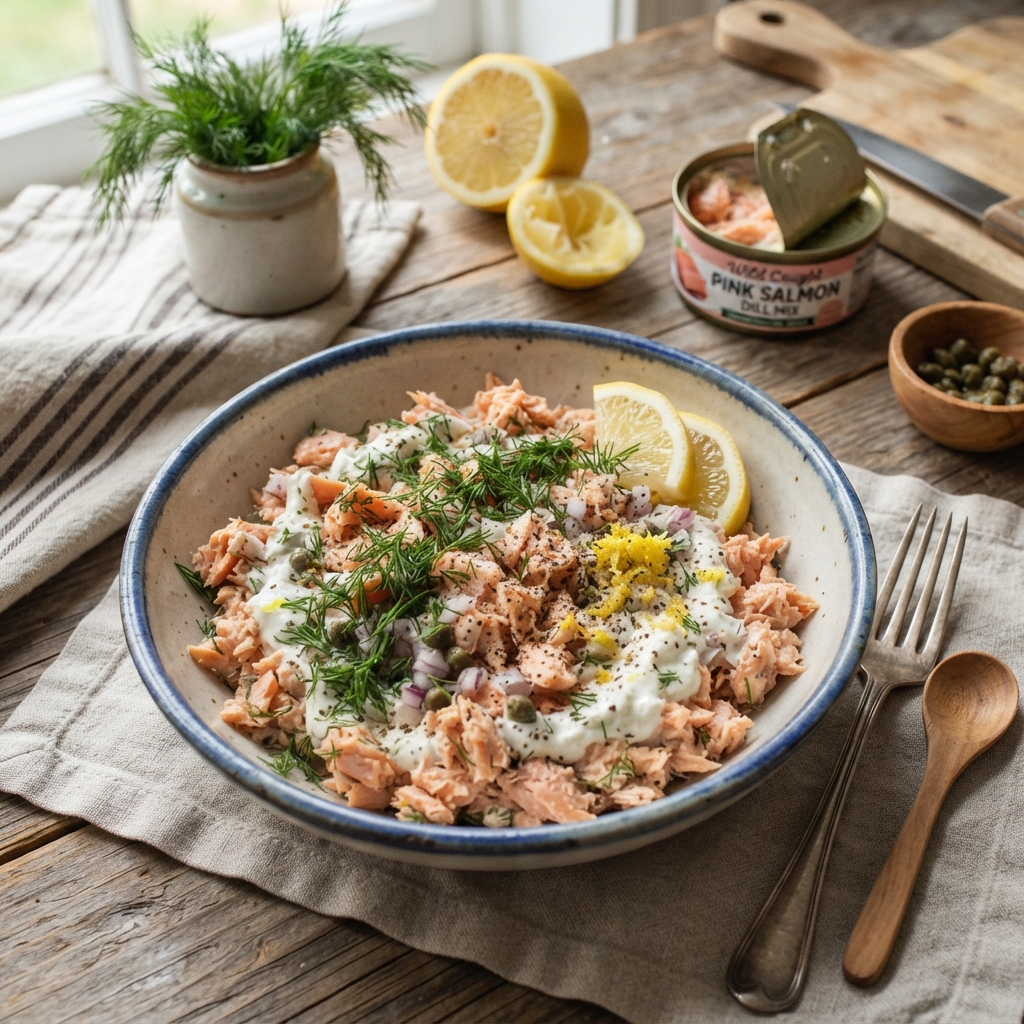
There is a unique satisfaction in creating a gourmet-quality meal from pantry staples, and few ingredients embody this balance of convenience and sophistication quite like canned salmon. When paired with the bright, citrusy notes of lemon and the aromatic, grassy freshness of dill, canned salmon transforms from a simple preserved protein into a dish that feels light, elegant, and deeply nourishing. This recipe is designed for the modern home cook who values time without compromising on flavor, offering a solution for quick lunches, light dinners, or impressive appetizers that require minimal effort but deliver maximum impact.
The combination of salmon, dill, and lemon is a classic trio found in cuisines ranging from Scandinavian smorgasbords to Mediterranean meze plates. The richness of the fish, naturally high in oils and omega-3 fatty acids, is cut through by the acidity of the lemon, while the dill provides a herbal bridge that ties the flavors together seamlessly. Whether you are looking to expand your weekly meal rotation, find a high-protein option for post-workout recovery, or simply utilize what you have in the cupboard, this guide will walk you through every aspect of mastering this dish. Below, we explore not just the how, but the why, ensuring you understand the mechanics of the recipe so you can replicate it perfectly every time.
The History
The story of canned salmon is intrinsically linked to the history of food preservation and maritime exploration. The technique of canning was pioneered in the early 19th century by Nicolas Appert, a French confectioner who discovered that food could be preserved indefinitely if sealed in airtight containers and heated. However, it was the expansion of the fishing industry in the Pacific Northwest and Alaska during the late 1800s that truly popularized canned salmon as a global commodity. Initially, salmon canning was a way to preserve the massive seasonal catches that could not be sold fresh before spoiling, allowing the nutrient-dense fish to be shipped across continents and stored for long periods.
The pairing of salmon with dill and lemon has roots deeply embedded in Northern European culinary traditions, particularly in Sweden, Norway, and Finland. In these regions, dill grows abundantly during the short summer months, and preserving its flavor was essential for winter consumption. Salmon, being a native fish to the cold Atlantic and Pacific waters, was naturally paired with the herbs and citrus available to cut through the fat of the fish. Over time, as trade routes expanded, lemons became more accessible in Northern Europe, solidifying this trio as a classic flavor profile. Today, this combination represents a fusion of preservation technology and ancient flavor pairing wisdom, bringing a taste of coastal heritage to your modern kitchen.
Ingredients Breakdown
Understanding the role of each component in this recipe is crucial for achieving the perfect balance of texture and taste. Here is a detailed analysis of what goes into the dish and why quality matters.
Canned Salmon
The star of the show, canned salmon, comes primarily in two varieties: Pink and Sockeye. Pink salmon is generally softer, milder in flavor, and more affordable, making it ideal for salads and spreads where texture is less critical. Sockeye salmon, on the other hand, has a deeper red color, a firmer texture, and a more robust, rich flavor profile that stands up well to strong seasonings. When selecting your can, look for options labeled “wild-caught” if possible, as these tend to have a better nutritional profile and texture compared to farm-raised varieties. Additionally, decide whether you want skinless and boneless fillets for a smoother consistency or traditional pack with bones and skin for added calcium and authenticity.
Fresh Dill
Dill is not merely a garnish here; it is a foundational flavor. Fresh dill weed offers a delicate, anise-like sweetness that dried dill simply cannot replicate. The volatile oils in fresh dill are responsible for the bright aroma that lifts the dish. When chopping dill, it is important to use a sharp knife to avoid bruising the leaves, which can release bitter compounds. If fresh dill is unavailable, dried dill can be used, but the quantity should be reduced significantly as dried herbs are more potent, though the flavor profile will be earthier and less vibrant.
Lemon (Zest and Juice)
Lemon serves a dual purpose in this recipe: acidity and aroma. The juice provides the necessary acid to balance the richness of the salmon oils, acting as a palate cleanser. The zest, however, contains the essential oils of the lemon peel, offering a concentrated citrus fragrance without the additional liquid that might make the salad soggy. Using both ensures a multi-dimensional citrus experience. Always choose lemons that feel heavy for their size, indicating juiciness, and wash them thoroughly before zesting to remove any wax or pesticides.
Binding Agents (Mayonnaise or Greek Yogurt)
To transform the flaked salmon into a cohesive salad or spread, a binding agent is required. Traditional recipes often call for mayonnaise, which adds creaminess and a slight tang. However, plain Greek yogurt is an excellent alternative that provides similar texture with added protein and probiotics, while reducing the overall fat content. Some cooks prefer a hybrid approach, using half of each to balance richness with health benefits. The quality of this ingredient matters; opt for full-fat versions for the best mouthfeel, as low-fat varieties can sometimes separate or taste watery.
Aromatics and Seasonings
Red onion or scallions add a necessary crunch and a sharp bite that contrasts with the soft fish. Celery provides hydration and a distinct savory crunch. Seasonings like sea salt and freshly cracked black pepper should be added to taste, keeping in mind that canned salmon often contains added sodium already. Capers are an optional but highly recommended addition, providing bursts of briny salinity that complement the lemon and dill beautifully.
Step-by-Step Recipe
Follow these detailed instructions to ensure your canned salmon salad is perfectly textured and flavored. Each step is designed to maximize the potential of your ingredients.
- Preparation of Workspace: Begin by clearing a clean surface and gathering all your tools. You will need a large mixing bowl, a fork for flaking, a sharp chef’s knife, a cutting board, a zester or microplane, and a citrus juicer. Having everything mise en place ensures the process is smooth and prevents the salmon from sitting out too long.
- Draining the Salmon: Open the can(s) of salmon using a can opener. Pour the contents into a fine-mesh strainer over the sink. Allow the liquid to drain completely for at least one minute. For a drier salad, you can gently press the salmon with the back of a spoon to remove excess moisture or oil. This step is critical; too much liquid will result in a watery final dish.
- Flaking the Fish: Transfer the drained salmon to your large mixing bowl. Using a fork, break the fish apart into fine flakes. If you are using salmon with bones, this is the stage to inspect the meat. The bones in canned salmon are edible and soft, rich in calcium, but if you prefer a smoother texture, you can pick them out with your fingers or the fork. Remove any large pieces of skin if desired, though leaving some can add texture.
- Chopping the Aromatics: While the salmon sits, finely dice your red onion or scallions. The pieces should be small enough to distribute evenly in every bite without overpowering the fish. Chop the celery into similarly sized small cubes. If using capers, give them a rough chop to release their briny flavor.
- Preparing the Dill and Lemon: Wash the fresh dill thoroughly and pat it dry with a paper towel. Moisture on the herbs can dilute the dressing. Chop the dill finely. Next, wash the lemon. Use your zester to remove the yellow outer layer, avoiding the white pith which is bitter. Cut the lemon in half and juice it, removing any seeds that might fall into the juice.
- Creating the Dressing: In a small separate bowl, combine your mayonnaise or Greek yogurt with half of the lemon juice and all of the lemon zest. Whisk this together until smooth. Tasting the dressing at this stage allows you to adjust the acidity before it touches the fish.
- Combining Ingredients: Pour the dressing over the flaked salmon. Add the chopped vegetables and dill. Using a spatula or large spoon, gently fold the ingredients together. Be careful not to mash the salmon too vigorously; you want to maintain some flaky texture rather than creating a paste.
- Seasoning and Resting: Taste the mixture. Add salt and black pepper as needed. Remember that the salmon and capers may already be salty. Once seasoned, cover the bowl with plastic wrap and refrigerate for at least 30 minutes. This resting period allows the flavors to meld and the salmon to absorb the lemon and dill notes.
- Final Service: Remove from the refrigerator. Give it a gentle stir. If the mixture seems too dry after chilling, add a splash more lemon juice or a dollop of yogurt. Serve immediately on your chosen vessel, whether it be crackers, bread, or greens.
Tips
To elevate your canned salmon recipe from good to exceptional, consider these professional tips and tricks gathered from culinary experts and home cooks alike.
- Control the Moisture: The number one enemy of a good salmon salad is excess liquid. Ensure you drain the can thoroughly. If you are using salmon packed in water, press it firmly in the strainer. If packed in oil, you might want to retain a teaspoon of the oil for extra flavor, but drain the rest.
- Temperature Matters: Always serve this dish chilled. The flavors of dill and lemon are most vibrant when cold, and the texture of the mayonnaise or yogurt binding is firmer. Letting it sit at room temperature for too long can cause the fats to separate and the dish to look unappealing.
- Zest Before Juicing: Always zest your lemon before you cut it in half to juice it. It is nearly impossible to zest a lemon half effectively. Also, roll the lemon on the counter with firm pressure before cutting; this breaks the internal juice sacs and yields more liquid.
- Texture Contrast: If you are serving this as a spread, the soft texture is desirable. However, if serving as a salad, consider adding toasted almonds, walnuts, or even crushed potato chips just before serving to introduce a crunchy element that contrasts with the soft fish.
- Herb Preservation: If you have leftover fresh dill, do not let it wilt. Wrap it in a damp paper towel and store it in a sealed bag in the crisper drawer. Alternatively, chop the excess and freeze it in ice cube trays with a little water or oil for future use.
- Acidity Balance: If you find the lemon flavor too sharp, you can mellow it out by adding a pinch of sugar or honey to the dressing. Conversely, if it tastes too flat, a dash of white wine vinegar can brighten it up further.
Variations and Customizations
This recipe serves as a versatile canvas that can be adapted to suit various dietary preferences, cultural tastes, and meal types. Here are several ways to customize your canned salmon dish.
- Salmon Patties: Transform the salad mixture into patties by adding an egg and breadcrumbs or crushed crackers. Form them into discs and pan-fry in olive oil until golden brown on both sides. Serve with a lemon-dill yogurt sauce for a hot meal option.
- Pasta Salad: Toss the salmon mixture with cooled fusilli or penne pasta. Add cherry tomatoes, cucumber chunks, and Kalamata olives for a Mediterranean-inspired cold pasta salad perfect for picnics.
- Stuffed Avocados: For a low-carb or Keto-friendly option, serve the salmon salad inside hollowed-out avocado halves. The creaminess of the avocado complements the salmon beautifully and adds healthy monounsaturated fats.
- Spicy Kick: If you enjoy heat, add finely minced jalapeños, a dash of cayenne pepper, or a teaspoon of sriracha to the dressing. The spice pairs surprisingly well with the cooling effect of the dill and lemon.
- Curried Salmon: Incorporate a teaspoon of mild curry powder into the mayonnaise base. Add raisins or chopped apples for sweetness. This variation draws inspiration from British colonial cuisine and offers a warm, complex flavor profile.
- Vegan Adaptation: While salmon is not vegan, you can mimic the texture using flaked hearts of palm or young green jackfruit. Use vegan mayonnaise and keep the dill and lemon seasoning exactly the same for a plant-based version of the dish.
- Breakfast Hash: Sauté diced potatoes and onions until crisp, then stir in the canned salmon and dill at the very end just to warm through. Top with a poached egg for a high-protein breakfast.
Health Considerations and Nutritional Value
Canned salmon is not only convenient but also a nutritional powerhouse. Understanding its health benefits can help you incorporate it into a balanced diet effectively.
Omega-3 Fatty Acids: Salmon is renowned for its high content of EPA and DHA, essential omega-3 fatty acids that support heart health, reduce inflammation, and promote brain function. Even canned varieties retain most of these beneficial oils.
High-Quality Protein: A single serving of canned salmon provides a significant amount of complete protein, containing all essential amino acids required for muscle repair and immune function. This makes it an excellent choice for athletes or those looking to increase satiety.
Calcium and Vitamin D: If you choose canned salmon with the bones included, you are getting a substantial dose of calcium, which is vital for bone health. Additionally, salmon is one of the few natural food sources of Vitamin D, crucial for immune health and mood regulation.
Sodium Content: The primary health consideration with canned goods is sodium. Many canned salmon products have added salt for preservation. To manage this, look for “low sodium” or “no salt added” varieties. Rinsing the salmon under water before use can also reduce surface sodium by up to 30%.
BPA Concerns: Some consumers are concerned about Bisphenol A (BPA) in can linings. Many modern brands now use BPA-free linings. Check the label if this is a concern for you, or opt for salmon packaged in pouches which often use different lining materials.
Mercury Levels: Compared to larger predatory fish like tuna or swordfish, salmon generally has lower levels of mercury. However, moderation is key. Incorporating a variety of seafood into your diet ensures you reap the benefits without excessive exposure to any single contaminant.
Ingredients
- 2 cans (14.75 oz each) canned salmon, drained
- 1/2 cup mayonnaise or plain Greek yogurt
- 1/4 cup fresh dill, finely chopped
- 1 large lemon, zested and juiced (about 2 tablespoons juice)
- 1/4 cup red onion, finely diced
- 1/2 cup celery, finely diced
- 2 tablespoons capers, drained and chopped (optional)
- 1/4 teaspoon freshly cracked black pepper
- Salt to taste (use caution due to salmon sodium content)
- Pinch of cayenne pepper (optional, for heat)
Directions
- Drain the canned salmon thoroughly in a strainer and transfer to a large mixing bowl.
- Flake the salmon with a fork, removing any large bones or skin if preferred.
- In a small bowl, whisk together the mayonnaise, lemon juice, lemon zest, and black pepper.
- Add the diced red onion, celery, capers, and fresh dill to the salmon.
- Pour the dressing over the salmon mixture and gently fold until evenly combined.
- Taste and adjust seasoning with salt or additional lemon juice as needed.
- Cover and refrigerate for at least 30 minutes before serving to allow flavors to meld.
- Serve chilled on crackers, toast, lettuce cups, or alongside a fresh green salad.
FAQ
Can I use dried dill instead of fresh?
Yes, you can use dried dill in a pinch, but the flavor will be less vibrant. Use one-third the amount of dried dill compared to fresh (e.g., 1 tablespoon dried for 3 tablespoons fresh). Rehydrate the dried dill in a teaspoon of lemon juice for 10 minutes before adding it to the mixture to soften the texture.
How long does this salmon salad last in the fridge?
When stored in an airtight container, this salmon salad will remain fresh for up to 3 days. After that, the vegetables may begin to release water, and the quality of the fish may degrade. Always smell the dish before consuming leftovers to ensure freshness.
Is the skin and bones in canned salmon safe to eat?
Absolutely. The canning process softens the bones until they are edible and rich in calcium. The skin is also safe and contains additional nutrients. However, if the texture is unappealing to you, it is perfectly fine to remove them during the flaking process.
Can I freeze this salmon salad?
It is not recommended to freeze this dish once the mayonnaise or yogurt has been added, as the emulsion will break upon thawing, resulting in a watery and separated texture. You can freeze the plain drained salmon, but prepare the fresh ingredients and dressing upon thawing.
What is the best bread to serve with this?
Crusty baguette slices, toasted sourdough, or dense rye bread complement the flavors well. For a lighter option, serve over butter lettuce cups or with whole-grain crackers. Avoid overly sweet breads which may clash with the savory dill and lemon profile.
This creamy canned salmon salad combines rich omega-3s with bright lemon and aromatic dill for a quick, healthy meal.
Perfect for lunches or appetizers, it comes together in minutes using pantry staples for effortless elegance.