Introduction
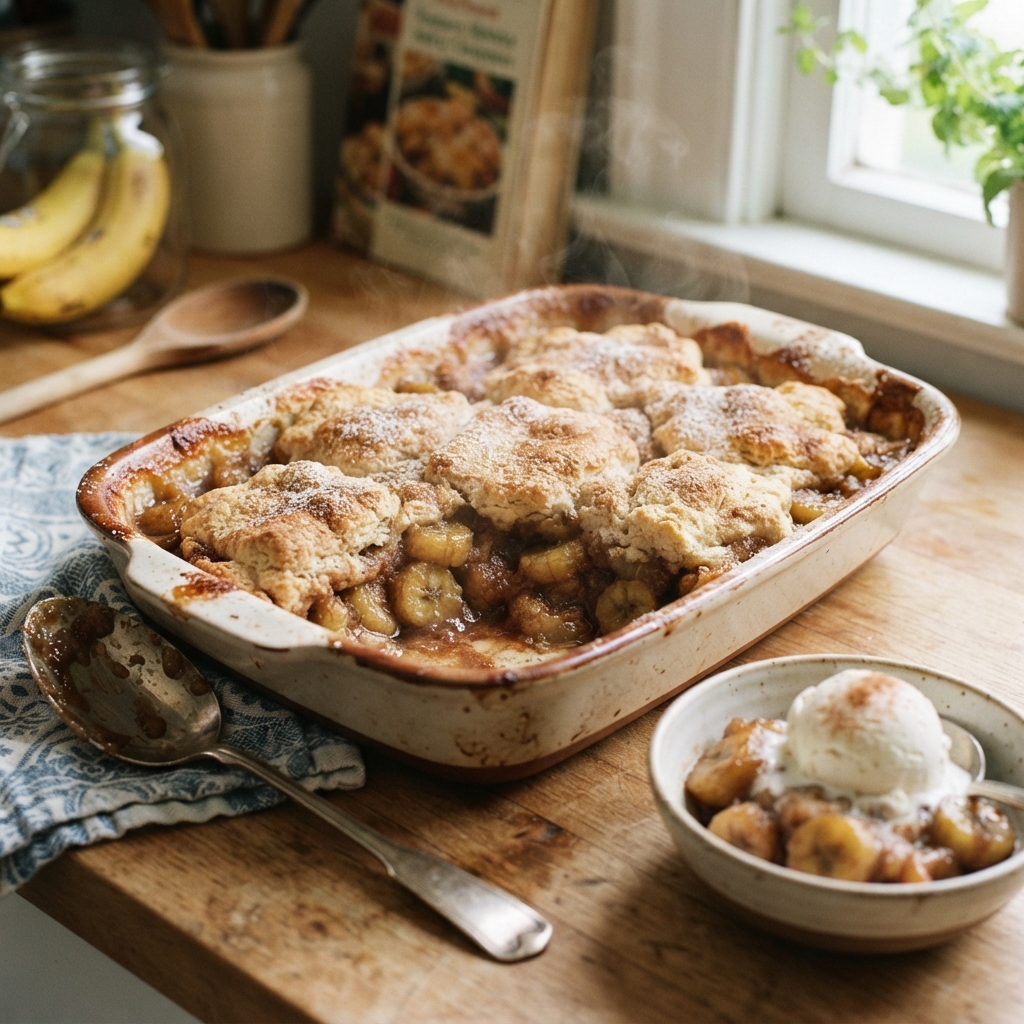
There is perhaps no dessert more emblematic of Southern hospitality and comfort than the cobbler. While peach cobbler often steals the spotlight, the Southern Banana Cobbler is a hidden gem that offers a uniquely rich, caramelized sweetness that captivates the palate. This dessert is not merely a combination of fruit and dough; it is a warm embrace on a plate, evoking memories of family gatherings, Sunday dinners, and the slow-paced enjoyment of life in the American South. The aroma of baking bananas mixed with cinnamon, nutmeg, and butter fills the kitchen with a scent that is impossible to resist, promising a texture that is simultaneously gooey, tender, and slightly crisp on top.
Perfect for utilizing overripe bananas that might otherwise go to waste, this cobbler transforms simple pantry staples into a luxurious treat. Whether served warm with a melting scoop of vanilla bean ice cream or enjoyed cool with a dollop of freshly whipped cream, Southern Banana Cobbler stands as a testament to the magic of humble ingredients prepared with love and tradition. In this comprehensive guide, we will explore every facet of this delightful dish, from its historical roots to the scientific breakdown of its ingredients, ensuring you master the art of the perfect banana cobbler.
The History
To understand the Southern Banana Cobbler, one must first understand the lineage of the cobbler itself. The term “cobbler” dates back to the early 19th century, with roots deeply embedded in British and American colonial cooking. Unlike pies, which required precise pastry skills and specific pie tins, cobblers were rustic desserts made in whatever deep dish was available. The topping, often dropped in spoonfuls resembling cobblestones, gave the dish its name. As settlers moved across the United States, the cobbler evolved to accommodate regional fruits.
While peaches and apples were the dominant fruits in early Southern cobblers due to their abundance in orchards, bananas began to make their way into Southern kitchens in the late 19th and early 20th centuries as trade routes expanded. During the Great Depression, resourcefulness became key in Southern cooking. Bananas, which ripen quickly and soften rapidly, were an excellent candidate for baking because they provided intense sweetness without the need for excessive added sugar. The Banana Cobbler emerged as a frugal yet decadent way to feed a family during hard times, utilizing flour, lard or butter, and fruit that was on the verge of spoiling.
Over the decades, the recipe has been refined by generations of Southern grandmothers, often referred to affectionately as “Mawmaws” or “Grandmas.” Each family added their own secret touch, whether it was a hint of lemon juice to brighten the flavor, a splash of bourbon for depth, or a specific blend of spices. Today, the Southern Banana Cobbler remains a staple of comfort food culture, representing resilience, creativity, and the enduring power of shared meals.
Ingredients Breakdown
Creating the perfect Southern Banana Cobbler requires more than just throwing ingredients into a bowl; it requires an understanding of what each component brings to the final texture and flavor profile. Here is a detailed analysis of the key players in this recipe.
The Bananas
The star of the show must be chosen carefully. For a cobbler, you want bananas that are ripe to overripe. Yellow bananas with brown spots indicate that the starches have converted to sugars, resulting in a sweeter, softer fruit that breaks down beautifully during baking. Green-tipped bananas will remain too firm and lack the necessary sweetness, potentially leaving the dessert tasting bland.
The Flour
All-purpose flour is the standard for Southern cobblers. It provides the necessary gluten structure to hold the topping together without becoming too chewy like bread. Some bakers prefer a blend of cake flour for a more tender biscuit-like topping, but all-purpose ensures a reliable rise and a sturdy crust that can hold up against the juicy fruit filling.
The Sugar
Granulated white sugar is typically used for the batter, providing sweetness and aiding in caramelization. However, many traditional recipes incorporate brown sugar into the fruit layer. The molasses content in brown sugar complements the natural flavor of bananas, adding notes of toffee and depth that white sugar alone cannot achieve.
The Fat
Unsalted butter is preferred to control the sodium levels, but salted butter can be used if you reduce the added salt in the recipe. The butter should be cold when cut into the flour for a biscuit-style topping, or melted if creating a cake-like batter that rises through the fruit. The fat contributes richness, tenderness, and that coveted golden-brown color on the crust.
The Leavening
Baking powder is essential for giving the cobbler topping its lift. Without it, the topping would be dense and doughy. Fresh baking powder ensures that the cobbler rises properly in the oven, creating air pockets that trap steam and result in a light, fluffy texture.
The Spices
Cinnamon is the classic pairing for bananas, but nutmeg and allspice are traditional Southern additions that warm the dish. A pinch of salt is crucial not just for flavor balance, but to enhance the perception of sweetness and cut through the richness of the butter and sugar.
Step-by-Step Recipe
Follow this narrative guide to walk through the process of creating your Southern Banana Cobbler. This section focuses on the technique and the sensory cues you should look for along the way.
Phase 1: Preparation and Preheating
Begin by preheating your oven to 350°F (175°C). Consistency in oven temperature is vital for even baking. While the oven heats, select a baking dish. A 9×9 inch square glass or ceramic dish is ideal, as it retains heat well and promotes even browning. Grease the dish lightly with butter or cooking spray to prevent sticking. Prepare your bananas by peeling and slicing them into uniform rounds about half an inch thick. Uniformity ensures that all pieces cook at the same rate.
Phase 2: Creating the Fruit Base
In a large mixing bowl, combine your sliced bananas with a portion of your sugar and spices. Toss them gently to coat. Let this mixture sit for about ten minutes. This maceration process draws out the natural juices of the bananas, creating a syrup that will bubble and thicken in the oven. Spread this mixture evenly into the bottom of your prepared baking dish. If you prefer a saucier cobbler, you can add a splash of water or lemon juice at this stage.
Phase 3: Mixing the Batter
In a separate bowl, whisk together your dry ingredients: flour, baking powder, salt, and the remaining sugar. Make a well in the center of the dry mix. Pour in your wet ingredients, which typically include milk and melted butter. Stir gently with a wooden spoon or spatula. Do not overmix. Lumps are acceptable and even desirable; overmixing develops gluten which leads to a tough topping. The batter should be thick and somewhat sticky.
Phase 4: Assembly
There are two schools of thought on assembly. The traditional Southern method involves dropping spoonfuls of the batter over the fruit, leaving gaps for the fruit juices to bubble up. The modern cake-like method involves spreading the batter evenly over the fruit. For a true Southern experience, drop the batter in dollops. This creates nooks and crannies where the caramelized sugar can crystallize slightly, adding texture.
Phase 5: Baking and Cooling
Place the dish in the center rack of the oven. Bake for approximately 45 to 55 minutes. You are looking for a golden-brown crust and bubbling fruit juices around the edges. Insert a toothpick into the topping; if it comes out clean or with a few moist crumbs, it is done. Remove from the oven and let it rest for at least 15 minutes. This cooling period allows the filling to set slightly, making it easier to serve without falling apart.
Tips
To ensure your Southern Banana Cobbler turns out perfect every time, consider these expert tips gathered from generations of bakers.
- Ripeness Matters: Do not use green bananas. The starch content is too high, and they will not sweeten enough during the baking process.
- Prevent Sogginess: If you find your bottom crust is often soggy, try pre-baking the fruit filling for 10 minutes before adding the batter. This thickens the juices slightly before the topping goes on.
- Butter Temperature: If making a biscuit-style topping, keep your butter cold. If making a cake-style batter, ensure the melted butter is cooled slightly so it doesn’t cook the eggs (if using) or curdle the milk.
- Oven Hotspots: Rotate your baking dish halfway through the baking time to ensure even browning, especially if your oven has known hot spots.
- Serving Temperature: While warm is traditional, some prefer the cobbler at room temperature where the flavors have had time to meld and settle.
- Acidity Balance: Add a teaspoon of lemon juice to the banana mixture. The acid brightens the heavy sweetness and prevents the bananas from oxidizing too quickly before baking.
Variations and Customizations
One of the beauties of the Southern Banana Cobbler is its versatility. You can adapt this recipe to suit dietary needs or flavor preferences without losing the soul of the dish.
Nutty Crunch
Add a layer of texture by sprinkling chopped pecans or walnuts over the batter before baking. Toast the nuts lightly beforehand to enhance their oils and flavor. This adds a wonderful contrast to the soft bananas and tender dough.
Chocolate Banana Twist
For a decadent dessert, fold semi-sweet chocolate chips into the batter or sprinkle them over the fruit layer. The combination of chocolate and banana is classic, reminiscent of a baked banana split.
Gluten-Free Option
Substitute the all-purpose flour with a 1:1 gluten-free baking blend. Ensure the blend contains xanthan gum, which helps mimic the elasticity of gluten. The texture may be slightly more crumbly, but the flavor will remain authentic.
Vegan Adaptation
Replace the butter with coconut oil or a plant-based butter stick. Use almond milk, oat milk, or soy milk instead of dairy milk. These swaps create a dairy-free cobbler that is still rich and satisfying.
Spiced Rum Infusion
For an adult version, add a tablespoon of spiced rum or bourbon to the banana mixture. The alcohol cooks off during baking, leaving behind a complex, warm flavor profile that pairs beautifully with the cinnamon.
Oat Topping
Transform the topping into a crisp by mixing rolled oats into the flour mixture. This creates a heartier, granola-like crust that adds fiber and a chewy texture.
Health Considerations and Nutritional Value
While Southern Banana Cobbler is undoubtedly a treat, understanding its nutritional profile can help you enjoy it mindfully. Bananas are naturally nutritious, providing a significant amount of potassium, which is essential for heart health and blood pressure regulation. They are also a good source of dietary fiber, Vitamin C, and Vitamin B6.
However, the added sugars and fats in the cobbler topping increase the calorie density. A standard serving can range from 300 to 450 calories, depending on the portion size and specific ingredients used. To make the dish healthier, consider reducing the sugar in the batter by 25%, as the ripe bananas provide substantial natural sweetness. Using whole wheat pastry flour can increase the fiber content, helping to regulate blood sugar spikes. Additionally, pairing the cobbler with Greek yogurt instead of ice cream can add protein and probiotics while reducing saturated fat intake. Portion control is key; enjoying a smaller square alongside a large salad or balanced meal can allow you to indulge without overconsumption.
Ingredients
- For the Filling:
- 6 large ripe bananas, sliced
- 1/2 cup granulated sugar
- 1/4 cup brown sugar, packed
- 1 teaspoon ground cinnamon
- 1/4 teaspoon ground nutmeg
- 1 tablespoon lemon juice
- 2 tablespoons unsalted butter, cut into small pieces
- For the Topping:
- 1 1/2 cups all-purpose flour
- 3/4 cup granulated sugar
- 1 1/2 teaspoons baking powder
- 1/2 teaspoon salt
- 3/4 cup milk (whole milk preferred)
- 1/3 cup unsalted butter, melted
- 1 teaspoon vanilla extract
Directions
- Preheat your oven to 350°F (175°C) and grease a 9×9 inch baking dish.
- In a large bowl, toss the sliced bananas with granulated sugar, brown sugar, cinnamon, nutmeg, and lemon juice.
- Pour the banana mixture into the prepared baking dish and dot with the 2 tablespoons of butter pieces.
- In a separate medium bowl, whisk together the flour, 3/4 cup sugar, baking powder, and salt.
- Stir in the milk, melted butter, and vanilla extract until just combined. Do not overmix.
- Drop spoonfuls of the batter evenly over the banana mixture in the baking dish.
- Bake for 45 to 55 minutes, until the topping is golden brown and the fruit filling is bubbling.
- Remove from the oven and allow to cool for 15 minutes before serving.
- Serve warm, optionally with ice cream or whipped cream.
FAQ
Can I use frozen bananas for this recipe?
Yes, you can use frozen bananas, but you must thaw them completely before using. Be aware that frozen bananas release more liquid, so you may need to drain some excess juice or add a teaspoon of cornstarch to the filling to prevent the cobbler from becoming too soupy.
Why is my cobbler topping doughy?
This usually happens if the cobbler is underbaked or if the batter was overmixed. Ensure your oven is fully preheated and use a toothpick to check for doneness. Mix the batter only until the dry ingredients are moistened.
Can I make this ahead of time?
You can assemble the cobbler up to 24 hours in advance and keep it covered in the refrigerator. Bake it just before serving. Alternatively, bake it fully and reheat individual portions in the microwave or oven.
How do I store leftovers?
Store leftover cobbler in an airtight container in the refrigerator for up to 4 days. Reheat in the oven at 350°F for 10 minutes to restore the crispness of the topping.
Can I use self-rising flour?
Yes, if you use self-rising flour, omit the baking powder and salt from the recipe. Self-rising flour already contains leavening agents and salt.
Southern Banana Cobbler is a timeless dessert that blends the sweetness of ripe fruit with the comfort of a warm, buttery crust.
Embrace the tradition of Southern baking and enjoy this gooey, spiced treat with family and friends for any occasion.