Introduction
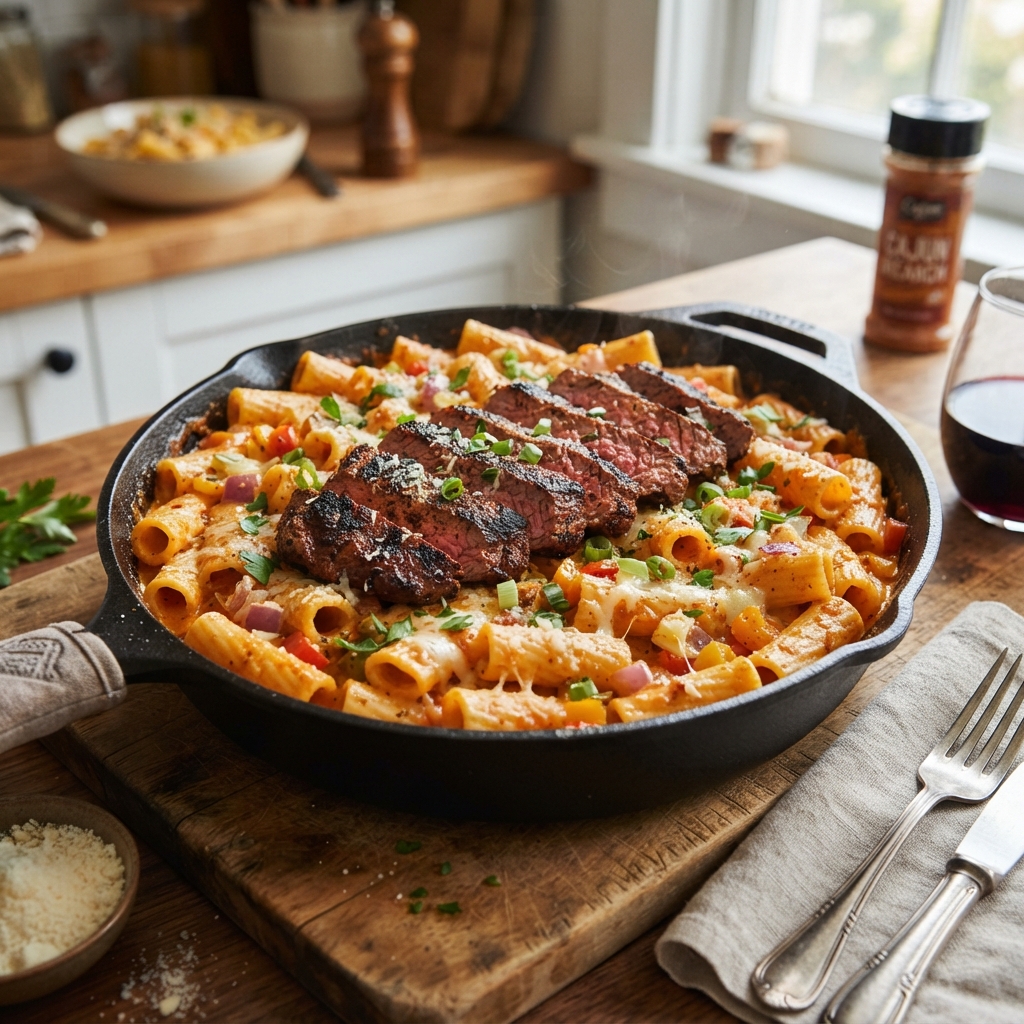
Welcome to the ultimate culinary fusion where the bold, spicy depths of Louisiana Cajun cuisine meet the creamy, comforting embrace of Italian pasta traditions. This Cajun Steak Cheesy Rigatoni Parmesan Recipe is not merely a dinner option; it is an experience designed to tantalize the taste buds with every single bite. Imagine tender, seared strips of beef coated in a robust blend of spices, nestled atop al dente rigatoni tubes that have been generously smothered in a velvety, rich Parmesan cream sauce. The contrast between the heat of the Cajun seasoning and the cooling richness of the cheese creates a harmonious balance that satisfies both cravings for heat and comfort.
Perfect for weeknight dinners that feel luxurious or weekend gatherings where you want to impress guests without spending hours in the kitchen, this dish delivers maximum flavor with manageable effort. The rigatoni’s ridged surface is specifically chosen to catch every bit of the savory sauce, ensuring that no flavor is wasted on the plate. Whether you are a seasoned home cook looking to expand your repertoire or a beginner eager to try something exciting, this recipe provides a detailed roadmap to creating a restaurant-quality meal in the comfort of your own home. Prepare to elevate your pasta game with a dish that promises warmth, zest, and undeniable satisfaction.
The History
To truly appreciate this dish, one must understand the cultural convergence that makes it possible. Cajun cuisine originates from the French Acadian immigrants who were expelled from Canada and settled in Louisiana during the 18th century. Isolated in the bayous, they adapted their French cooking techniques to local ingredients, creating a rustic, spicy, and hearty style of cooking defined by the “holy trinity” of onions, bell peppers, and celery. The use of bold spices like cayenne, paprika, and black pepper became a hallmark of this cuisine, designed to preserve food and stimulate the appetite in the humid Southern climate.
On the other side of the culinary spectrum lies the Italian tradition of pasta. Rigatoni, hailing from Southern Italy, was designed with large tubes and ridges specifically to hold thick, meat-based sauces. As Italian immigrants moved to the United States, their culinary traditions began to merge with local American flavors. The concept of “Cajun Pasta” emerged prominently in the late 20th century, particularly in American casual dining chains that sought to combine the popularity of spicy Southern flavors with the universal love for creamy Italian noodles. This recipe honors that fusion history by respecting the integrity of the steak sear typical of Southern cooking while utilizing the emulsification techniques of Italian sauce-making to create a modern classic.
Ingredients Breakdown
Understanding the role of each component in this recipe is crucial for mastering the flavor profile. Below is a detailed analysis of why specific ingredients are chosen and how they contribute to the final dish.
The Steak
Sirloin or Ribeye: The choice of beef is paramount. Sirloin offers a leaner option with robust beefy flavor, while Ribeye provides superior marbling and tenderness due to its fat content. The fat renders during cooking, basting the meat from the inside out and adding richness to the sauce later. For this recipe, we recommend cutting the steak against the grain into strips to ensure maximum tenderness when bitten.
The Cajun Seasoning
Homemade vs. Store-Bought: While store-bought blends are convenient, making your own allows you to control the sodium levels and heat intensity. A proper blend includes paprika for color, cayenne for heat, garlic powder, onion powder, dried oregano, thyme, and black pepper. This layering of spices creates complexity rather than just simple spiciness, ensuring the heat builds gradually rather than overwhelming the palate immediately.
The Pasta
Rigatoni: This large, tube-shaped pasta is superior to penne or fusilli for this specific recipe because of its structural integrity. The ridges on the outside of rigatoni are engineered to grab onto creamy sauces, while the hollow center captures pockets of cheese and spice. It holds up well against heavy meats and thick sauces without becoming mushy, providing a satisfying chew that complements the tender steak.
The Cheese and Cream
Parmesan and Heavy Cream: Authentic Parmigiano-Reggiano offers a nutty, salty umami punch that processed grated cheese cannot replicate. When melted into heavy cream, it creates an emulsion that coats the pasta evenly. The fat content in the heavy cream is necessary to carry the fat-soluble flavors of the Cajun spices, ensuring the heat is distributed throughout the dish rather than sitting on the surface.
Step-by-Step Recipe
Creating this dish involves a sequence of steps designed to maximize flavor development at each stage. Rushing the process can lead to overcooked meat or a broken sauce, so patience is key.
Phase One: Preparation
Begin by bringing all your ingredients to room temperature, especially the steak. Cold meat sears poorly, leading to steaming rather than browning. Mix your Cajun spices in a small bowl to ensure even distribution. Grate your Parmesan cheese fresh; pre-grated cheese often contains anti-caking agents that prevent it from melting smoothly into a sauce.
Phase Two: The Sear
Heat a large skillet over high heat until it is smoking slightly. Add a high-smoke-point oil like avocado or canola. Season the steak strips generously with the Cajun blend. Sear the meat in batches to avoid overcrowding the pan, which lowers the temperature and ruins the crust. You are looking for a deep brown Maillard reaction on the exterior while keeping the interior medium-rare to medium. Remove the steak and let it rest on a separate plate to retain its juices.
Phase Three: The Sauce
In the same pan used for the steak, do not wipe out the browned bits (fond); this is pure flavor. Lower the heat to medium and add butter and garlic. Once fragrant, pour in the heavy cream and bring to a gentle simmer. Slowly whisk in the Parmesan cheese until fully melted and smooth. If the sauce is too thick, reserve some pasta water to thin it out while adding starch to help the sauce cling to the noodles.
Phase Four: The Union
Add the cooked rigatoni directly into the skillet with the sauce. Toss vigorously to coat every noodle. Return the rested steak and any accumulated juices back into the pan. Toss gently one last time to warm the meat through without cooking it further. Garnish with fresh parsley for color and a final crack of black pepper before serving immediately.
Tips
To ensure your Cajun Steak Cheesy Rigatoni turns out perfectly every time, consider these professional insights and kitchen hacks.
- Save the Pasta Water: Before draining your rigatoni, reserve at least one cup of the starchy cooking water. This liquid gold helps emulsify the cheese sauce, preventing it from becoming greasy or separating.
- Rest the Meat: Never skip the resting period for the steak. Cutting into it immediately releases the internal juices onto the cutting board, resulting in dry meat. Let it rest for at least five minutes to allow the fibers to relax and reabsorb the moisture.
- Low and Slow for Sauce: When melting the cheese into the cream, keep the heat low. High heat can cause the dairy to curdle or separate, resulting in a grainy texture rather than a smooth velvet sauce.
- Taste as You Go: Cajun seasoning brands vary wildly in salt content. Taste your sauce before adding additional salt, as the Parmesan and the seasoning blend may already provide enough sodium.
- Prep Ahead: You can slice the steak and mix the spices earlier in the day. However, cook the pasta and sauce just before serving to ensure the best texture, as pasta continues to absorb liquid and can become bloated if left sitting in the sauce too long.
Variations and Customizations
One of the beauties of this recipe is its flexibility. You can adapt it to suit dietary needs, flavor preferences, or whatever ingredients you have on hand.
- Protein Swap: If beef is not your preference, this sauce pairs exceptionally well with chicken breast strips or large shrimp. If using shrimp, reduce the cooking time significantly to prevent them from becoming rubbery.
- Vegetable Additions: To add nutritional value and crunch, consider sautéing bell peppers, onions, and mushrooms along with the garlic. Spinach can also be wilted into the sauce at the very end for a pop of green color and iron.
- Spice Level Adjustment: For those who prefer mild flavors, reduce the cayenne pepper in the seasoning blend or use a mild Cajun rub. For heat seekers, add a dash of hot sauce or red pepper flakes to the cream sauce.
- Dairy-Free Option: You can substitute heavy cream with full-fat coconut milk or a cashew cream base, and use nutritional yeast or vegan Parmesan alternatives to maintain the cheesy flavor profile without dairy.
- Gluten-Free: Simply swap the rigatoni for a high-quality brown rice or chickpea-based gluten-free pasta. Be careful not to overcook gluten-free pasta as it can become mushy faster than wheat-based varieties.
- Extra Creaminess: For an indulgent twist, stir in a tablespoon of cream cheese along with the Parmesan. This adds a tangy depth and stabilizes the sauce, making it even thicker and richer.
Health Considerations and Nutritional Value
While this dish is undoubtedly a comfort food indulgence, understanding its nutritional profile allows you to enjoy it mindfully. The primary sources of calories in this recipe come from the heavy cream, cheese, and the fat content of the steak. A standard serving is rich in protein, thanks to the beef and Parmesan, which aids in muscle repair and satiety. However, it is also high in saturated fats and sodium.
To make this dish healthier without sacrificing flavor, consider using a leaner cut of beef such as tenderloin or trimming visible fat from the steak. You can also substitute half of the heavy cream with low-sodium chicken broth to lighten the sauce while maintaining volume. Increasing the vegetable content, such as adding broccoli or zucchini noodles mixed with the rigatoni, can increase fiber content and reduce the overall calorie density per bowl. Portion control is key; serving this over a large bed of steamed vegetables rather than a massive mound of pasta can help balance the macronutrients. Always consult with a nutritionist for specific dietary needs, especially regarding sodium intake for those with hypertension.
Ingredients
- 1 pound sirloin or ribeye steak, sliced into thin strips against the grain
- 2 tablespoons homemade or store-bought Cajun seasoning
- 1 pound rigatoni pasta, dried
- 2 tablespoons olive oil or avocado oil for searing
- 2 tablespoons unsalted butter
- 4 cloves garlic, minced finely
- 2 cups heavy whipping cream
- 1 ½ cups Parmesan cheese, freshly grated
- ½ cup reserved pasta water
- Salt and black pepper to taste
- Fresh parsley, chopped for garnish
- Red pepper flakes (optional for extra heat)
Directions
- Prep the Steak: Pat the steak strips dry with paper towels to ensure a good sear. Toss the steak strips in a bowl with 1 tablespoon of the Cajun seasoning until evenly coated.
- Boil the Pasta: Bring a large pot of salted water to a rolling boil. Add the rigatoni and cook according to package directions until al dente. Before draining, reserve ½ cup of the starchy pasta water.
- Sear the Beef: While the pasta cooks, heat the oil in a large skillet over high heat. Add the steak strips in a single layer, working in batches if necessary. Sear for 2-3 minutes per side until browned but still pink inside. Remove steak from the pan and set aside on a plate.
- Build the Sauce: In the same skillet, reduce heat to medium. Add the butter and minced garlic. Sauté for 1 minute until fragrant, being careful not to burn the garlic. Pour in the heavy cream and bring to a gentle simmer.
- Melt the Cheese: Gradually whisk in the grated Parmesan cheese. Continue stirring until the cheese is completely melted and the sauce is smooth. If the sauce is too thick, add the reserved pasta water a tablespoon at a time until desired consistency is reached.
- Combine: Add the cooked rigatoni to the skillet with the sauce. Toss to coat evenly. Return the seared steak and any juices to the pan. Toss gently to combine and heat the steak through for about 1 minute.
- Serve: Remove from heat. Taste and adjust seasoning with salt, pepper, or remaining Cajun spice. Serve immediately garnished with fresh parsley and optional red pepper flakes.
FAQ
Can I make this dish ahead of time?
While best served fresh, you can prep the ingredients separately. Cook the pasta and toss it with a little oil to prevent sticking. Store the sauce and steak separately in the refrigerator. Reheat the sauce gently on the stove, adding a splash of milk or water to loosen it, then combine with pasta and steak.
Why is my sauce grainy?
Grainy sauce usually occurs from high heat or using pre-grated cheese with anti-caking agents. Ensure you use low heat when melting the cheese and grate it yourself from a block for the smoothest texture.
What can I use instead of heavy cream?
Half-and-half can be used for a lighter version, though the sauce will be thinner. For a non-dairy alternative, full-fat coconut milk provides a similar richness without the dairy.
How spicy is this recipe?
The spice level depends on the Cajun seasoning used. Most commercial blends are moderate. If you are sensitive to heat, start with half the recommended amount of seasoning and add more to taste.
Can I freeze the leftovers?
Cream-based sauces do not freeze well as they tend to separate upon thawing. It is recommended to consume leftovers within 3 days stored in an airtight container in the refrigerator.
Summary (in two lines)
Experience the bold fusion of spicy Cajun steak and creamy Parmesan rigatoni in this ultimate comfort food recipe.
Perfectly seared beef meets velvety cheese sauce for a hearty, flavorful meal ready in under 30 minutes.